Last updated on May 16th, 2026
This Nagasaki Travel Guide covers the city’s main attractions, temples, parks, shopping areas, and local experiences. My Nagasaki itinerary is included!
Nagasaki (長崎) is the largest city in the Nagasaki Prefecture and is rich in culture, history, and delicious food. Being the former important port city, Nagasaki has a long history of exchanges with foreign countries. Travelers can see the influences of the Chinese and Western cultures (Portuguese and Dutch) perfectly mixed with the local Japanese culture. Experience the wonders and charms of this diversity when visiting Nagasaki.
The historical city is also known for the tragedy of its past. It was one of only two cities, to have been subjected to a nuclear attack. Nagasaki experienced the atomic bomb on August 9, 1945 (3 days after the Hiroshima incident). Historical travelers should allow time to visit the park and Peace Memorial Museum in the city.
Nagasaki is worth visiting for many reasons. Whether you’re into food, history, nature, or culture, the city has something for you.
To help you make the most of your time in Nagasaki, we’ve compiled lists of essential travel information in this Nagasaki Travel Guide blog. We will share what to do and see, where to stay, what to eat, and some insider tips when visiting this city. Read more about our Nagasaki itinerary here.
How to Get to Nagasaki from Fukuoka
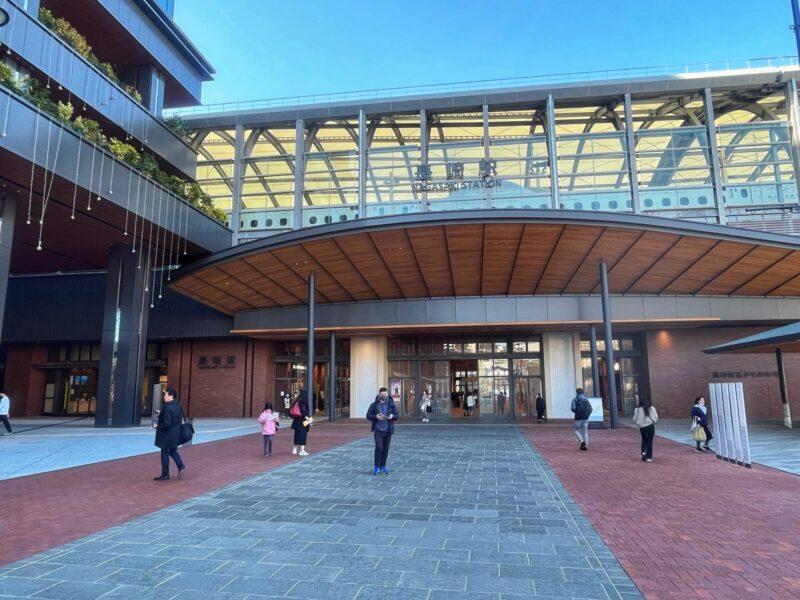
The Nagasaki Station is the main transportation hub for travelers visiting Nagasaki. It connected the Shinkansen, limited express trains from Hakata, and the local JR train to a nearby city.
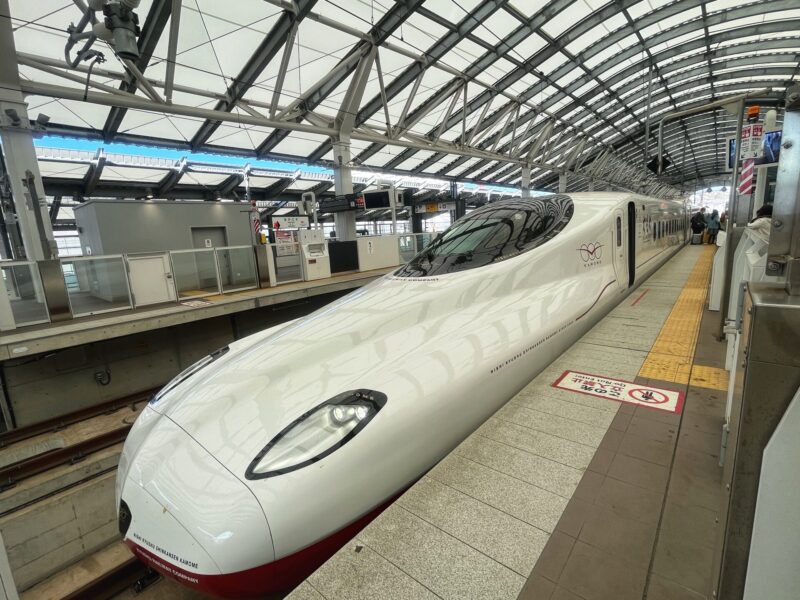
Thanks to the new Shinkansen route, traveling to Nagasaki is shorter and faster. To get to Nagasaki from Fukuoka, you’ll need to do one transfer to the Shinkansen fast-speed train.
By Train: From Fukuoka’s Hakata Station (博多駅), take the local JR train ride to Takeo Onsen. Next, take a quick 3-minute transfer to go on a Shinkansen train that goes to Nagasaki Station (長崎駅). The Shinkansen train is commonly located right at the opposite platform when the local JR train to ease the travelers to make the transfer. So it is super easy.
A one-way trip takes about 1.5 hours and costs approximately ¥5,500, but if you have a Japan Rail Pass or JR Kyushu Pass you can take these trains for free.
Alternatively, the local JR train ride will take you from Fukuoka to Nagasaki directly if you choose not to transfer to Shinkansen. The trip takes about 2 hours.
By Bus: An hourly departure bus will take you from Fukuoka to Nagasaki. The highway bus journey takes 3 hours bus journey and costs approximately ¥3,000.
Like the Rail Pass for trains, you can save on Kyushu highway buses by purchasing a SUNQ Pass. If you’re visiting multiple cities in Kyushu, then it will give you unlimited rides on consecutive days.
Getting around in Nagasaki
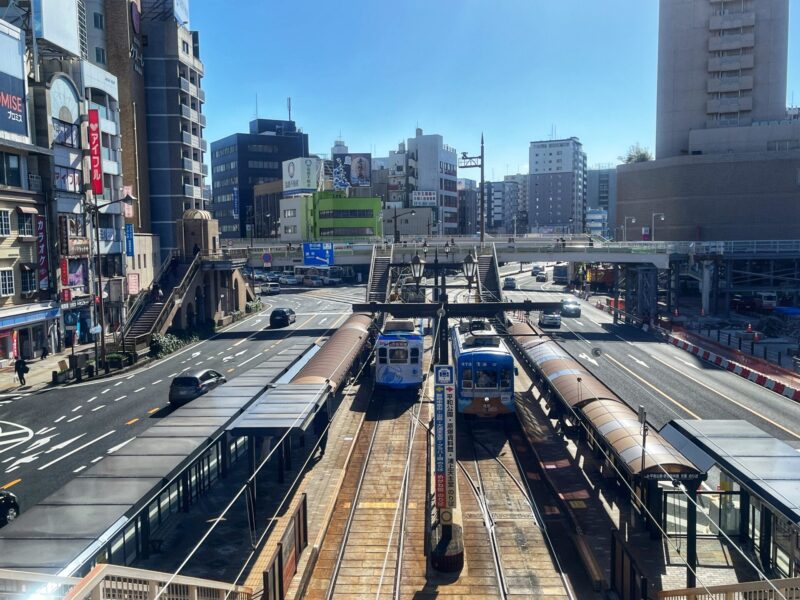
Nagasaki is a relatively compact city and travelers easily get around using public transport – the Nagasaki Electric tram system. Announcements and signs both on trams and at the stops are available in English, making it easy to find which tram you need to take and where to get off.
There are 4 tram routes that traverse Nagasaki City.
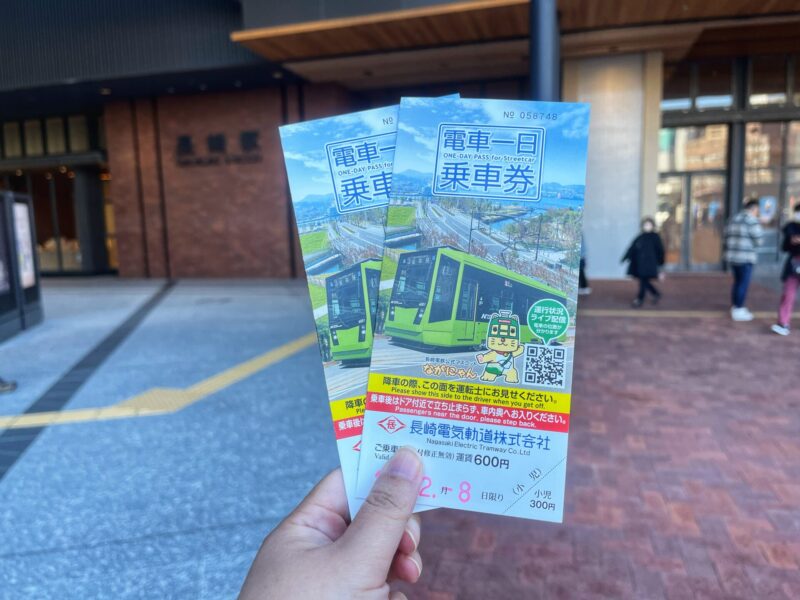
The flat rate of ¥140 per ride no matter how far you go.
Buy the Nagasaki Electric Tramway Day Pass for the tram to reduce transportation costs for unlimited rides within the day. The one day pass costs only ¥600 which is really a steal!
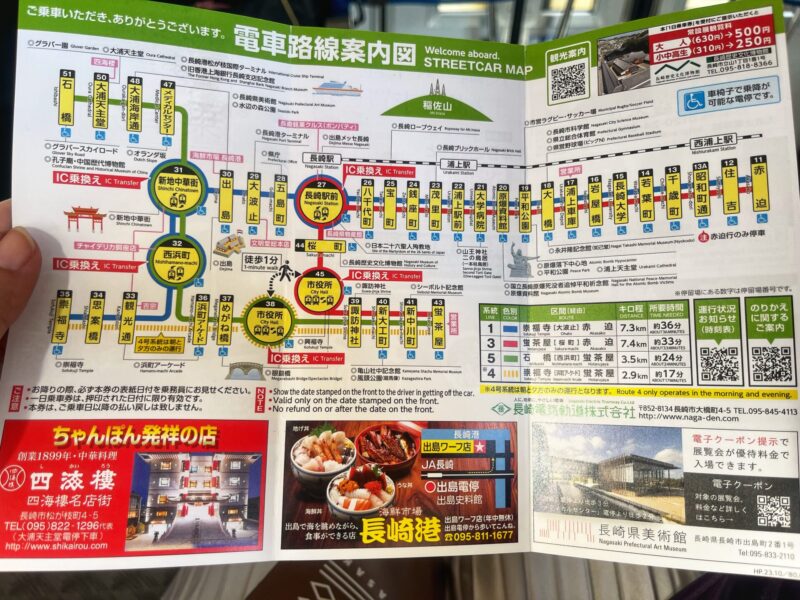
From Nagasaki Station, walk over the pedestrian bridge to the tram stop which serves routes #1 and #3.
Tram routes #1 and #3 both run up to Akasako (赤迫) direction of the Nagasaki Peace Park. While Tram route #1 with Sofukiji Temple (崇福寺) direction will go to Dejima and Shinchi Chinatown.
How Many Days for Nagasaki
Nagasaki is a compact city with the city’s attractions split into two different sections, the south and the north. There are lots of interesting local attractions scattered around the city and you can easily spend 2-3 days here.
Assuming you arrive arrived Nagasaki in the morning, one full day will give you enough time to visit Nagasaki, focusing on the main attractions in the city. You have to pick some of the sights based on your interest for your Nagasaki itinerary.
While two full days give you enough time to do everything in this Nagasaki travel guide at a leisurely pace.
Best Hotel in Nagasaki
Nagasaki is easy to navigate with public transport well-connected. So, finding a great place to stay in Nagasaki should be easy. There are three best areas to stay for first-time visitors to Nagasaki – Dozamachi (Downtown Nagasaki), Shinchi Chinatown, and Daikokumachi (Nagasaki Station Area). Our recommendations are:
High-Range: Candeo Hotels Nagasaki Shinchi Chinatown – A 4-star hotel with an excellent location at Shinchi Chinatown. It’s easily reachable by tram or a 15-minute walk from the Nagasaki station.
Mid-Range: Hotel Cuore Nagasaki Ekimae offers simple accommodations with clean rooms and comfortable beds. The location is very convenient because it’s located close to Nagasaki Station with 2 tram lines accessible.
Budget: Hostel Casa Noda Nagasaki is a great option for travelers who looking for where to stay in Nagasaki on a budget. Guests can choose to stay in either a private room with a private bathroom or a dormitory room with bunk beds and a shared bathroom.
For more Nagasaki accommodation options, continue to read on: Where To Stay in Nagasaki.
Planning for Nagasaki itinerary
The city is a good place to get lost, but it’s also easy to navigate because it isn’t as big as Tokyo, Osaka, Kyoto, and other famous cities in Japan. You can grab a city map from Nagasaki Tourism Center, hoop on the city’s tram, and start traveling in the city.
From Nagasaki Station, we suggest you focus on the attractions on the North side of the city first and spend time visiting the Nagasaki Peace Park, and Atom Bomb Museum. Next, spend the rest of the time visiting the attractions at South like Oura Church, and Glover Garden. Here’s a Nagasaki itinerary to help you plan your trip.
Top Things to Do for Nagasaki Itinerary:
- Nagasaki Atomic Bomb Museum and Nagasaki Peace Memorial Hall
- Hypocenter Park
- Nagasaki Peace Park
- Nagasaki Shinchi Chinatown
- Meganebashi Bridge
- Dejima Island
- Oura Cathedral Church
- Glover Garden
- Mt. Inasa View Deck (Best for sunset and night view)
- Hashima Island (Battleship Island)
Nagasaki Atomic Bomb Museum and Nagasaki Peace Memorial Hall
On your first stop of the Nagasaki itinerary, head to the Nagasaki Atomic Museum and Peak Park from Nagasaki Station. Both places are the most visited attractions in Nagasaki. From JR Nagasaki station you can board either a Route 1 (blue) or Route 3 (red) tram to North to visit sightseeing at North Nagasaki.
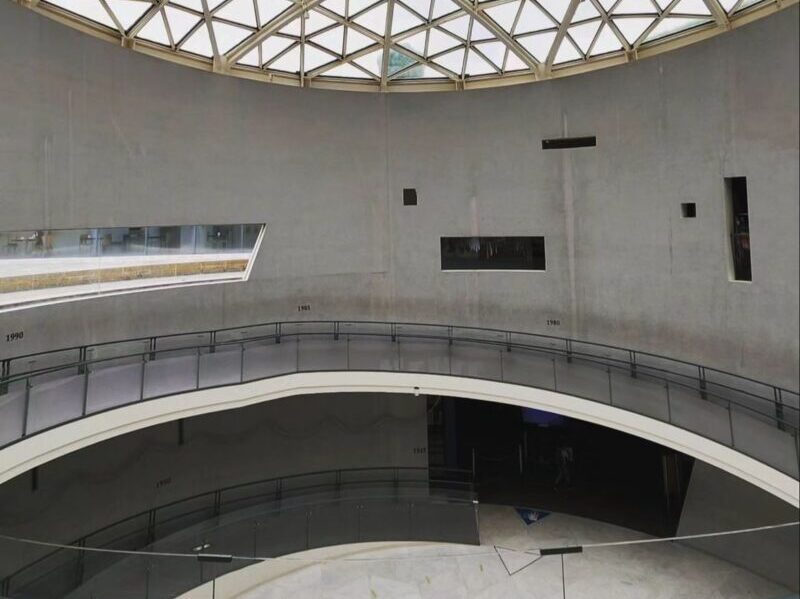
Firstly, get off at Atomic Bomb Museum tram stop. You can learn about the history and events leading up to the atomic bomb incident at the Atomic Bomb Museum and the National Peace Memorial Hall for Atomic Bomb Victims.
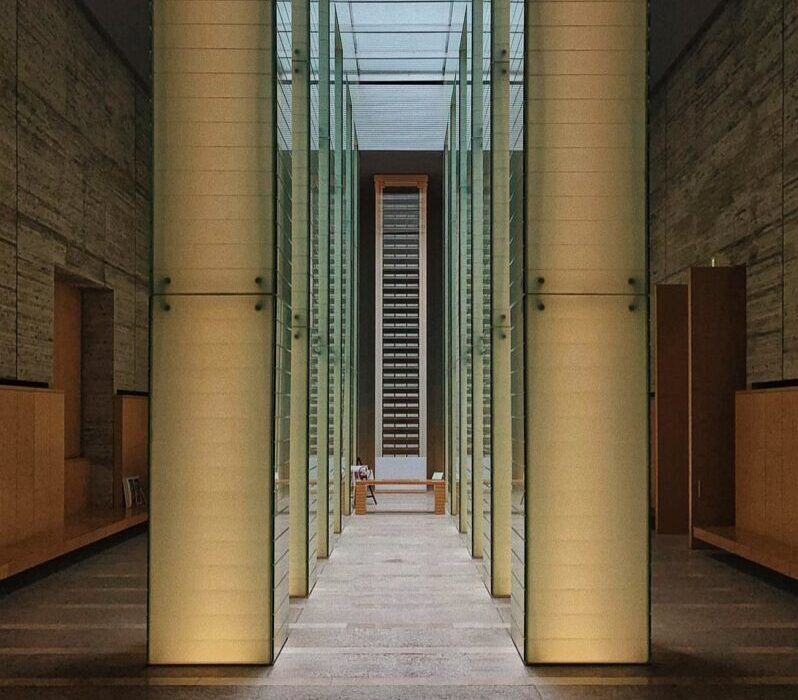
Once inside the Nagasaki Atomic Bomb Museum, the Nagasaki Peace Peace Memorial Hall is on your left after the entrance. The memorial features a beautiful underground hallway with glass pillars illuminated from above with natural light.
There are 3D videos, pictures, portraits, artifacts, computer images, and paper cranes made by school kids to remember those who suffered and perished during the atomic bombing of Nagasaki. Every different corner presents the way Nagasaki has gone through after the bombing occurred. Worth taking the time to visit the memorial before you go through the museum exhibits.
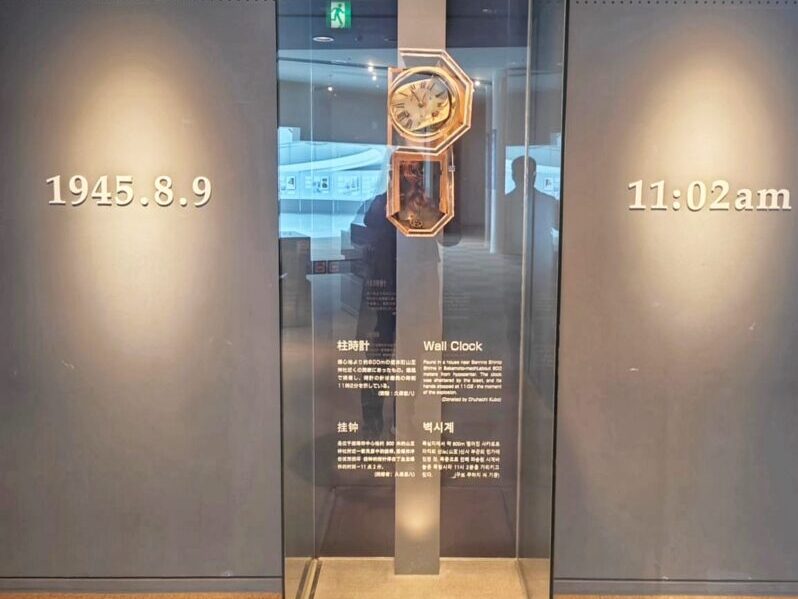
Next, continue visiting the Atomic Bomb Museum.
Compared to Hiroshima, the Atomic Bomb Museum in Nagasaki primarily focuses on a future of peace, rather than on the preservation of buildings. The museum provides good context related to the WWII nuclear bombing of Nagasaki.
Get the Nagasaki Atomic Bomb Museum Admission Ticket from Klook
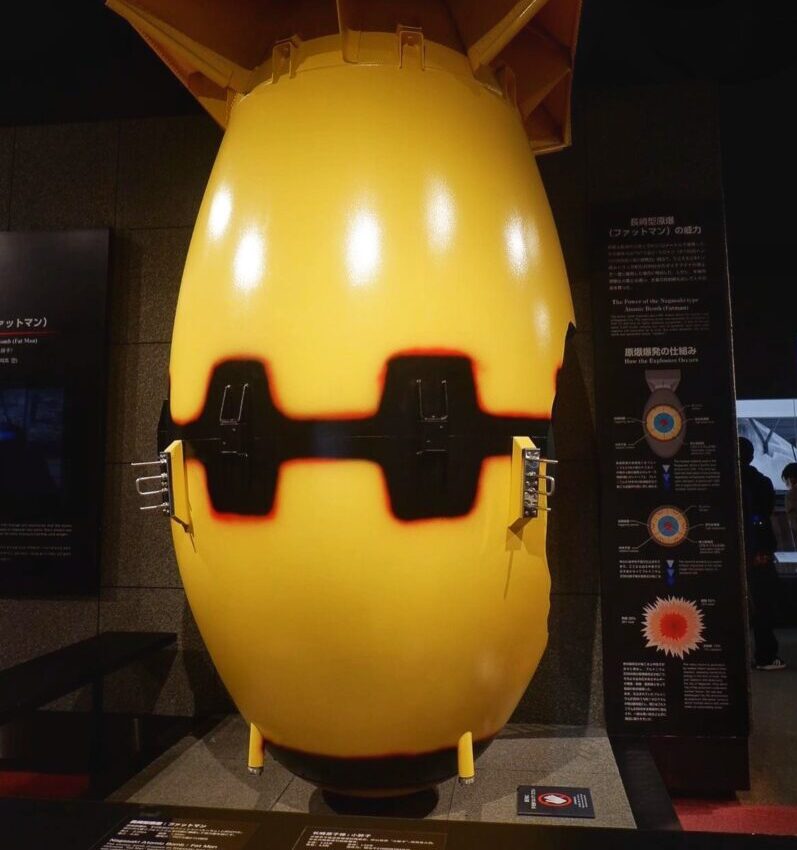
Seeing and reading through the photos and documentation of the bomb and its radiation effects, all give us a much deeper understanding of that event and the need to avoid nuclear war in the future.
Atomic Bomb Museum (原爆資料館)
Suggested Length of Visit: Around 1-2 hrs
Admission Fee: ¥200
Getting there: Get off at Atomic Bomb Museum (原爆資料館) tram stop.
Hypocenter Park
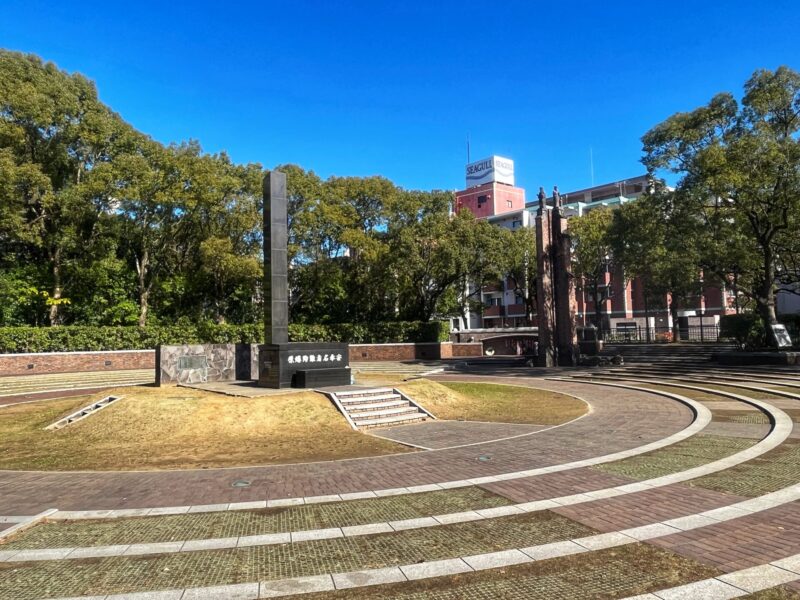
Next, walk downstair from the main entrance of the Atomic Bomb Museum to the Hypocenter Park. The park is a small park site between the Bomb Museum and the Peace Park.
The Hypocenter Park has a couple of monuments and various signs explaining the historical importance of the location.
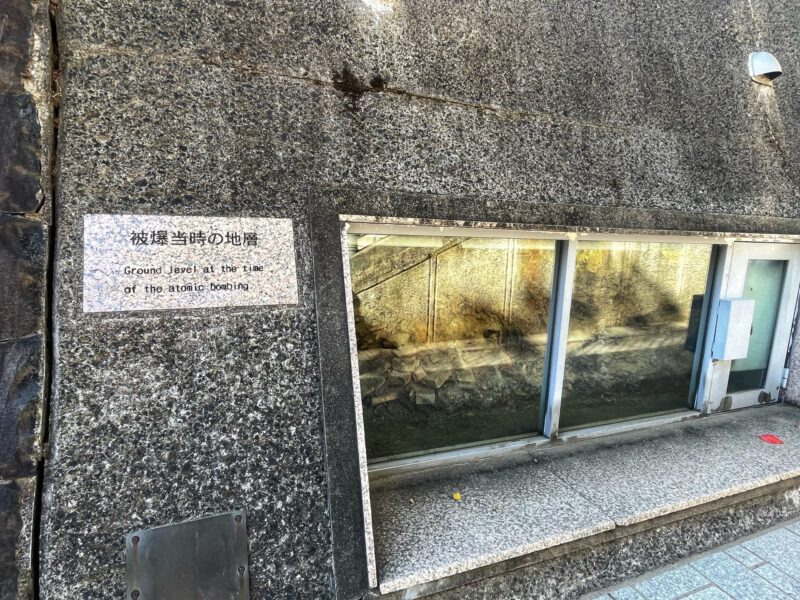
Walk to nearby steps descend to where ground level was located at the time of the bombing.
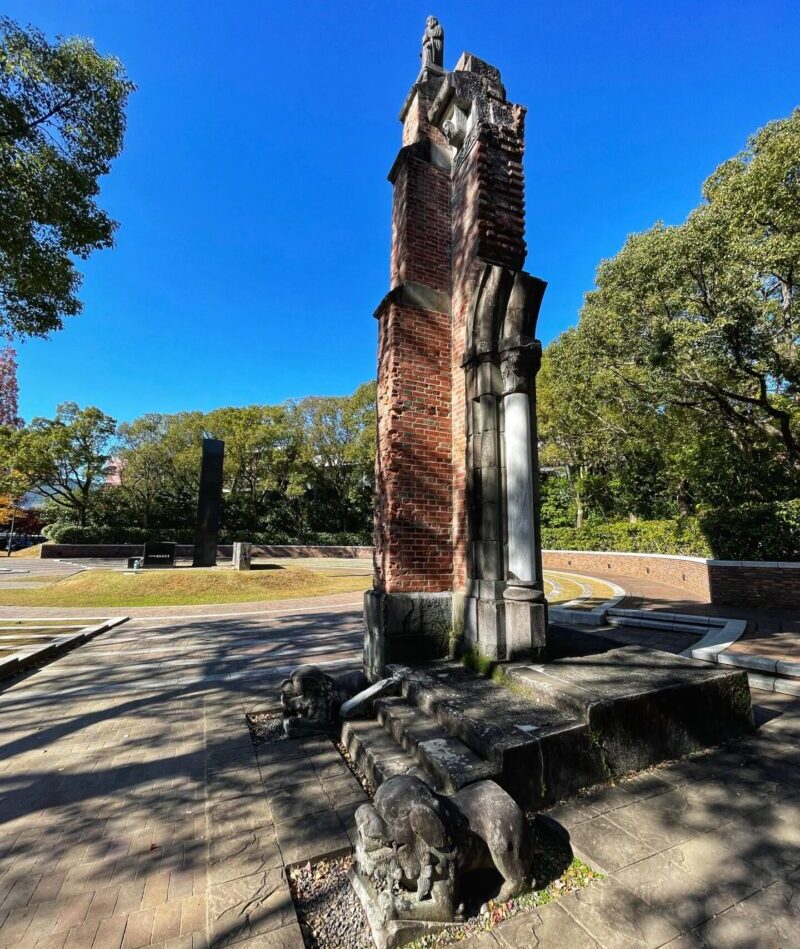
There is also an exhibit of the remnants of parts of the damaged pillar of the former Urakami Cathedral as reminders of what happened here.
Nagasaki Peace Park
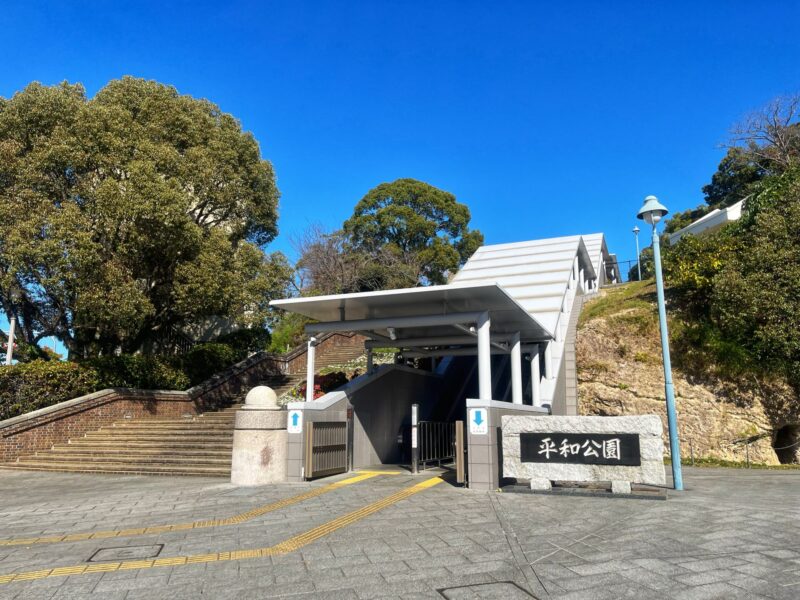
Continue walk about 5 minutes to the Nagasaki Peak Park.
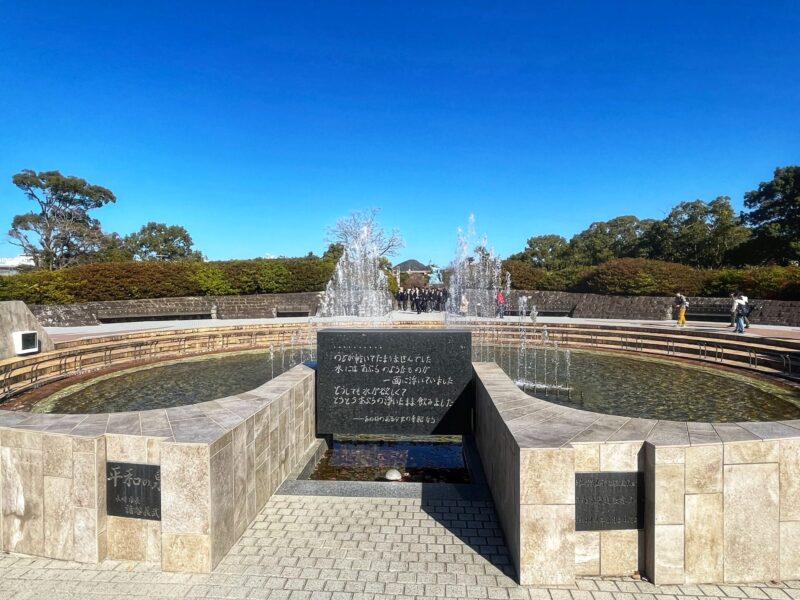
The Nagasaki Peace Park is in an open space area and features multiple monuments dedicated to the victims of the nuclear attack. Most of them are donations from other countries or organizations to show the impassioned tributes to those who suffered here.
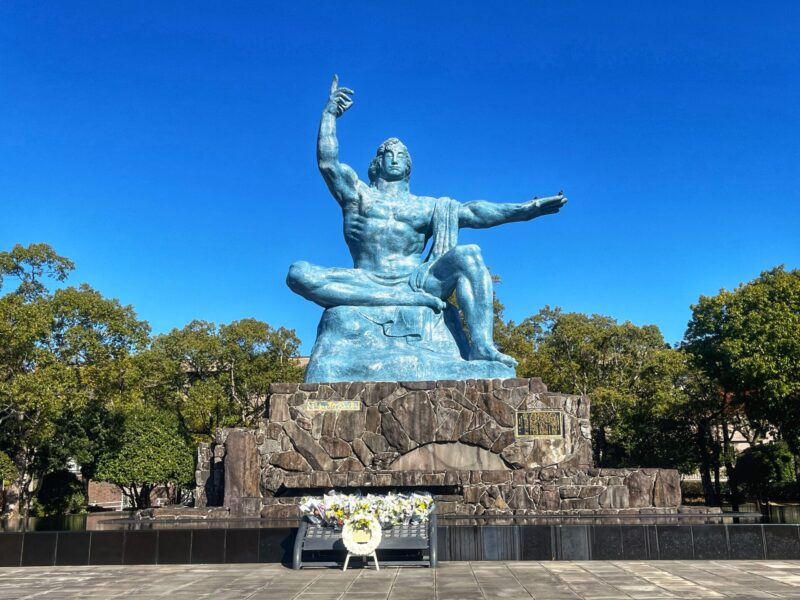
The most notable is the bronze Peace Statue at the Nagasaki Peace Park – a man holding up his right hand to the sky and left arm horizontally to show world peace.
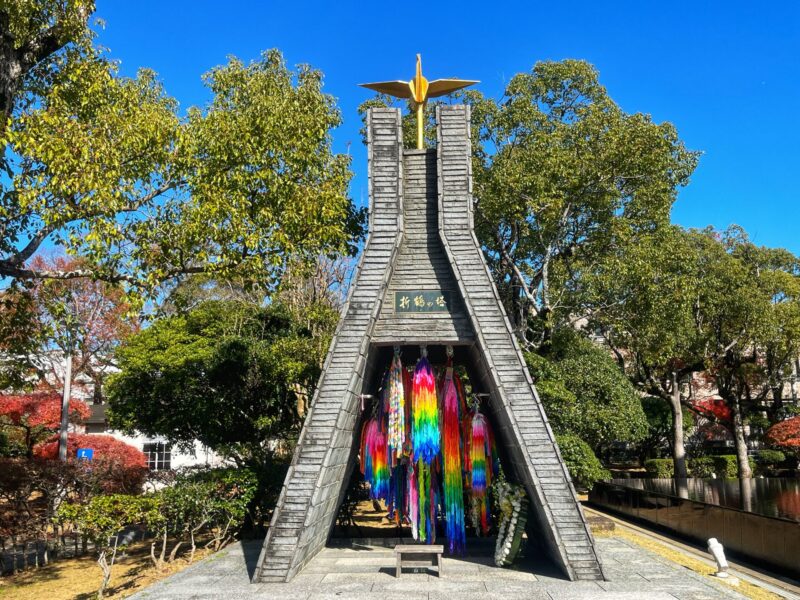
Pay your respects at the Peace Park, read the history around the park, and take in the moment to understand how important peace is.
Admission to the park is free.
Nagasaki Peace Park (平和公園)
Suggested Length of Visit: Around 1 to 2 hours
Getting there: Approximate 5 minutes’ walk from Peace Park. Alternatively, get off at the Peace Park (平和公園) Tram Stop.
Nagasaki Travel Tip: There are not many shade areas in the park and can be very hot and humid at noon. We advise come early or bring a hat and more water.
Nagasaki Shinchi Chinatown
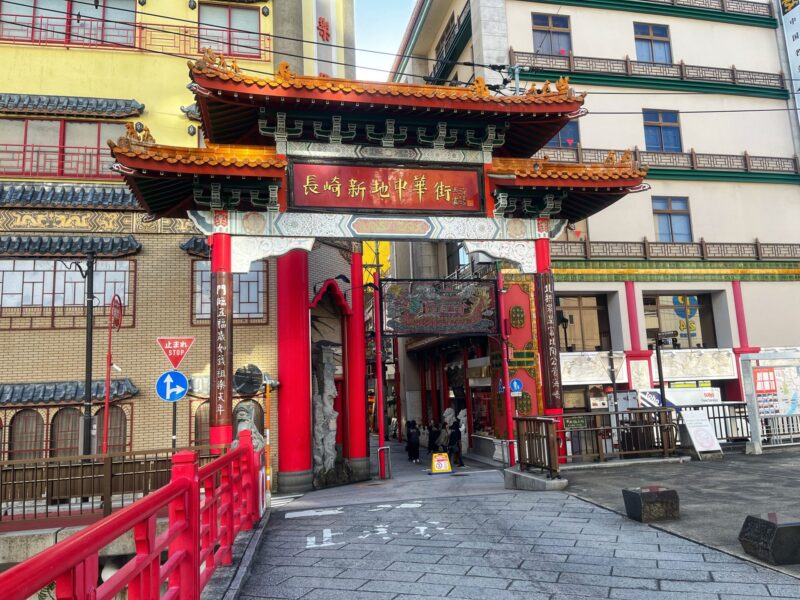
Nagasaki Shinchi Chinatown is one of Japan’s top three Chinatowns. This place was home to Chinese traders and sailors during the period of isolation (17th – 19th century).
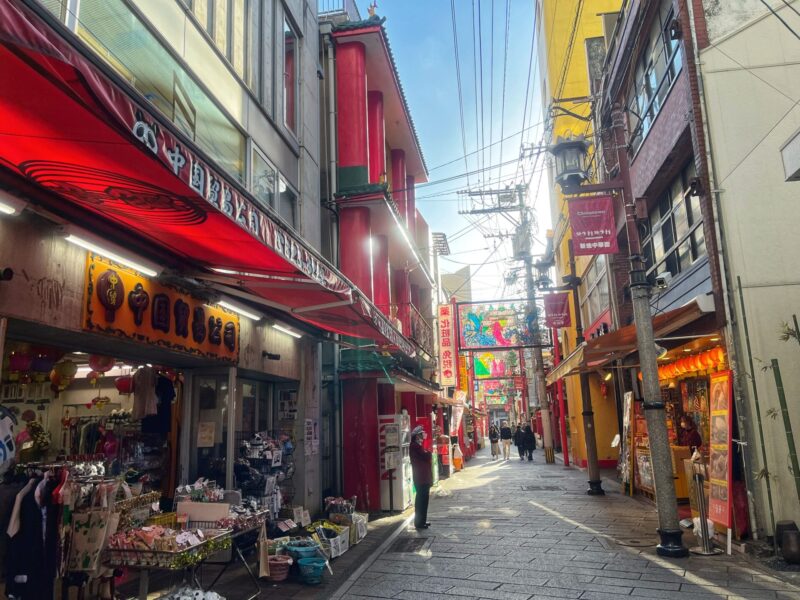
The Shinchi Chinatown features a total of 250m crisscrossing roads filled with Chinese restaurants, shops, and large red Chinese gates. We came here for their famous Champon noodles, a noodle specialty dish from Nagasaki. It’s one of our favorite Japanese foods to eat in Nagasaki.
If you have a chance to visit Nagasaki during the Lantern Festival, you’ll see incredible decor and colorful lanterns light up in the area.
Nagasaki Shinchi Chinatown (長崎新地中華街)
Suggested Length of Visit: Around 30 minutes.
Admission Fee: Free!
Getting there: Take the tram and get off at Shinchi Chinatown (新地中華街) Tram Stop.
Meganebashi Bridge
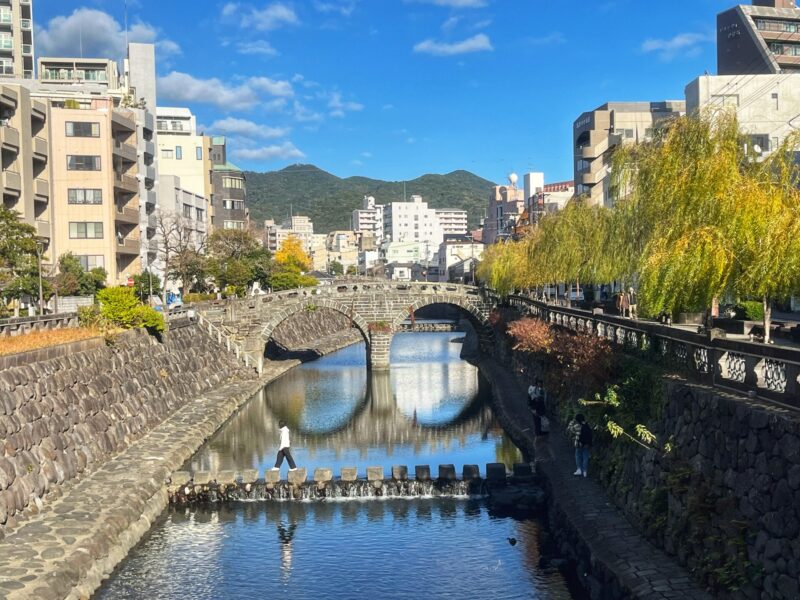
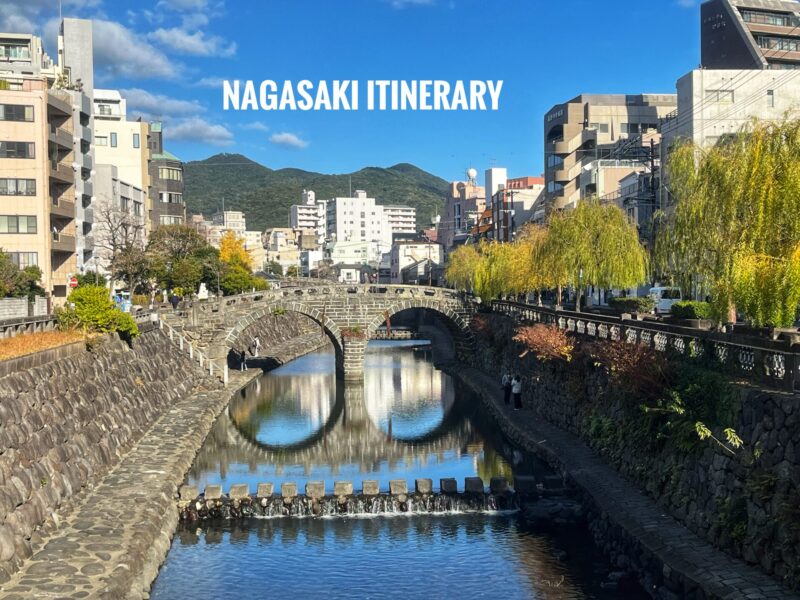
From Chinatown walk toward downtown Nagasaki, there are several stone bridges span the Nakashima River. The stone bridge was originally built in 1634 and is the oldest stone arch bridge in Japan. Its construction was overseen by the Chinese monk who would go on to become the resident priest of Kofukuji Temple, which is located a short walk away.
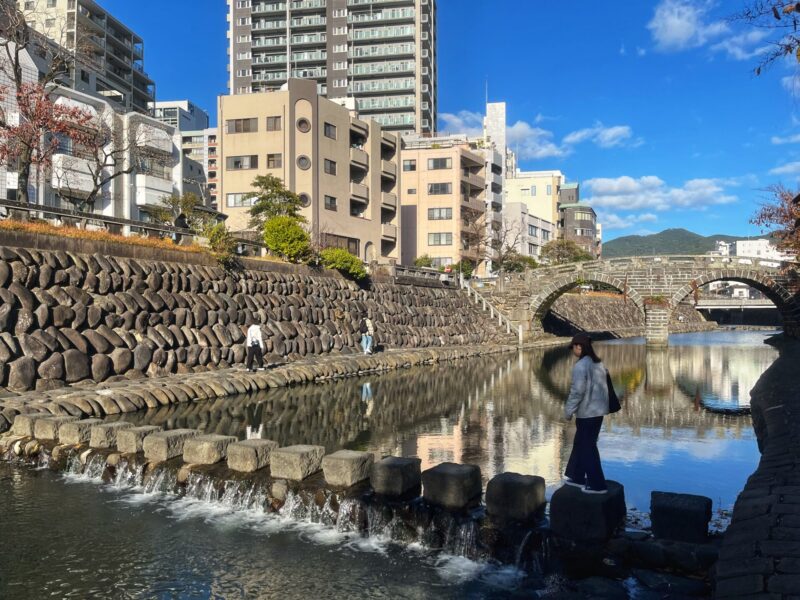
Among all, the Megane-Bashi (眼鏡橋, lit. Spectacles Bridge) is the most remarkable. It gets its name from the resemblance it has to a pair of spectacles when reflected in the river water. The stone bridge is designated as an important cultural property and is a popular tourist attraction.
Megane-Bashi is one of Japan’s three famous bridges along with Tokyo’s Nihonbashi Bridge and Iwakuni’s Kintaikyou Bridge.
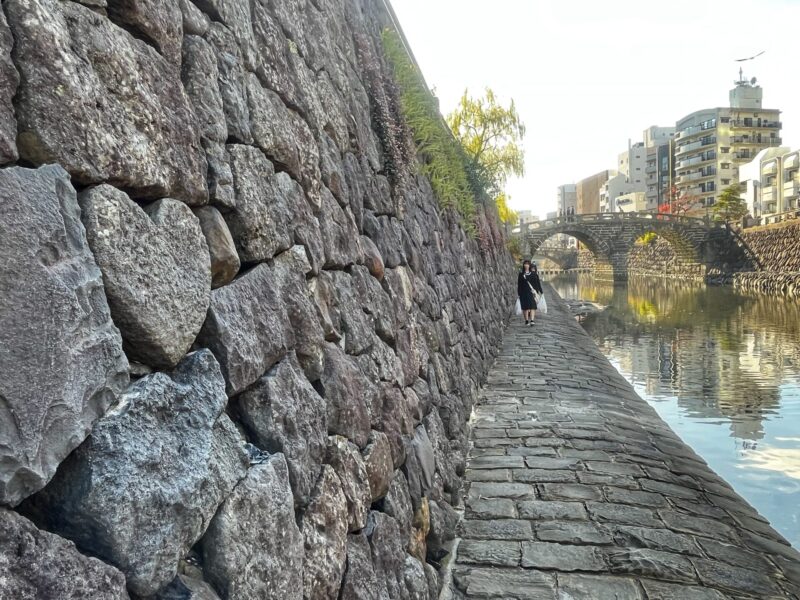
There was also a heart-shaped stone near the Meganebashi Bridge, and tourists were taking pictures in front of the stone.
Megane-Bashi (眼鏡橋)
Suggested Length of Visit: Around 30 – 60 minutes
Admission Fee: Free!
Getting there: Take the tram and get off at Megane-Bashi Bridge (眼鏡橋) Tram Stop. Alternatively, walk approximately 10 to 12 minutes from Shinchi Chinatown.
Dejima Island
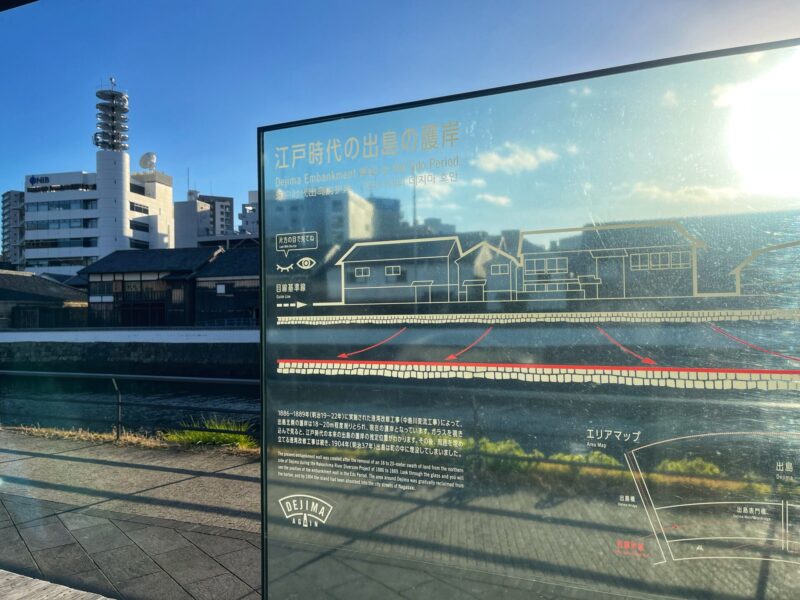
If you have more time, you can slowly walk along the Nakashima River to Dejima Island. It is the place an isolated island for Dutch merchants from local Japanese activities and control over their missionary activities.
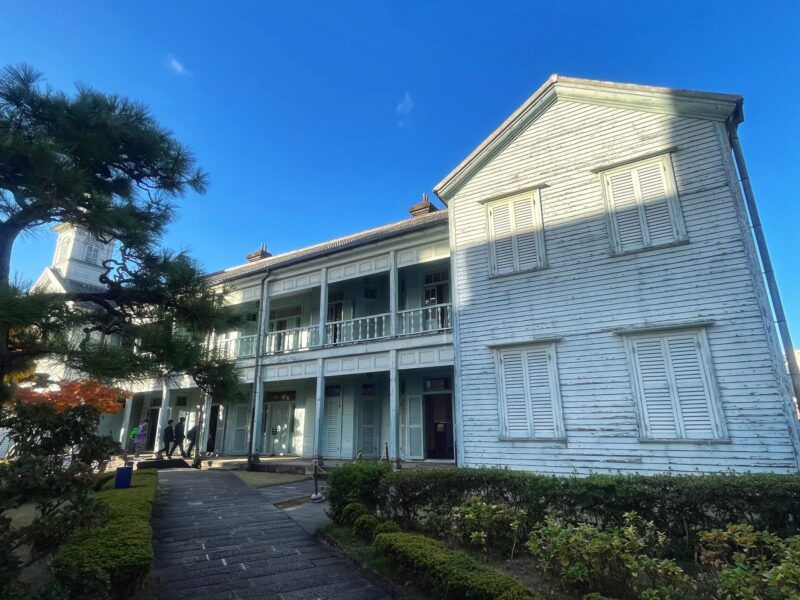
The former buildings have been faithfully restored and Dejima Island is now a popular place to visit in Nagasaki. Well worth a visit.
Oura Cathedral Church
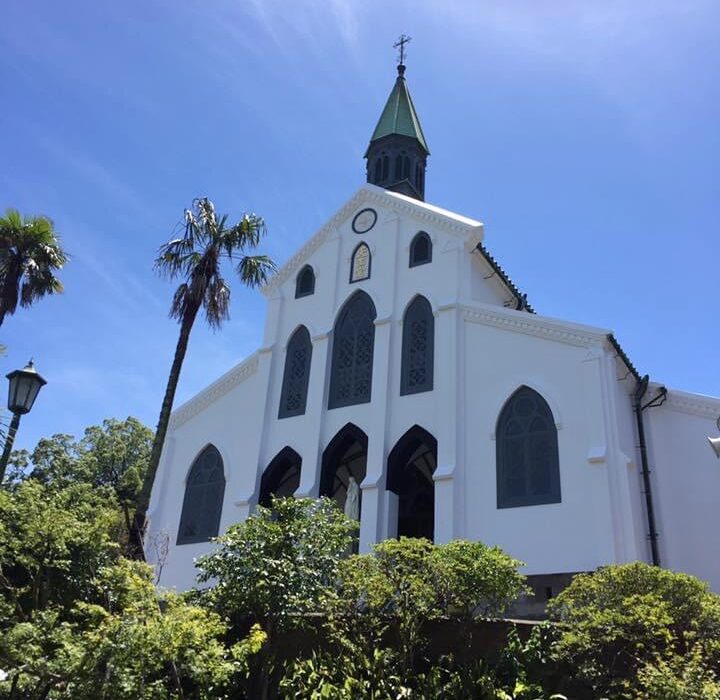
Oura Cathedral Church (大浦天主堂) is the next stop for the Nagasaki itinerary. The gothic-style Oura Church is dedicated to the memory of the 26 Christian saints who were martyred on Nishizaka hill in the city in 1597.
They were executed for their belief in Christianity at a time when outside religions were forbidden. The church is facing Nishizaka Hill as a sign of respect for those who die on this day.
Underground Japanese Christians came to the Oura Church revealed their faith and performed worship here. Some of these Christians have been secretly practicing their religion for 200 years.
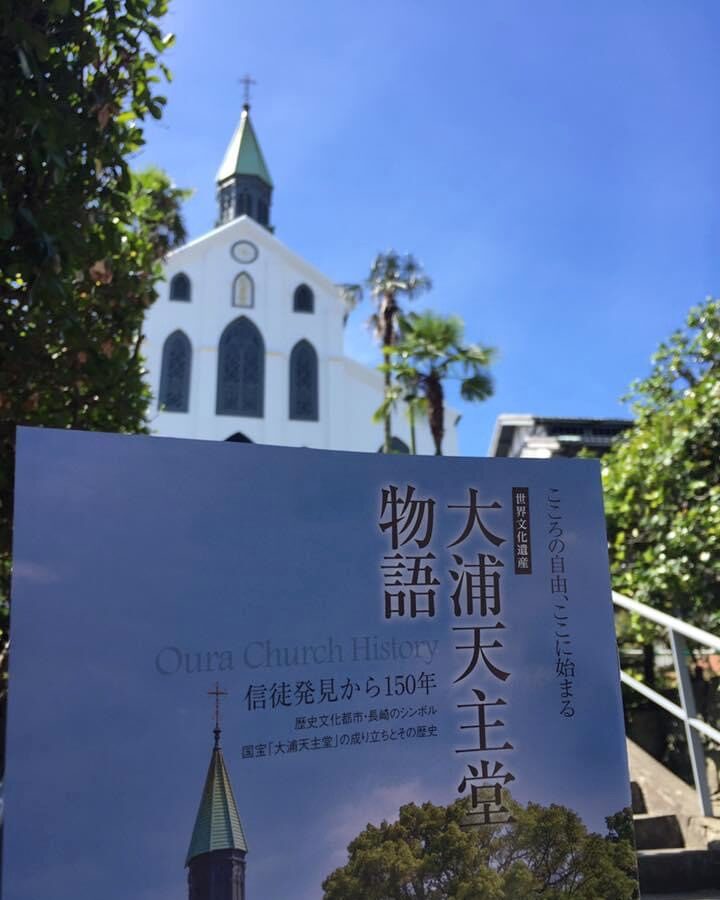
The Oura Church is one of the oldest churches in Japan and is recognized as a National Treasure and part of UNESCO World Heritage. Admission fee ¥1,000 is required which is hefty, and it includes entrance to the Urakami Cathedral about the history of Christianity in Japan.
To get to the church you have to climb many stairs. From the grounds, you can see views of surrounding buildings. It’s very close to Glover Garden, and the Confucius Shrine is basically down the hill and across the street.
Oura Cathedral Church (大浦天主堂)
Suggested Length of Visit: Around 1-2 hrs
Admission Fee: ¥1,000 (including Urakami Cathedral)
Getting there: Get off at Oura Cathedral (大浦天主堂) tram stop, and walk for approximate 10 minutes.
Glover Garden
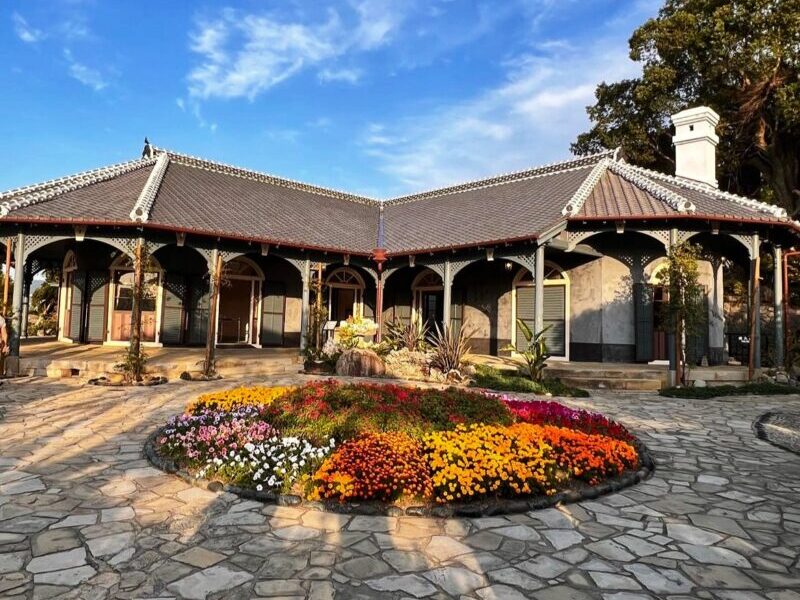
Just a few steps from the Oura Church is the Glover Garden.
The Glover Garden is an open-air museum in Nagasaki that exhibits mansions of several of the city’s former foreign residents and related buildings.
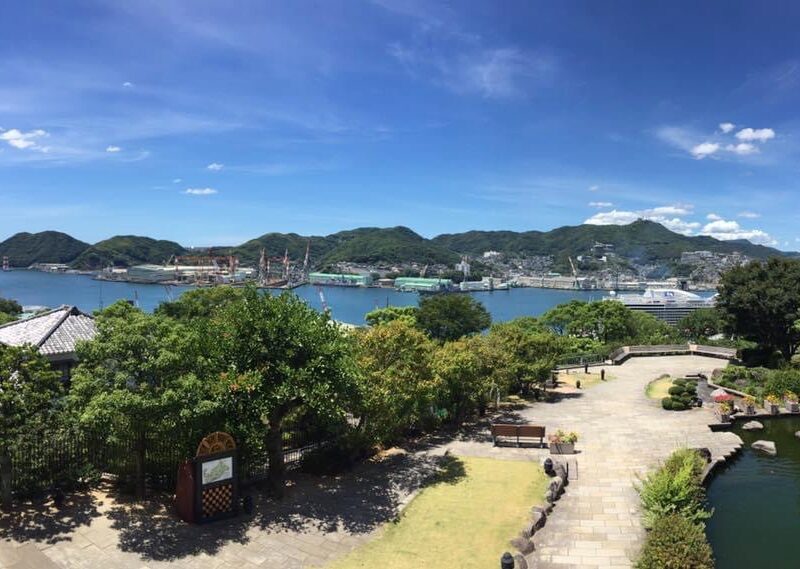
It is the place where Western merchants settled down after the end of Japan’s era of seclusion in the 2nd half of the 19th century. The views from the observation decks were wonderful. Highly recommended.
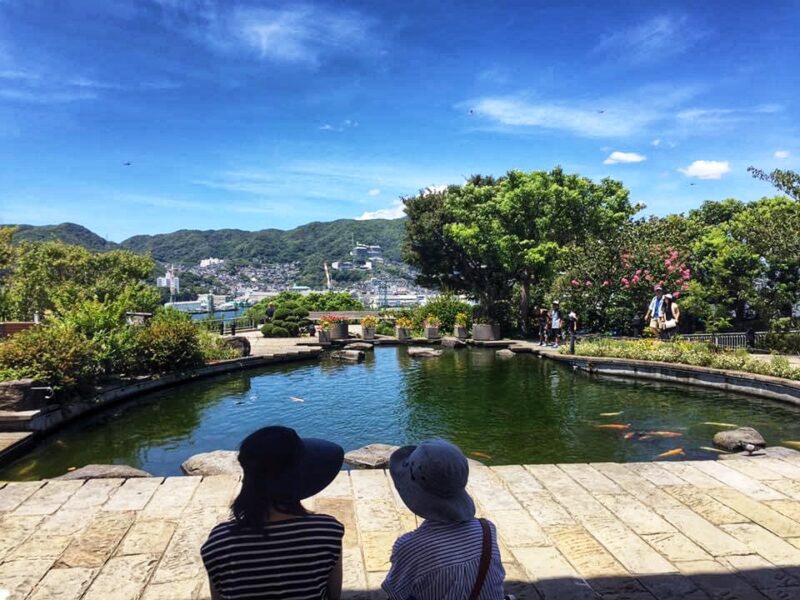
The garden is a huge park to walk around. It contains nine historical Western buildings including the residence of Thomas Blake Glover, a Scottish merchant who had a tremendous impact on the industrialization of Nagasaki. He is also the founder of Kirin Brewery in Japan. The former Glover’s house is recognized as a UNESCO World Heritage site.
Glover Garden (グラバー園/哥拉巴園)
Suggested Length of Visit: Around 1 to 2 hours
Admission Fee: ¥620
Getting there: The closest tram stop is at Oura Cathedral tram stop. The entrance is right beside the Oura Cathedral Church.
Mount Inasa
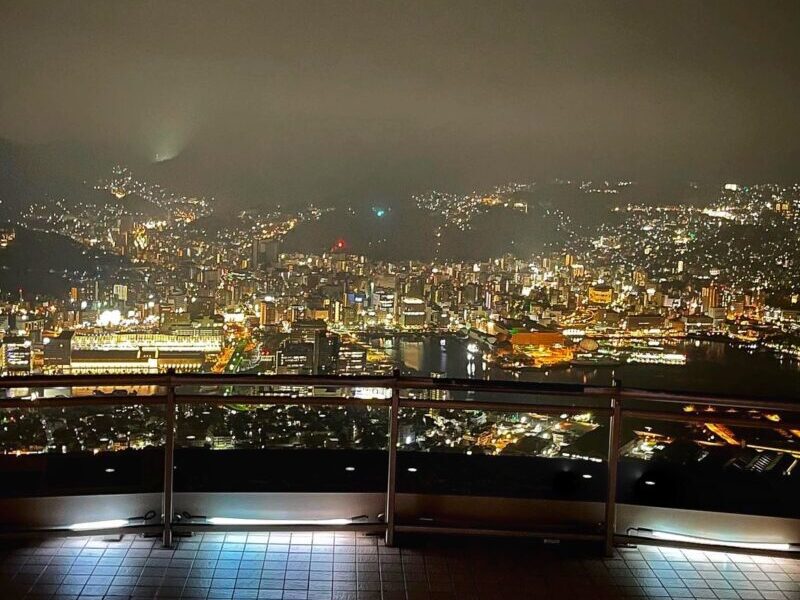
Mount Inasa (稲佐山, Inasayama) is a 333-meter-high mountain in Nagasaki that offers great views over the city. The view from Mt. Inasa is so spectacular that it’s ranked among Japan’s three best night views besides the views from Mount Hakodate and Mount Rokko.
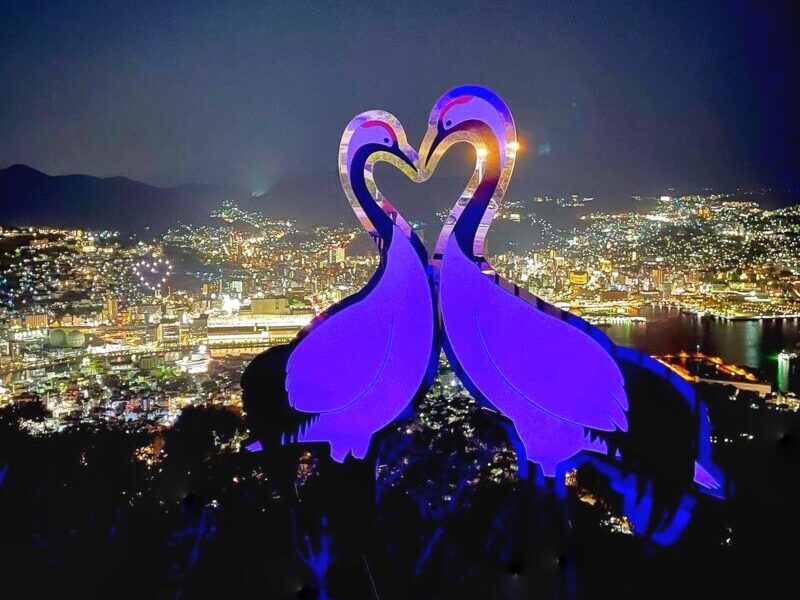
Spend some time walking around the observatory to check out the 360-degree view. It is best to arrive there before sunset to get the sunset and night view together.
The summit can be reached by ropeway, bus, or car to the top of the mountain. There is also a free shuttle bus but reservation is required via an online booking system.
Getting there: Take the tram to Takara Machi Station. From there, walk 15 minutes to the Fuchi Shrine Station to take the cable car.
Hashima Island (Battleship Island)
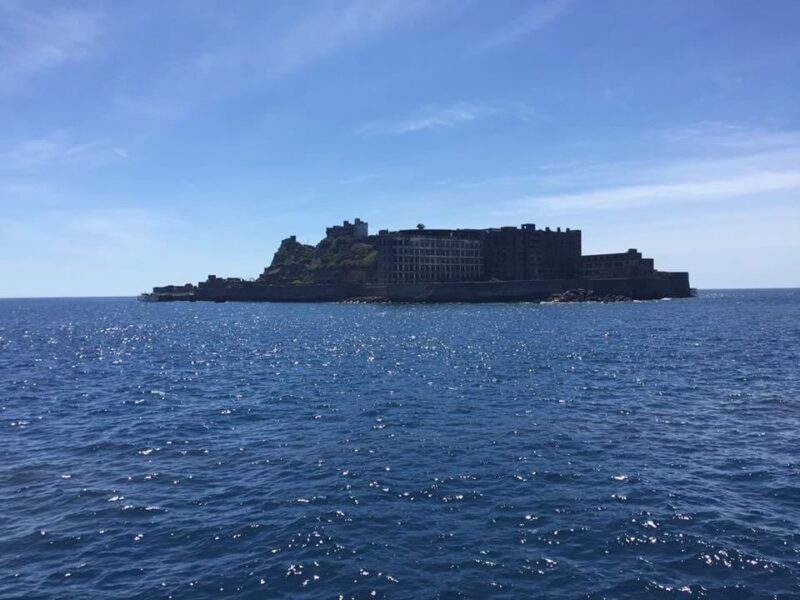
Gunkanjima (軍艦島, the battleship island in Japanese) is a small abandoned island located about 20 kilometers from Nagasaki Port. The island served as a coal mine when it was first founded in late 1800 until it closed in 1974.
During the mining period, there were more than 5,000 residents with high stone buildings built up to live on the small isolated island, resulting in the highest population density in history recorded worldwide. Over the years since then, direct exposure to typhoons has caused the residences and mining facilities to deteriorate, giving the island an eerie and haunting atmosphere. The abandoned Battleship Island was featured in the James Bond movie Skyfall.
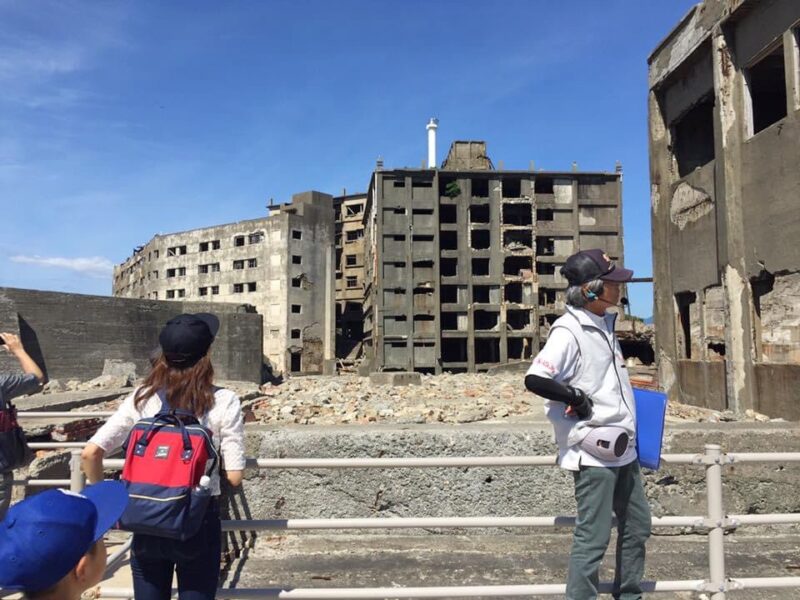
One the second day, we went to Hashima Island as part of the Nagasaki itinerary and it was interesting. The island can only be reached by one of the guided Battleship Island boat tours.
During the tour, we were not allowed to walk on the island and the tour boat sailed around the island a couple of times for photo opportunities. Still, it was highly recommended to visit.
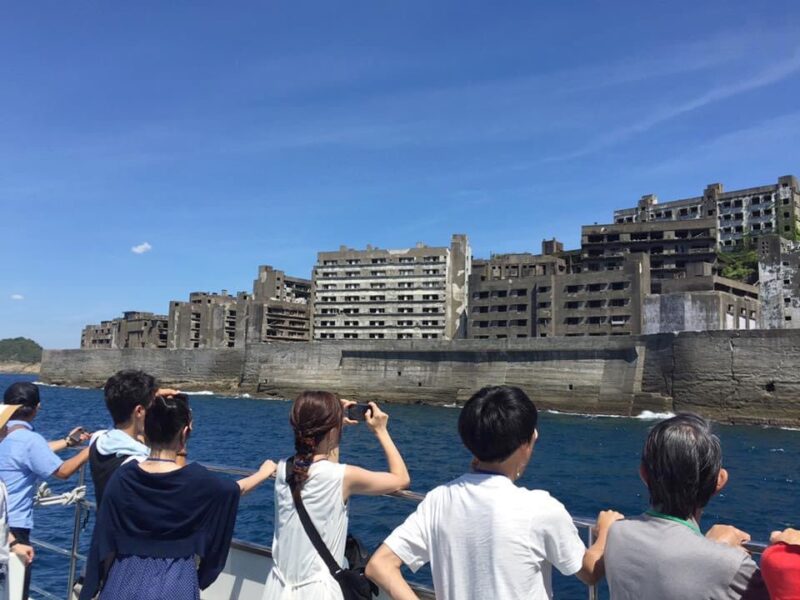
For travelers interested in history and remote islands, Gunkanjima is a unique place to visit. You can book a tour of this island to see its historical sites. It is a popular tour in Nagasaki with limited visitors per day. We highly recommend reserving your tour online through Klook ahead of time to secure your visit.
Recommended Tour: Battleship Island Cruise Experience in Nagasaki
Day Trips from Nagasaki
The above things to do for the Nagasaki itinerary can easily occupy your one or two days of visit. If you have more time, consider taking day trips to visit the Huis Ten Bosch or Sasebo (Kujukushima Island).
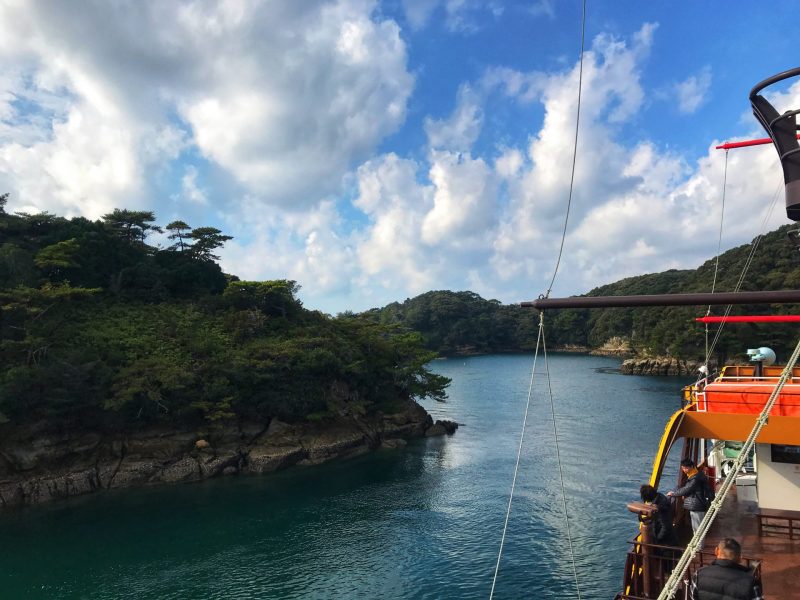
Sasebo is the second largest city in Nagasaki Prefecture. The city is famous for Kujukushima, a group of 208 mostly uninhabited islands. The stunning scene of the natural beauty coastline can be viewed by taking the Kujukushima Sightseeing Cruise. Cruise ticket costs ¥1,500 for an adult and ¥750 for kids (4-15). Get a Ticket from Klook.
From Nagasaki Station, take the JR train depart to Sasebo Station (90 – 120 minutes, ¥1,700 – ¥2,000). The Sea Side Liner will run along the very breathtaking coast. Once at Sasebo station, take the bus to Kujukushima Pearl Sea Resort.
Huis Ten Bosch – Amusement Park themed after a Dutch town. It is named after one of the residences of the Dutch Royal Family. The spacious resort is suffused with a European atmosphere with its picturesque canals, iconic windmills, beautiful gardens, and architecture.
Huis Ten Bosch Station and Nagasaki Station are connected by the JR Seaside Liner (75 minutes, ¥1,500 one way, hourly trains, fully covered by the Japan Rail Pass and Kyushu Rail Pass).
Overall: A Visit to Nagasaki
All in all, we hope our ultimate Nagasaki itinerary is helpful. The Nagasaki city took us by surprise with all its fantastic sights and attractions. We are truly impressed when exploring around and learning about the rich and colorful history of the city. Highly recommended to visit Nagasaki to see all the historical landmarks.
Thanks for stopping by and have a wonderful time exploring Nagasaki!
Related Nagasaki Travel Blog:
- Sasebo Itinerary: Kujukushima Sightseeing Cruise
- Where To Stay in Nagasaki: Best Hotels and Areas
- Nagasaki Food Guide: What To Eat in Nagasaki
Visiting Kyushu and looking for some inspiration for what to do in Kyushu then be sure to read our Kyushu travel blog here:
- How To Plan Your Kyushu Itinerary: Ultimate Guide
- Fukuoka Itinerary: Ultimate Travel Guide
- Things To Do in Kumamoto: 1-Day Itinerary
- Takachiho Gorge Travel Guide: 1-Day Itinerary Blog
- Yufuin Travel Guide: Must Eat Food And Things To Do
- Beppu Itinerary: Ultimate Travel Guide Blog
- Kurokawa Onsen: A Guide To Natural Hot Spring Town
- Kagoshima itinerary: A Travel Guide Blog