Last updated on May 15th, 2026
Take a day trip to Wulong Karst National Geology Park from Chongqing. Discover this natural wonder with our detailed Wulong Karst itinerary.
Located in Wulong County, Wulong Karst National Geology Park (Chinese: 武隆喀斯特) is less than three hours from Chongqing city. This UNESCO World Heritage Site features charming sights and boasts some of the most stunning karst landscapes in South China, including natural bridges, gorges, caves, and underground rivers.
When you visit Wulong Karst, you’ll be rewarded with the tranquility of nature and breathtaking scenery. It’s no surprise that many films have used these locations as backdrops! You can explore this popular Wulong Karst day trip on your own with some careful planning. Alternatively, there are also all-inclusive tours that cover transportation from Chongqing, as well as attraction entrance fees.
In this Wulong Karst Travel Guide blog, we’ll share how we explored Wulong Karst on our own. However, if you prefer a hassle-free experience, joining a tour can be a great option. Be sure to read until the end for an overview of our detailed Wulong Karst itinerary!
Wulong Karst Travel Guide: What To Know Before your Trip
A visit to Chongqing should definitely include a trip to Wulong Karst. The park features four main scenic spots: Three Natural Bridges (天生三桥), Longshuixia Fissure Gorge (龙水峡地缝), Fairy Mountain (仙女山), and Furong Cave (芙蓉洞). Among these, the Three Natural Bridges and Longshuixia Fissure Gorge are the most popular attractions.
When visiting Wulong Karst, you will need to purchase an entrance ticket for the scenic area you plan to explore. This ticket required includes both entrance fees and shuttle bus access. Please keep in mind that Wulong Karst National Park is vast, and you will likely only be able to cover one to two sections in a single day.
Wulong Karst National Geology Park Scenic Spot Entrance Ticket Prices:
- Three Natural Bridges Ticket (including shuttle Bus + Elevator): CNY 155
- Longshuixia Fissure Gorge Ticket (including shuttle Bus + Elevator): CNY 115
There are options for a combo ticket that includes a shuttle bus.. Check Wulong Karst Travel Pack at Trip.com for more detail and choose your best fit option.
How To Get To Wulong Karst
Wulong Karst is easily accessiable from Chongqing city. Among all options, traveling from Chongqing to Wulong Karst is best done by private car or direct shuttle, which typically costs around CNY 350 – 400 per person. Alternatively, you can book a day tour for convenience.
Round Trip Shuttle to Wulong Karst (Three Natural Bridges and Longshuixia Fissure Gorge)
If you’re looking for a cheaper option, public transport is quite accessible, though I did not personally use it. The bus and train options seem straightforward but it required additional transfer and take longer time. Note that the Wulong bus station is located 1.1 kilometers from the Wulong railway station.
Getting to Wulong Karst from Chongqing by Public Transport:
Option 1: Train from Chongqing to Wulong
- Travel Time: 2 hours
- Cost: Starting from CNY 25 for one way
- The high speed train operates from Chongqing North Station (重庆北站) to Wulong Railway Station (武隆火车站). Check for Train schedule to Wulong and reserved your train from Trip.com.
For a day trip, you’ll need to take the first high speed train to Wulong (departing at 07:58, arriving at 09:55) and return on the last train back to Chongqing (departing at 17:06, arriving at 19:16). You can purchase tickets at the train station or pre-book the high speed train ticket through the Trip.com.
Option 2: Bus from Chongqing to Wulong
- Travel Time: 2 hours
- Cost: CNY 60 for one way
- Direct buses from Chongqing Sigongli Bus Station (重庆南坪四公里汽车站) to Wulong Bus Station. Bus run regularly from 05:30 to 18:00- 18:30.
After arriving at Wulong Railway Train or Bus Station, you will need to transfer to reach the tourist center in Xiannu Town. Avoid taxi or walk straight to the shuttle bus boarding area. Tickets for this section did not require pre-booking and costs CNY8-10 for one way. Buses operate regularly from 06:30 to 17:40, departing as soon as they are full. The journey takes about 50 minutes.
Planning for Wulong Karst itinerary
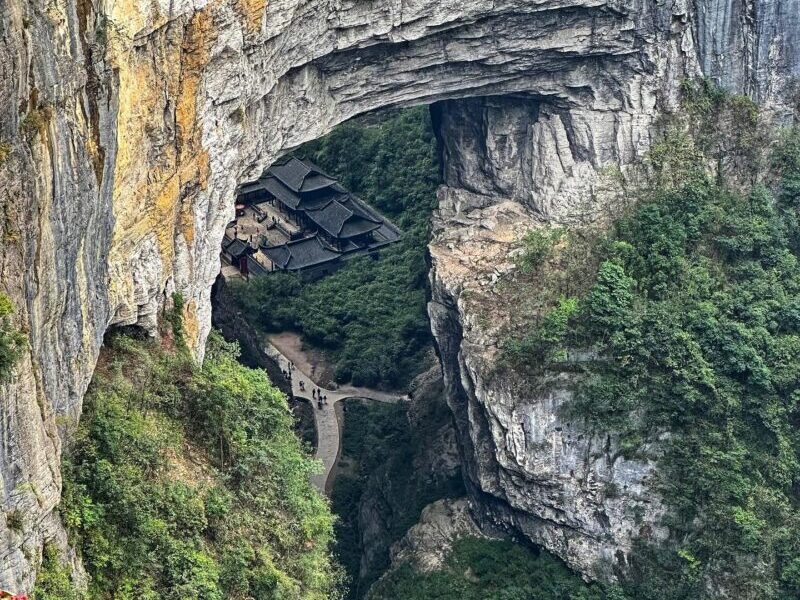
Since we are in group, we decided to travel from Chongqing to Wulong Karst using a small group tour with shuttle included for a more comfortable journey. This arrangement allowed us to focus on having fun without worrying about any of the logistics.
Round Trip Shuttle to Wulong Karst (Three Natural Bridges and Longshuixia Fissure Gorge)
One-day trip to Wulong Karst can cover one to two areas, we managed visit the Three Natural Bridges and Longshuixia Fissure Gorge with the well-planned itinerary.
One Day Wulong Karst itinerary:
- Early depart from Chongqing to Wulong Country at 7:30am
- Arrived at Tourist Center in Xiannv Town
- Three Natural Bridges (3 hours)
- Longshuixia Fissure Gorge (2 hours)
- Back to Chongqing.
Wulong Karst Travel Tips: If you plan to travel to Wulong by public transport, allocate more time for your journey, as transfers are required. If you miss the early train or bus to Wulong County, you may need to focus on exploring just one area.
My Wulong Karst itinerary
My Wulong Karst itinerary started early in the morning at 7:30 AM when we departed from Chongqing City. After roughly a 2.5-hour drive, we arrived at the Tourist Center in Xiannu Town (仙女镇), also known as Fairy Town, located in Wulong County. This is where you can catch the shuttle bus to the various scenic sites.
The entry process to the Wulong Karst Tourist Area is straightforward. Ensure that you purchase your ticket to the scenic spot, as document ID verification is typical for tourist sites in China.
Get the Three Natural Bridges Ticket
The air-conditioned minibuses run constantly between the tourist center and the scenic spots, with each ride taking about 15 minutes over a distance of 3 km. Although it was busy during our visit, everything was well-organized. We had to wait about 10 minutes in line for the minibus to the Three Natural Bridges. There was no wait for the minibus to Longshuixia Gorge, so be sure to board the correct minibus.
Wulong Karst Travel Tips: There are shuttle bus options to reach Three Natural Bridges or Longshuixia Gorge. Be sure to board the correct shuttle bus to the desired travel spot. Clear signs are provided in both English and Chinese to assist you.
Three Natural Bridges
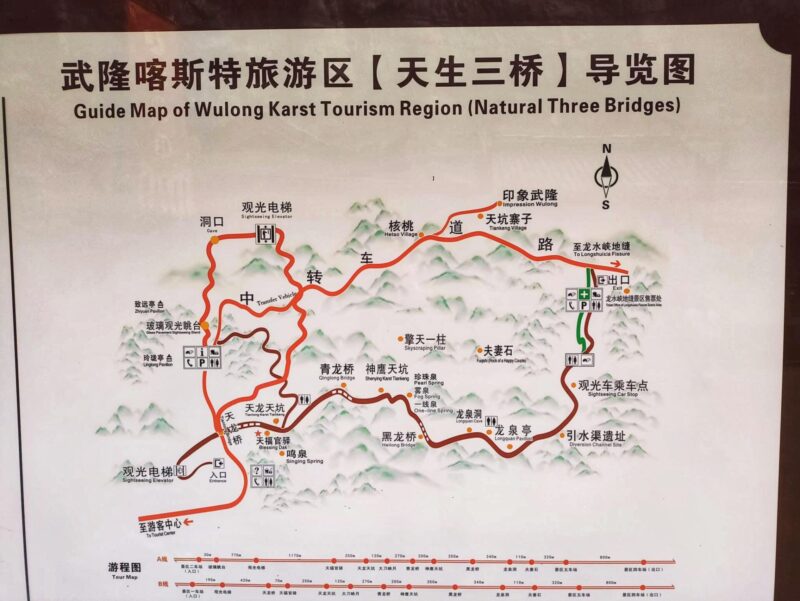
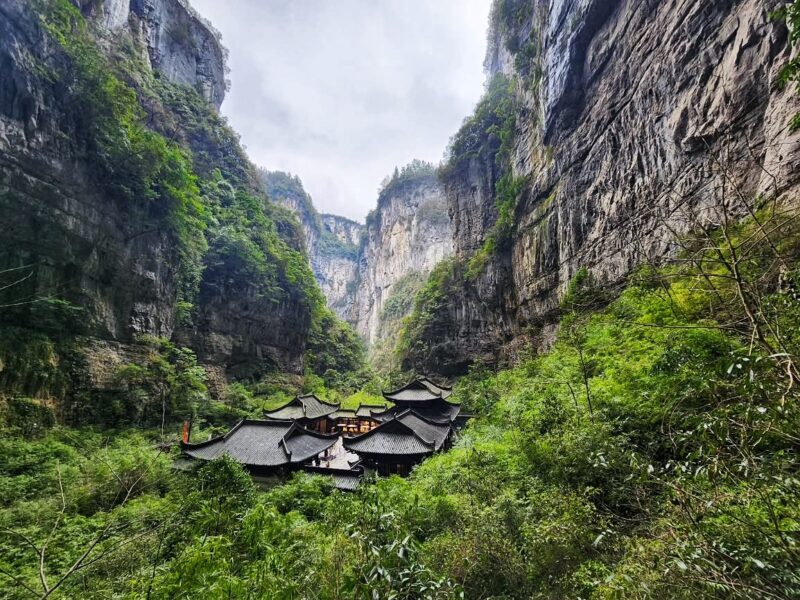
The Three Natural Bidges (天生三桥) is home to three enormous stone arch bridges: Tianlong (Sky Dragon) Bridge, Qinglong (Green Dragon) Bridge, and Heilong (Black Dragon) Bridge. Together, they form the largest group of natural stone bridges in Asia. The stunning beauty of the surrounding gorges and cliffs creates an almost otherworldly atmosphere.
Wulong Karst Lanscape was also used as a filming location for the movie “Transformers IV: Age of Extinction” and Curse of the Golden Flower (满城尽带黄金甲).
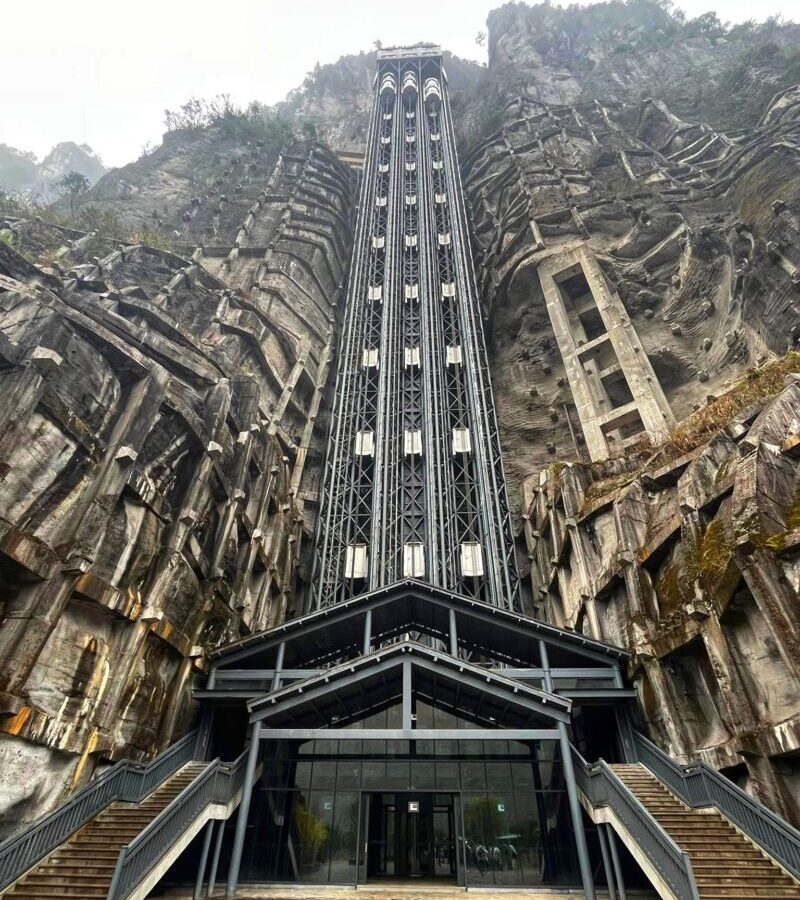
During the morning session, we covered the Tianlong, Qinglong, and Heilong limestone bridges, which took approximately three hours to complete.
Firstly, from the visitor center, a short electric shuttle bus transported us to the start of the scenic area. From there, visitors can choose to descend into the valley either by elevator or along a trail. The walk is quite straightforward and well-signed. It’s important to take your time and explore everything, as it’s truly worth it.
We choose to take the elevator. After being dropped off by the shuttle bus, we walked approximately 150 meters to the entrance of the elevator. The view of the elevator was impressive as we approached. There was a line for the elevator, which took us about an hour to get through. The elevator then took us down to the tiankeng at the bottom of the valley, which is also starting point of the Three Natural Bridges walking route.
Sky Dragon Bridge
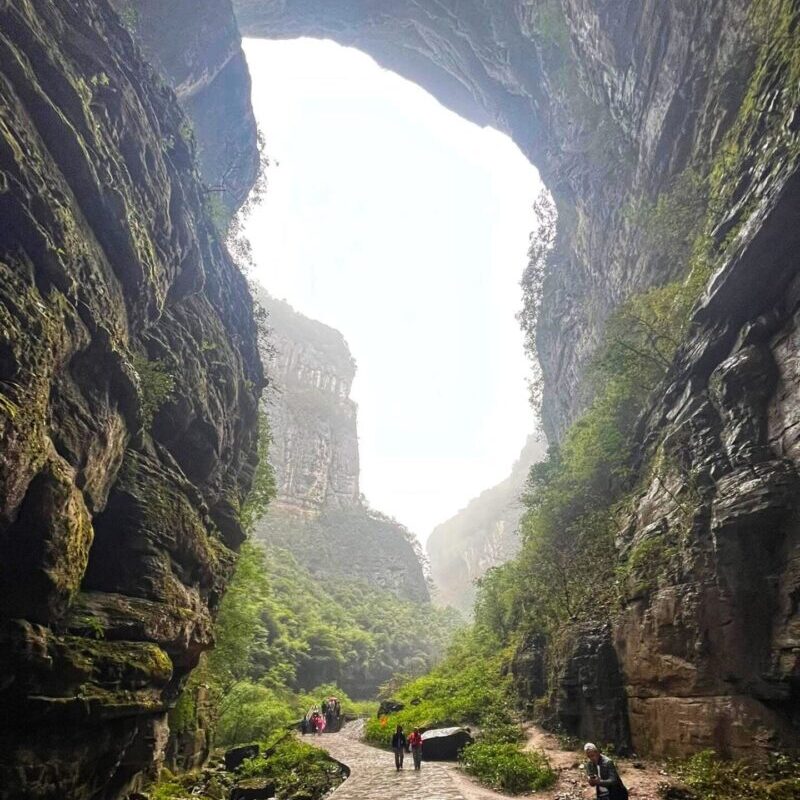
Tianlong Bridge, also known as Sky Dragon Bridge (天龙桥), is the first arch you will encounter. It spans 235 meters in width and stands 147 meters high. The elevator takes you right in front of the bridge, and you will need to take the steps down through it to reach the lowest level.
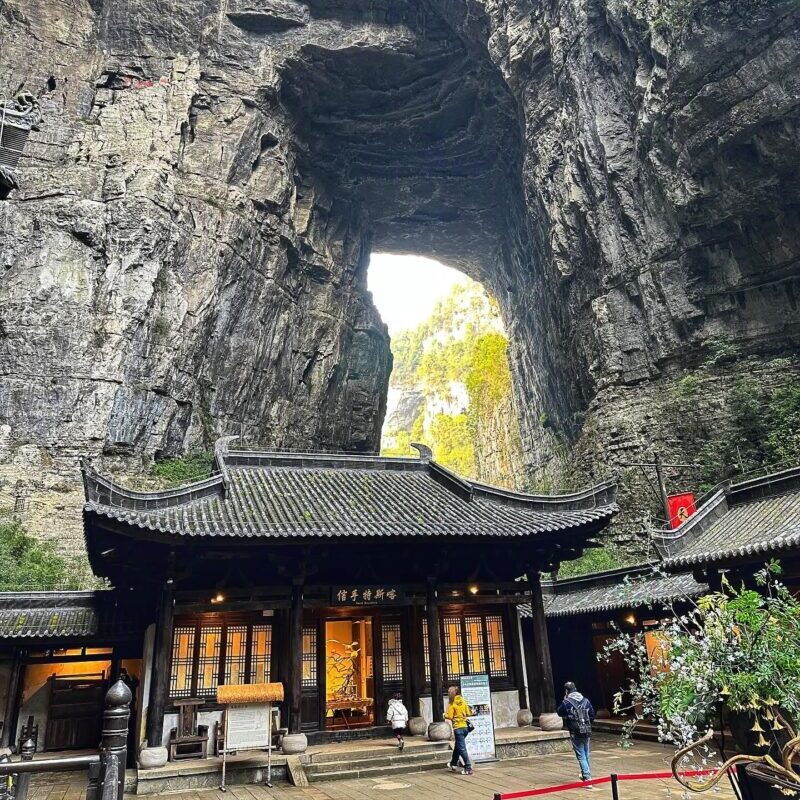
As you descend, you’ll encounter the roof of the Tianfu Postal House (天福官). This Tang dynasty building, originally constructed in the 7th century, was rebuilt in 2007 and features a moss-covered roof that is overshadowed by the majestic cliffs surrounding it.
From the vantage point, you can capture a panoramic photo with the entire rectangular shape of Sky Dragon Bridge. A perfect spot for stunning photographs from strategically positioned platforms.
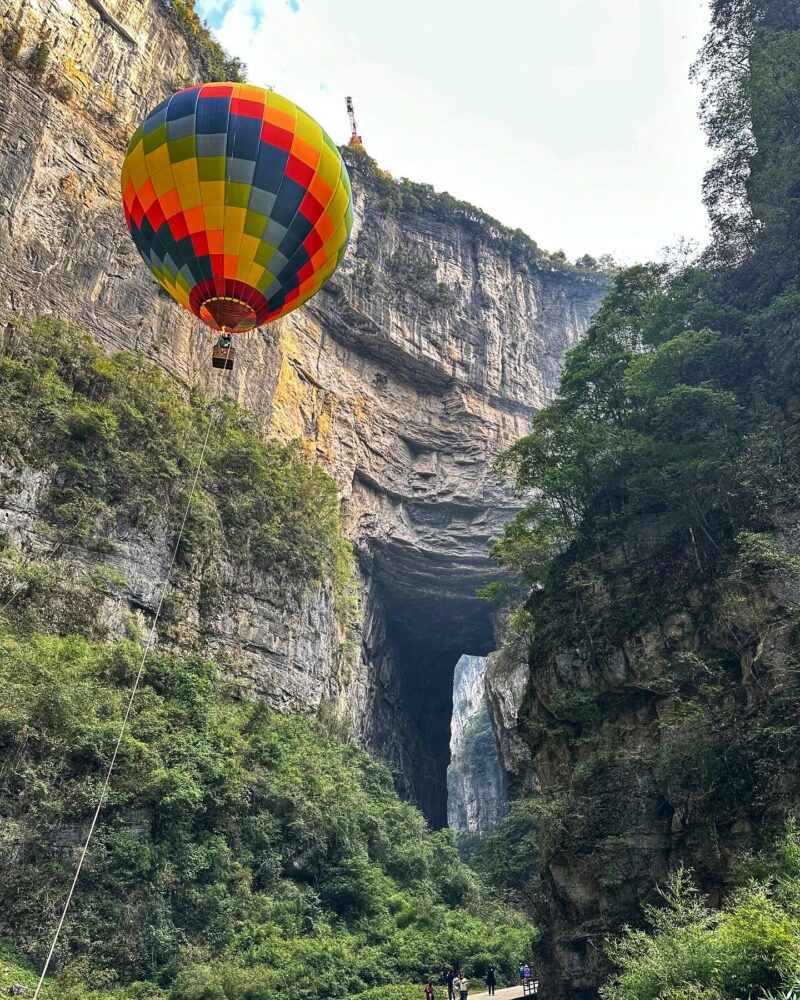
Next, you will pass through a giant sinkhole known as Sky Dragon Sinkhole, or Tianlong Karst Tiankeng (天龙天坑). The surface area of Sky Dragon Sinkhole is approximately 19 hectares. You can stand amidst the towering cliffs for an extended period, marveling at how these landscapes were formed over millions of years.
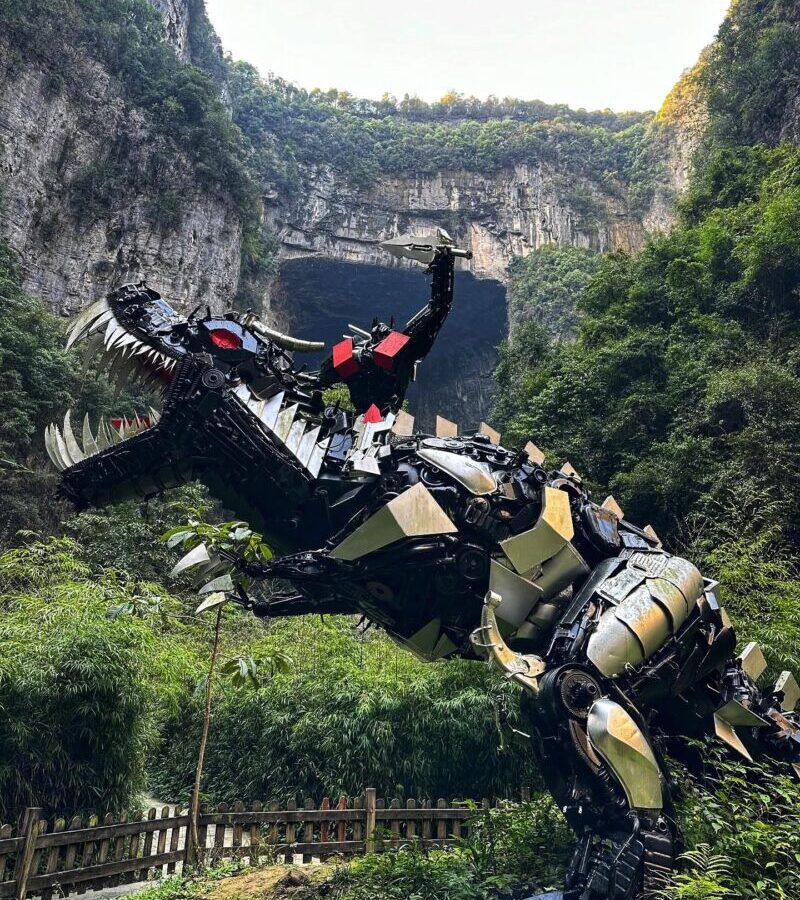
Additionally, “Transformers: Age of Extinction” was filmed at Wulong Karst National Geology Park. See the statues of the characters within the park’s complex!
Green Dragon Bridge
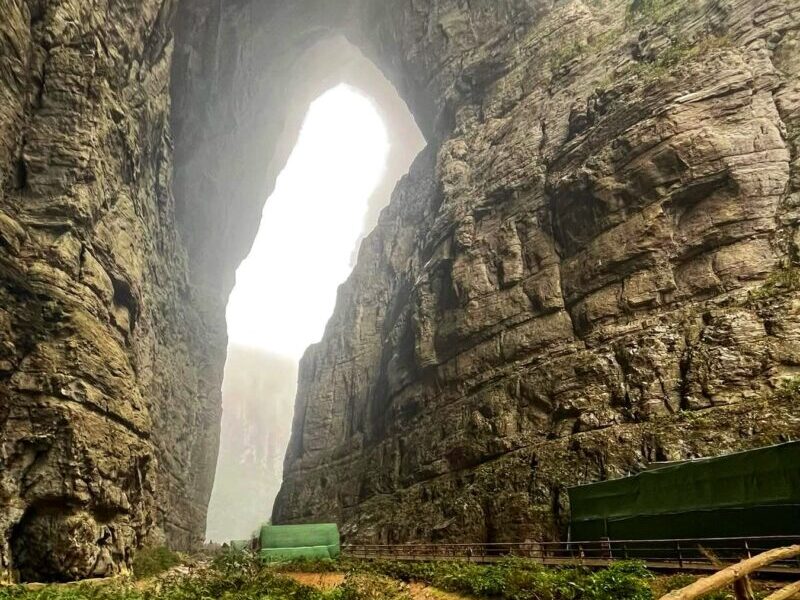
The second arch is the Qinglong Bridge, also known as Green Dragon Bridge (青龙桥). It stands 281 meters tall and is 124 meters wide. This bridge features a narrow base that widens toward the top. The shape of the arch resembles the blade of a sword.
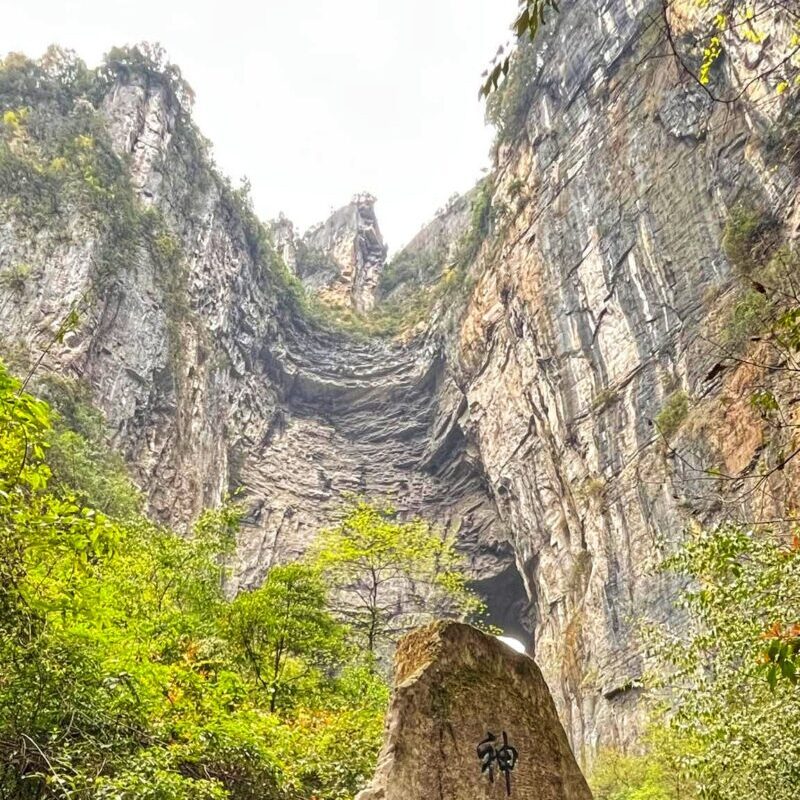
Another marvelous view – Wulong Shenying Tiankeng (神鹰天坑).
Black Dragon Bridge
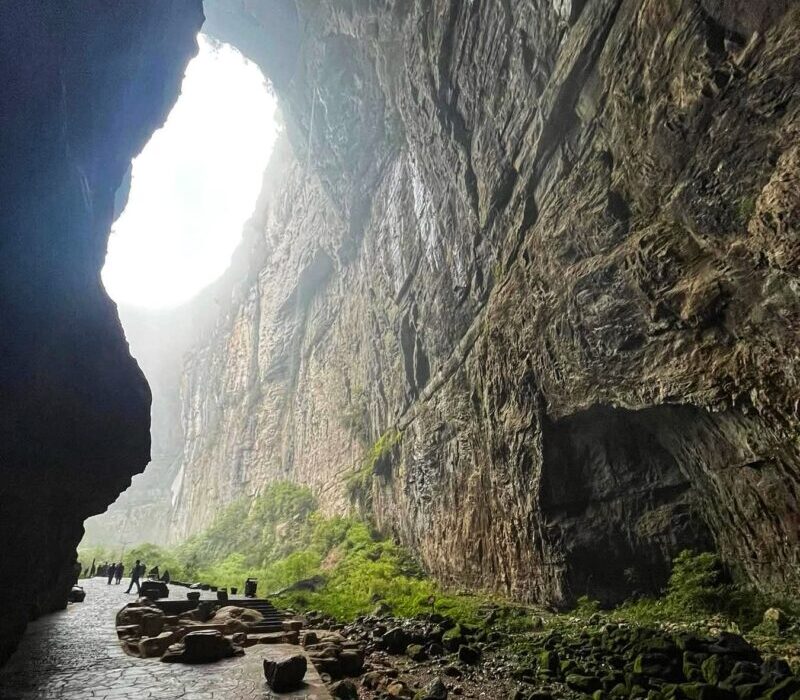
Next is the Heilong Bridge, or Black Dragon Bridge (黑龙桥), which is the final natural bridge in the area. It has a height of 223 meters and a width of 193 meters. This bridge offers a grand finale experience, as its narrow entrance and long. The curved shape create a dark and mysterious atmosphere compared to the first two bridges.
Notably, Black Dragon Bridge boasts the highest average arch rise at 116 meters and is famous for the waterfalls that spray out of the karst walls.
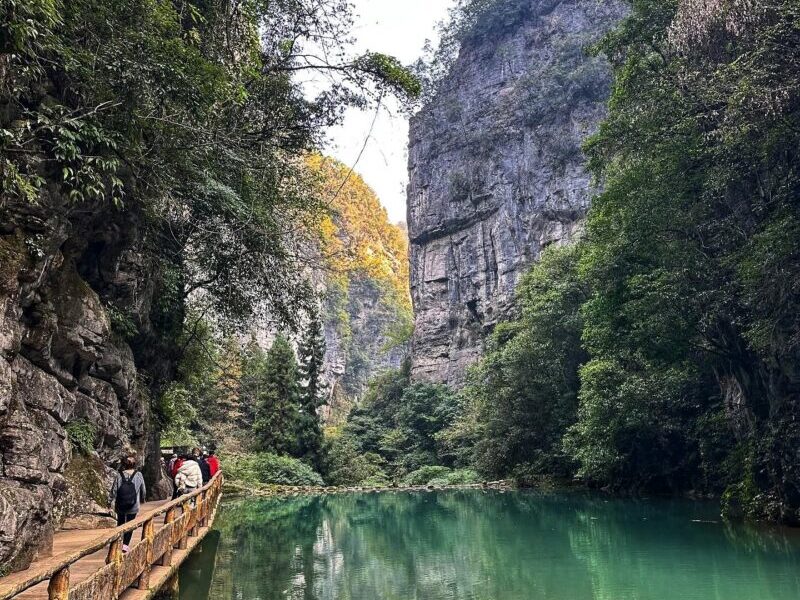
After passing Heilong Bridge, it’s a short walk along the river towards the end of the Three Natural Bridge Scenic Area. You’ll encounter a few more streams and waterfalls as the gorge narrows. The view is truly breathtaking!
After finishing at the Wulong Three Natural Bridge area, continue by taking the electric shuttle bus back to the tourist center, or proceed to the Longshuixia Fissure Gorge.
Longshuixia Fissure Gorge
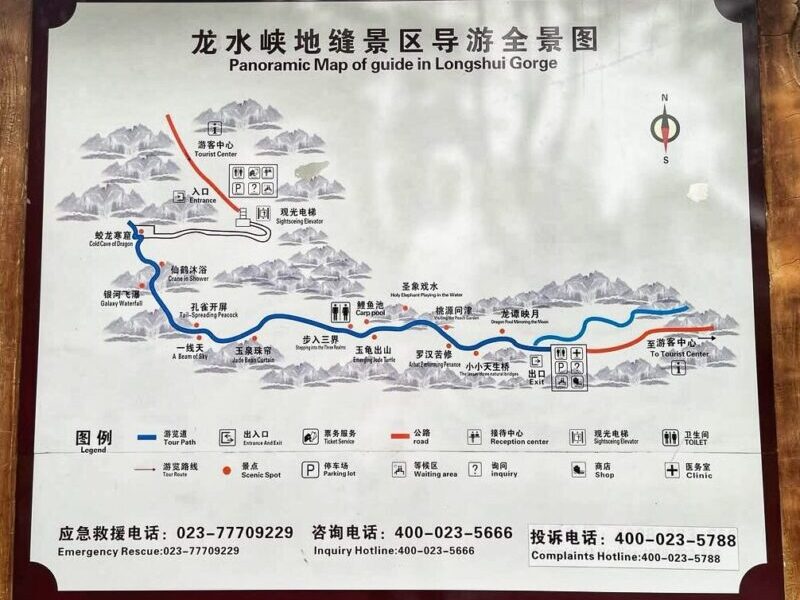
After a quick lunch, we continued our Wulong Karst itinerary to the Longshuixia Fissure Gorge. This section took us about two hours to complete.
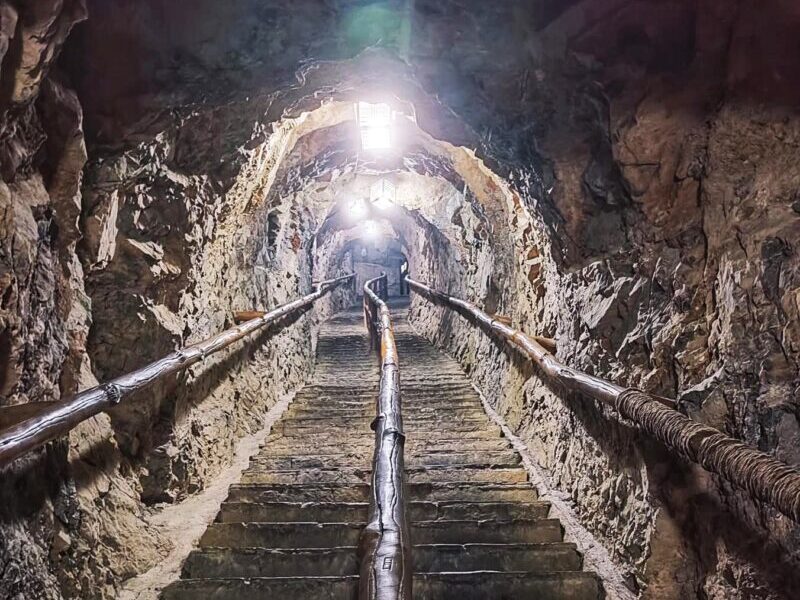
We exited the Three Natural Bridges area and boarded the electric shuttle bus that took us to the scenic area. Walked through the tunnel and we finally reach the gorge walkway.
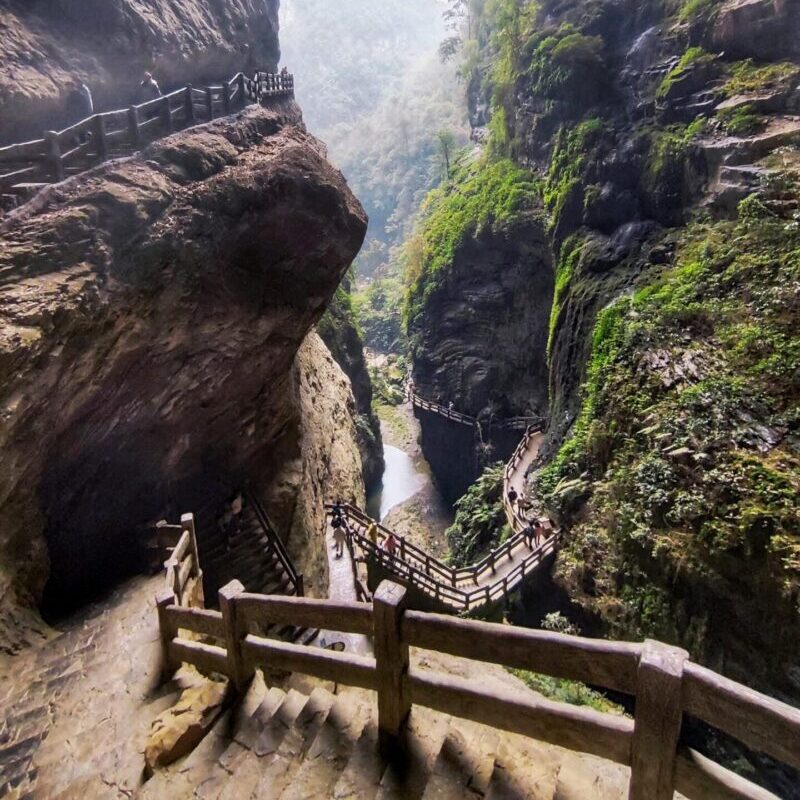
The Longshuixia Fissure Gorge (龙水峡地缝) was formed by geological processes thousands of years ago. This deep gorge features a walkway that stretches for 5 kilometers and ranges from 200 to 500 meters in depth. It is situated about 100 meters above the ground, and in some areas, the gorge narrows to only 1 to 2 meters wide.
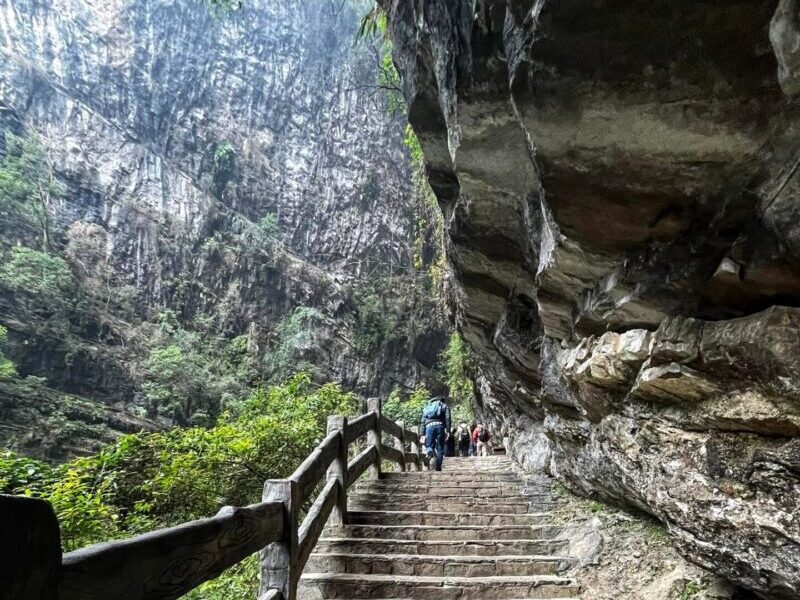
We began our walk along a winding wooden plank road built into the cliff walls, which was brilliantly constructed. The towering rock formations above us and the river below were breathtaking sights.
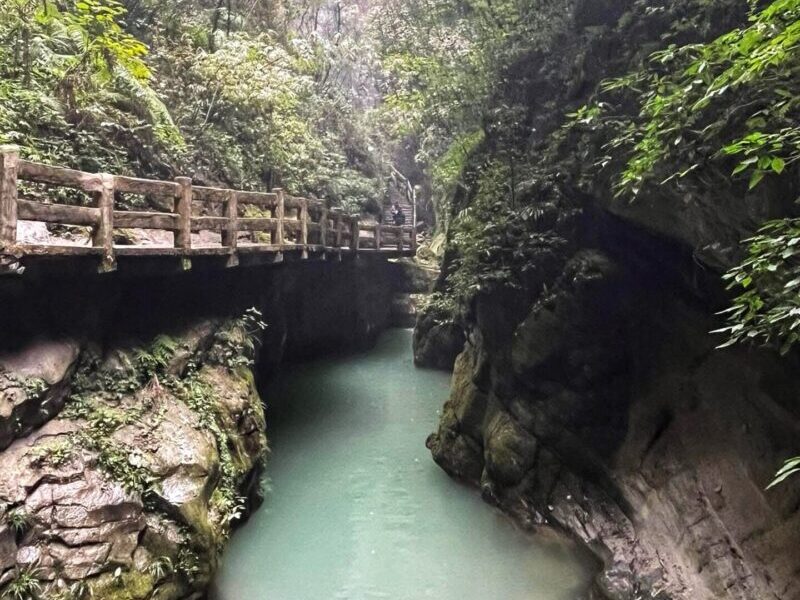
Sunlight filtered through narrow gaps above, creating dynamic spots of light on the valley floor. The natural beauty of this place was truly astonishing.
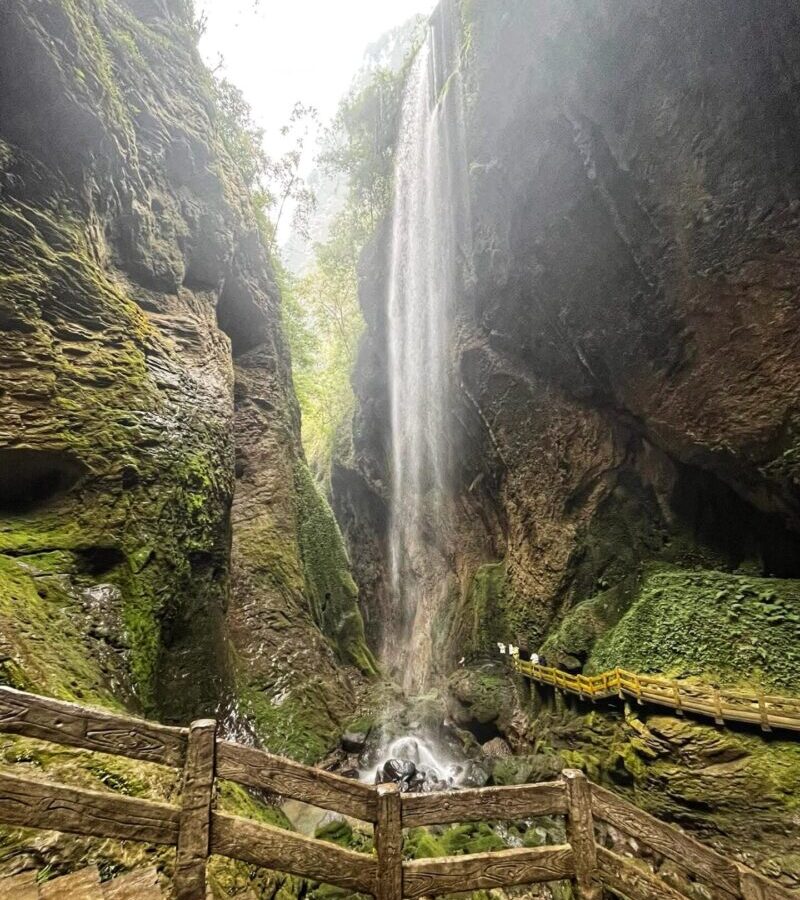
At one point during our tour, we encountered a waterfall with clear blue waters.
Our Final Wulong Karst Travel Guide Tips
If you love nature, the Wulong Karst Landscape Area is a must-visit side trip from Chongqing. The views are truly stunning! To help you prepare for your visit, here are some quick travel tips for Wulong Karst:
Travel Time: The Wulong Karst National Park is about a 2.5-hour drive (150 kilometers) from Chongqing. We recommend leaving Chongqing early in the morning at 7:00-7:30 AM to make the most of your day trip.
Best Time to Visit: Wulong Karst is accessible year-round, but for a more enjoyable experience, it’s best to avoid weekends, national holidays, and the summer season when local tourists arrive in large numbers.
Tickets: If you are traveling from outside of China, remember to pre-book your entry tickets (we used Trip.com). Purchase your tickets online in advance, and ensure to have your passport for validation at the entrance for seamless access.
Purchase the Ticket to Wulong Karst National Geology Park
Walking Paths: The park is designed with easy walking paths; like many parks in China, it has good tourism infrastructure, including steps and paved wooden walkways.
Physical Preparation: Be prepared to walk down and up thousands of steps. This can be challenging for older visitors or those who aren’t accustomed to uphill walking. Make sure to wear comfortable shoes.
Attractions: A day trip typically allows you to visit only one or two attractions in Wulong Karst National Geology Park. To see several main attractions, you’ll need more time, and even more time to explore the entire park.
Dress Appropriately: The temperature in Wulong Karst National Park is about 5 degrees cooler than in Chongqing, so be sure to dress accordingly.
Last and but not least, make sure to enjoy your visit to this breathtaking destination!
Overall: A Visit to Wulong Karst
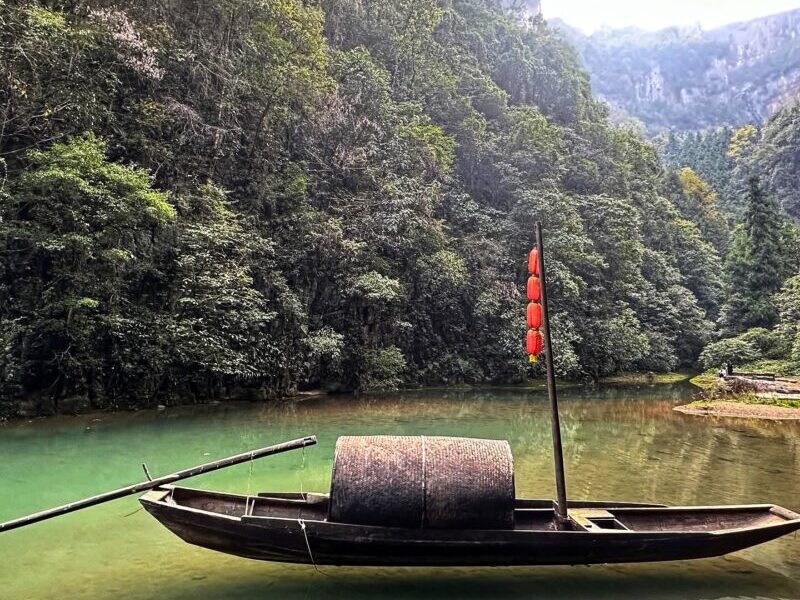
Overall, the natural wonders of Wulong Karst National Geology Park make it an excellent day trip in the area. The Three Natural Bridges and Longshuixia Fissure Gorge are sights that truly take your breath away. Words can’t fully capture their beauty, so we highly recommend including this incredible Wulong Karst itinerary fpr your visit to Chongqing.
Additionally, this Wulong Karst itinerary is part of our Chongqing travel blog. If you need more travel information, feel free to check out our blog linked below.
- 3 to 5 Days Chongqing Itinerary: A Travel Guide Blog
- Where To Stay in Chongqing: Best Areas and Hotels
- Longmenhao and Xiahaoli Old Street Travel Guide Blog
If you want to get more inspiration on how to plan your travel to Chengdu, be sure to check out our travel blog below:
- Chengdu Itinerary: A Travel Guide Blog for First-Timer
- Where To Stay in Chengdu: Best Areas and Hotels
- Chengdu Hotel Review: Nostalgia Hotel Kuanzhai Alley Chengdu
- Chengdu Hotel Review: Mercure Chengdu ChunXi Taikoo Li Hotel
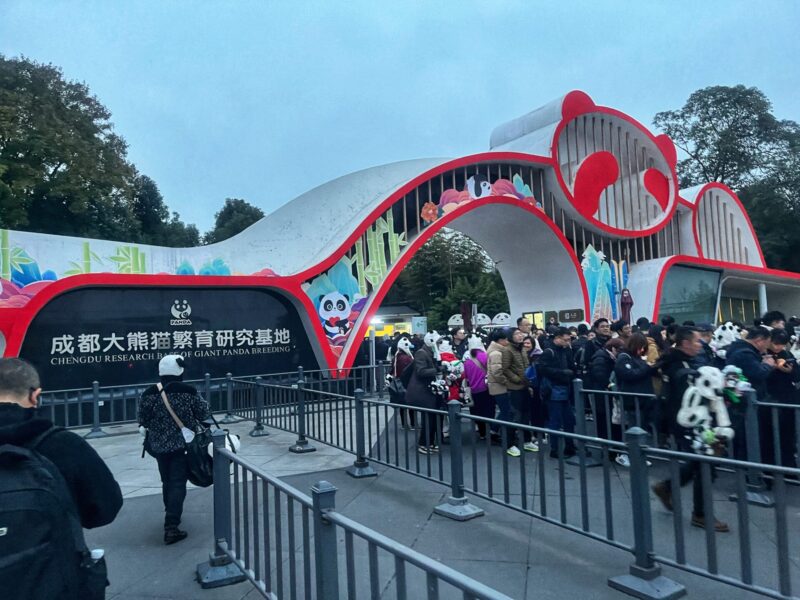
- Trip to Chengdu Research Base of Giant Panda Breeding (Xiongmao Jidi)
- Chengdu Food Guide: Where and What to Eat in Chengdu
Planning to visit Sichuan? Please feel free to continue read below Sichuan travel blog posts:
- How To Plan Your 7-Days Sichuan Itinerary
- Mount Siguniang Itinerary: A Travel Guide Blog
- Bipenggou Itinerary: A Travel Guide Blog
- Dagu Glacier Itinerary: A Travel Guide blog
- Jiuzhaigou Itinerary: A Travel Guide Blog
- Jiuzhaigou Orange Hotel Review (Jiuzhaigou Scenic Area)
- Huanglong Itinerary: A Travel Guide Blog
Traveling Xi’An and looking for inspiration? Read more our Xi’an travel stories.