Last updated on May 15th, 2026
Plan your Chengdu trip with this 5 to 7-day itinerary. It includes all the best attractions, places, temples, foods, and more for a comprehensive Chengdu itinerary!
Chengdu (成都 Chéngdū), the capital city of Sichuan Province in China, is a popular tourist destination that offers a wide variety of activities for every type of traveler.
For food lovers, Chengdu is famous for its spicy hotpot, so be sure to indulge in some culinary adventures while you’re there. If you’re a fan of adorable giant pandas, you can meet them up close and personal. Additionally, you can stroll through the historic Kuanzhai Alley to immerse yourself in the city’s rich culture and history. Be sure to visit Jinli Old Street and take a trip to see the Leshan Giant Buddha statue. There’s so much to experience in this wonderful city! With all that Chengdu has to offer, I recommend spending at least three days in the city, along with a few extra days to explore the outskirts.
In this Chengdu travel guide blog, I’ve outlined everything you need to know to create your perfect Chengdu itinerary. This Chengdu itinerary highlights the main attractions that everyone should visit in Chengdu city and also explores additional options for your extra days based on your preferences.
How To Get to Chengdu
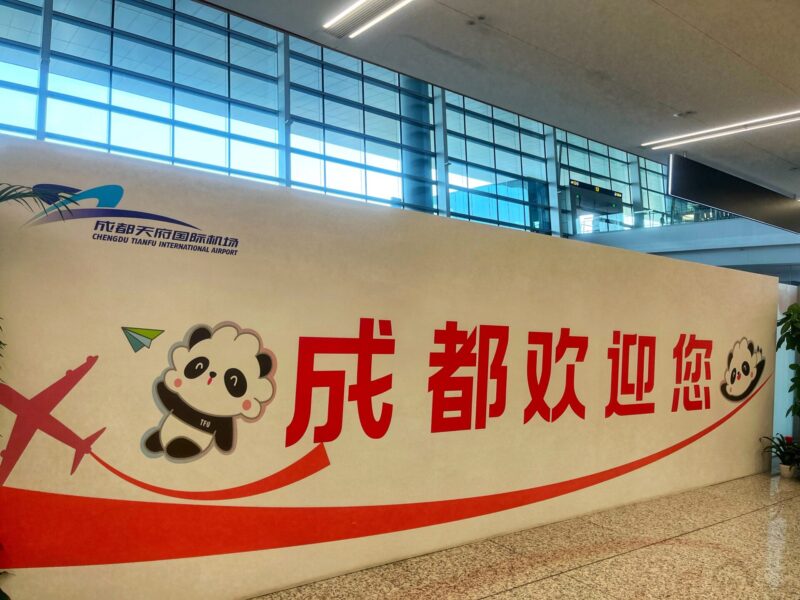
Chengdu is a well-known transportation hub and tourist destination, boasting extensive travel options. Here are a few ways to get to Chengdu:
By Plane – International travelers often choose to fly to Chengdu.
The city has two major airports: Chengdu Shuangliu International Airport (成都双流国际机场, CTU), which is approximately 16 kilometers from downtown Chengdu, and Chengdu Tianfu International Airport (成都天府国际机场, TFU), located about 51 kilometers away from the city center.
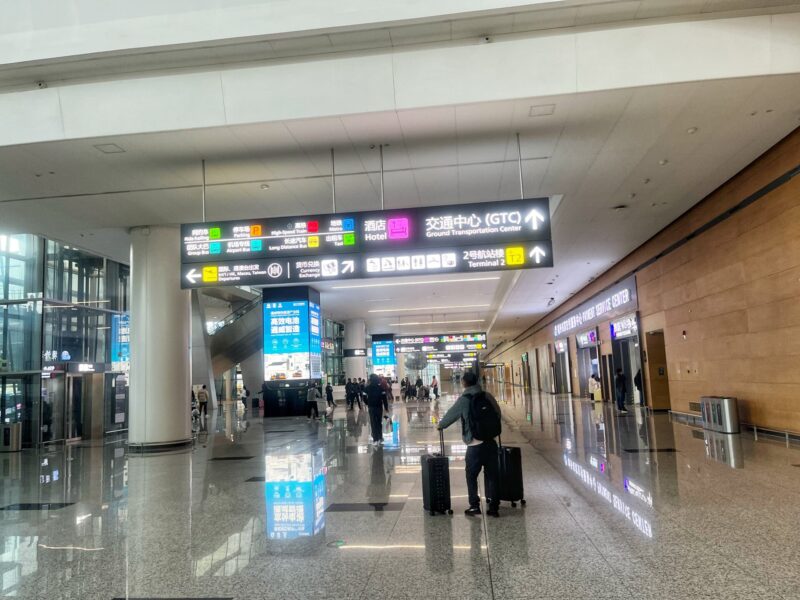
Upon arrival, it’s easy to reach downtown Chengdu using various transportation methods, including train, bus, taxi, e-hailing services, or private transfers. It’s advisable to book your airport transfer in advance when you arrive in Chengdu airport.
Chengdu Private Airport Transfer to Hotel
By High-Speed Bullet Train – Chengdu is well-connected by excellent train services from across China, featuring many high-speed bullet trains. Travelers can easily reach Chengdu from nearby cities such as Xian (4hrs), Chongqing (2hrs), Guilin (6hrs), and Kunming (6hrs), as well as from more distant destinations.
Getting Around in Chengdu
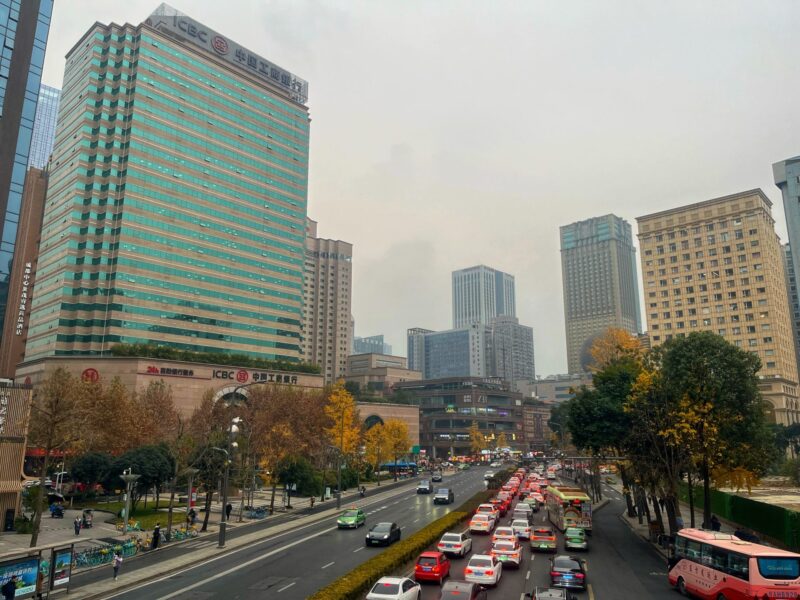
Chengdu is a very tourist-friendly city, and one of the main reasons for this is the ease of getting around. Here are your transportation options:
- By Metro – The metro is one of the easiest ways to explore Chengdu. It is the most convenient method: safe, clean, and efficient. Trains run frequently, and there are numerous stations close to most tourist attractions
- By Bus – Buses in Chengdu are a decent way to travel. Many attractions, especially in urban areas, have direct bus service, making this option quite convenient.
- By Ride hailing (Didi) – This is my favorite option! I used Didi for most of my travel in Chengdu, as I preferred not to walk or deal with public transport. The rates are very reasonable and affordable, although traffic can be congested during rush hours.
- By Taxi – Taxis can be easily hailed throughout the city and at popular tourist spots. They are a good alternative if you prefer not to use Didi. However, most drivers primarily speak Chinese. Be sure to provide the exact location when communicating with the drivers.
Best Place to Stay in Chengdu
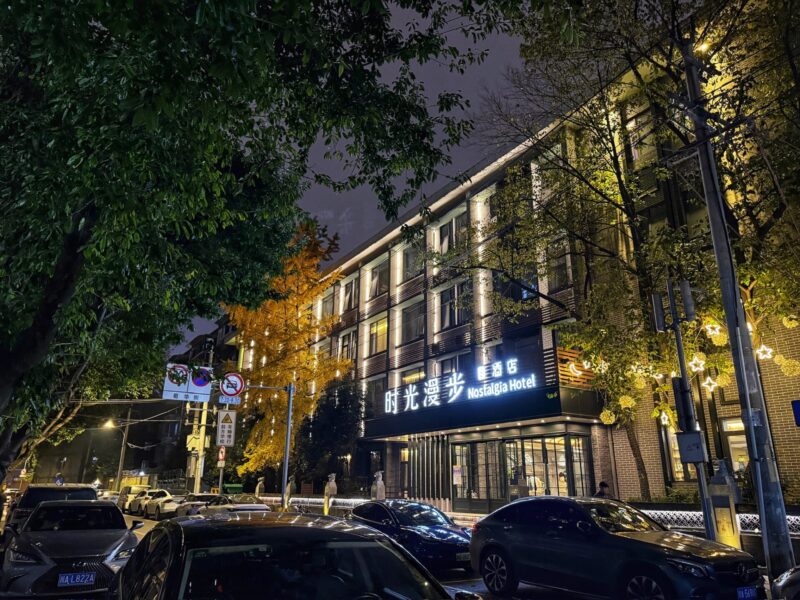
In Chengdu, you can find a wide variety of hotels, from international brands to boutique styles, ensuring a comfortable stay.
First-time visitors are strongly advised to stay in the downtown area, particularly in areas such as Kuanzhai Valley, Chunxi Road, and Taikoo Li. These areas offer convenient access to shopping malls, excellent restaurants, and metro stations, all within walking distance. Here is our recommendation.
Mercure Chengdu Chunxi Taikoo Li is a popular choice for accommodations in Chengdu. The property is conveniently located near the vibrant Chunxi Road and Taikoo Li, two of the city’s most favored spots for shopping, dining, and entertainment.
The Ibis Hotel Chengdu Taikoo Li Chunxi Road is a mid-range option located right next to the Hotel Mercure ChunXi Road. The hotel is within walking distance of Cheng Xi Lu and IFS, making it easy to explore the area.
Nostalgia Hotel KuanZhai Alley ChengDu – The location is conveniently within walking distance of KuanZhai Valley and People’s Park. The room was a bit small but beautifully decorated and clean. The staff is very friendly, polite, and helpful.
For more detail Chengdu accommodation, read here: Where to Stay in Chengdu.
How To Plan Chengdu Itinerary
This Chengdu itinerary is based on my personal experiences visiting the city. I’ve traveled to Chengdu several times and have fallen in love with this amazing place. There are countless wonderful attractions, both in and around Chengdu, ensuring that you’ll never run out of things to do during your visit.
Below, I’ve listed some of the most beautiful and famous places you should definitely visit in Chengdu, organized in the most efficient order.
Planning for Chengdu itinerary:
- Day 1: Arrived Chengdu. Check-in hotel. Wuhou Memorial Temple and explore Jinli Street.
- Day 2: Chengdu Cultural City Walk – People’s Park, Kuanzhai Valley, Wenshu Yuan Monastery.
- Day 3: Giant Panda Breeding Research Base (Xiongmao Jidi), Dongjiao Jiyi
- Day 4 – 6: Side Trip to Chengdu Outskirts (Customized based on personal interest, suggest to SanXingDui, DujiangYan, LeShan Giant Buddha, Jiuzhaigou Valley, and many more)
- Day 7: Chengdu Modern City Walk – ChunXi Road and TaiKoo Li, Daci Temple.
Lastly, say goodbye to Chengdu!
Note that this Chengdu itinerary covers the main attractions in Chengdu city area to helps you avoid unnecessary backtracking around the city. But no Chengdu itinerary would be complete without exploring some of the out-of-city attractions. You can mix and match the itinerary with few outskirts options based on your interest for your visit!
Day 1: Arrived Chengdu. Wuhou Memorial Temple and Jinli
We arrived in Chengdu around late noon and took a Didi e-hailing service from the airport to our hotel. It was very convenient; all you need to do is download the app. There are several transport options available for traveling between the airport and the city center.
The Chengdu Private airport transfers – Shuangliu Airport (CTU) or Chengdu Tianfu Airport (TFU) are quite affordable and can be easily reserved online. Be cautious, as many drivers offering rides at the airport may be operating unlawfully. Alternatively, you can use the e-hailing service Didi, but be prepared to go to the designated pick-up area and wait for a short period.
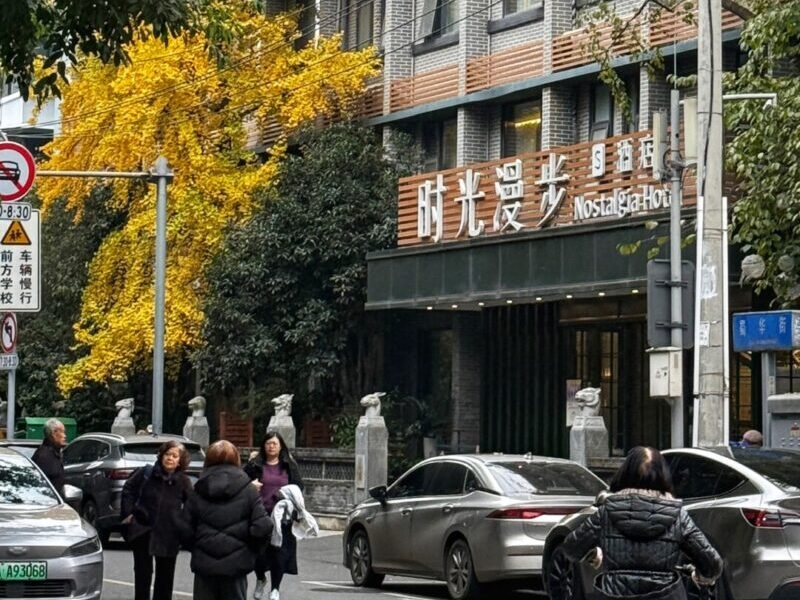
After checking into our hotel, Nostalgia Hotel (Kuanzhai Alley), we took some time to rest before heading out to explore. This hotel is the coolest and coziest place I’ve ever stayed in China. We absolutely loved our experience in Chengdu. Our stay was incredibly comfortable, and the management was well-organized. The staff were sweet, friendly, and always ready to help.
The location is conveniently situated just a 5-minute walk from Kuanzhai Valley. On the first day, you can choose to explore Kuanzhai Valley. However, we opted to visit Jinli and Wuhou Temple since we still had some time in our Chengdu itinerary.
Wuhou Memorial Temple
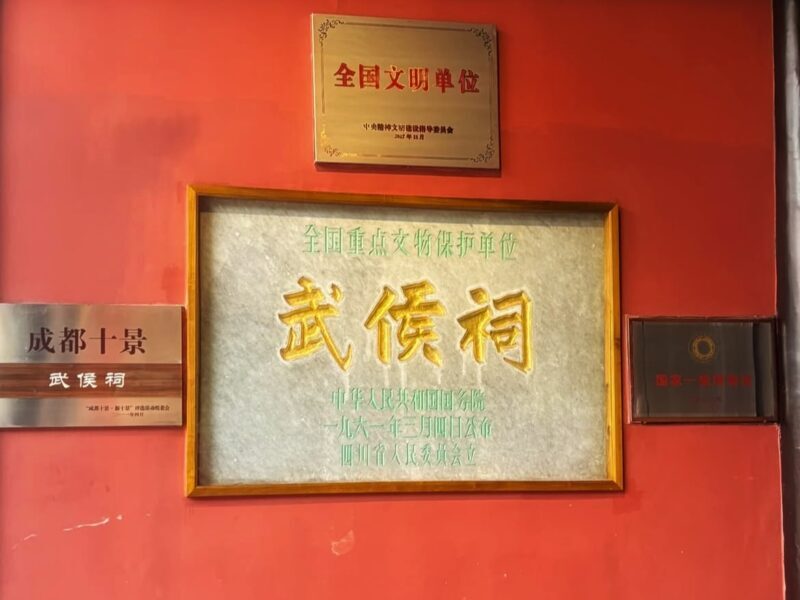
If you’re a fan of China’s history, especially the Three Kingdoms period, be sure to visit the Wuhou Memorial Temple (武侯祠). It’s conveniently located next to Jinli Street, making it a great way to spend a few hours in Chengdu.
Our first stop was the Wuhou Memorial Temple, which was not too far from our hotel. We used Didi, an e-hailing service, and it was very convenient.
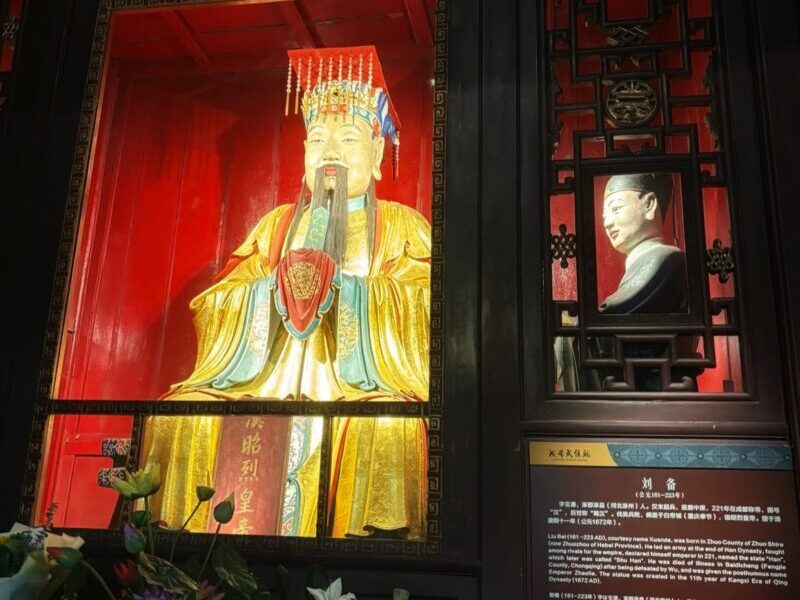
The Wuhou Memorial Temple honors Liu Bei and his chancellor, Zhuge Liang, two significant figures from the Three Kingdoms era. The temple is rich in history and features statues, as well as the tomb of Liu Bei, where the past truly comes to life. History enthusiasts will find this site particularly captivating.
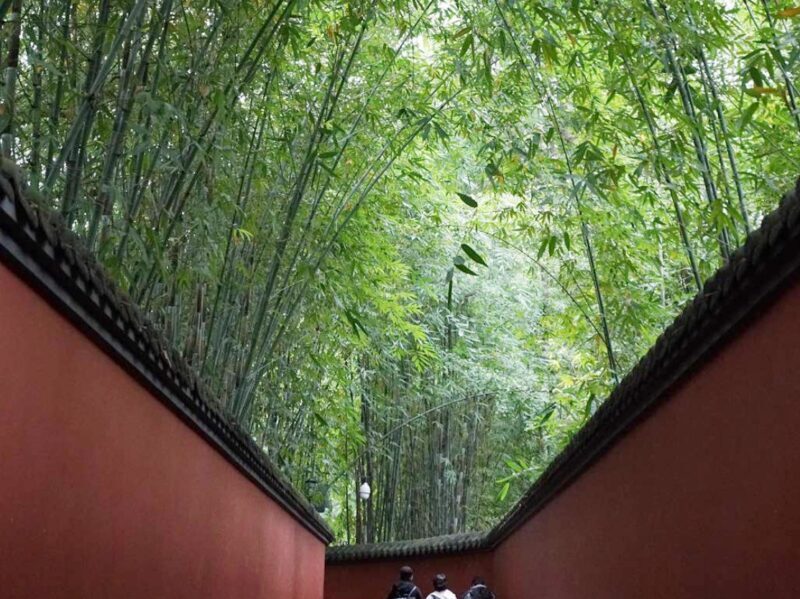
One of the most popular spots for photography at Wuhou Temple is the famous red wall corridor lined with bamboo. If you’re not particularly interested in history, you might choose to skip this site and spend most of your time enjoying Jinli Street instead.
Wuhou Memorial Temple (武侯祠)
Opening Hours: 8:00-18:30 (November – April); 8:00-20:00 (May – October)
Address: No.231 Wuhou Temple Street, Chengdu
Admission Fee: 50 RMB per person
Recommended Visiting Time: 2 hours
Jinli Pedestrian Street
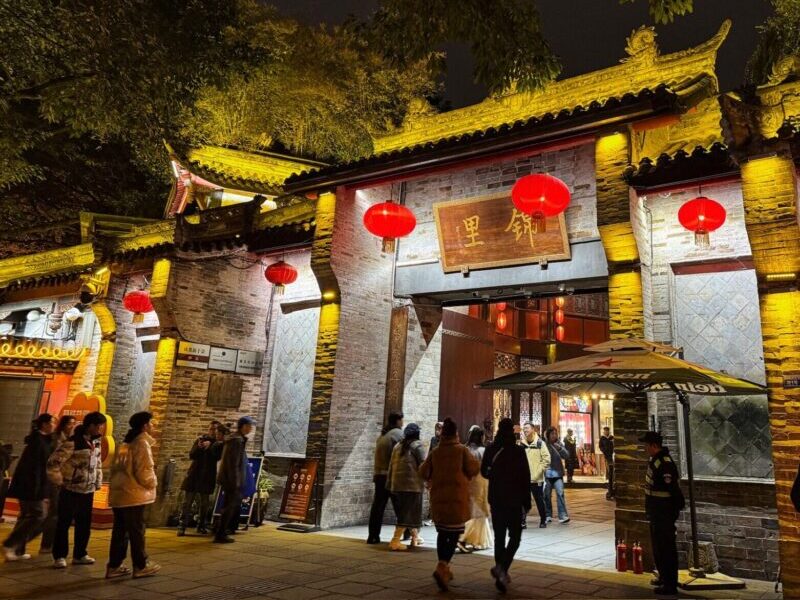
After visiting Wuhou Temple, we conveniently exited to Jinli Street.
Jinli Pedestrian Street(锦里) is a vibrant area filled with local culture and delicious food. As we walked along the narrow lanes and bridges, we admired the ancient building structures and historical shops and teahouses. All these make feeling transported to a memory lane of ancient China, despite its slightly touristy atmosphere.
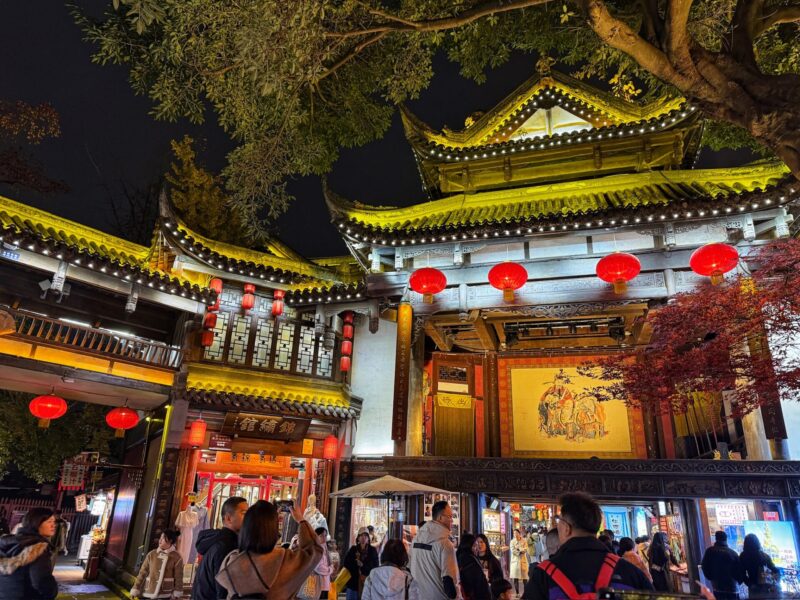
The Jinli Pedestrian Street is compact, making it easy to explore the many varieties of shops, which adds to the relaxing experience of browsing.
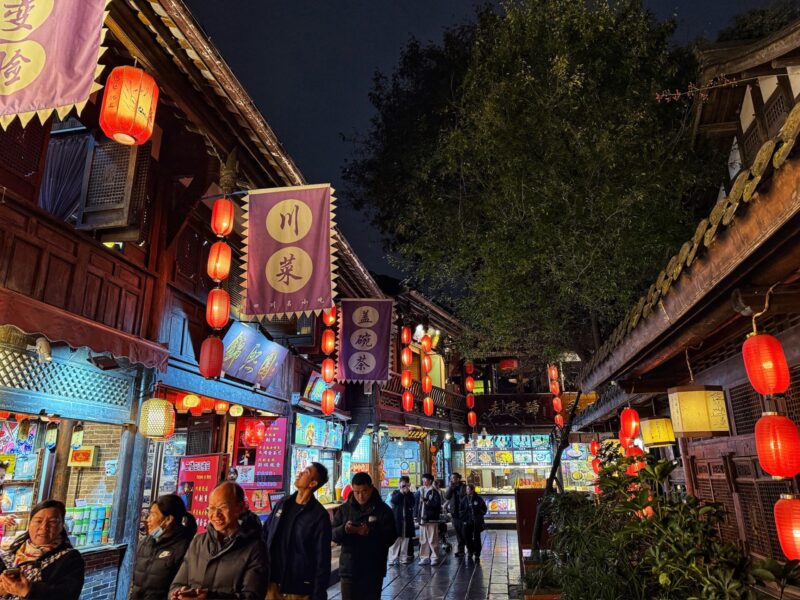
Numerous eateries, restaurants, and food booths offer local and international cuisine, leaving us spoiled for choice. Additionally, many shops sell souvenirs, regional delicacies, arts, and handicrafts.
There is also an open-air teahouse where you can enjoy live performances from 2 PM to 8 PM while relaxing under the trees and the clear blue sky. We saw an array of snacks arranged attractively to entice buyers.
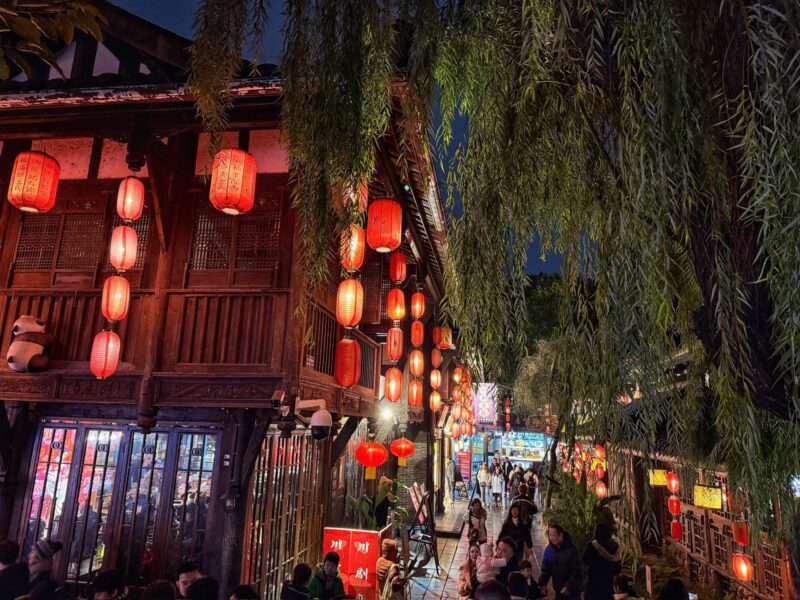
If you visit in the nigh, the area is beautifully illuminated by red lanterns along the walkways and bridges. The crowds, noises, aromas, colorful signs, all create a lively atmosphere. While the shops are somewhat touristy and can be pricey, Jinli Street is worth a visit.
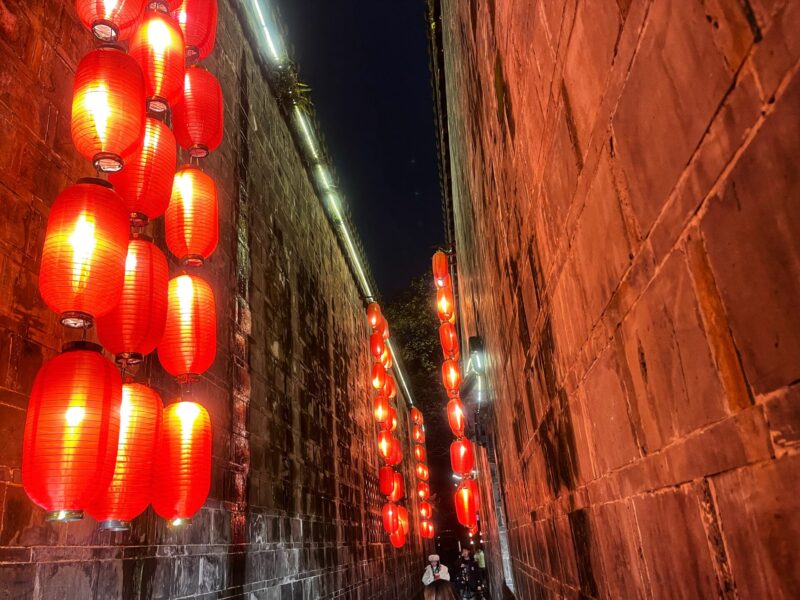
Taking the popular photography spots at Jinli, Chengdu. After exploring Jinli Street, we walked to Qin Shan Zhai restaurant for a delicious dinner.
Jinli Pedestrian Street(锦里)
Opening Hours: Always open. But most restaurants and snack bars will closed at 22:00.
Address: No.231 Wuhouci Street, Wuhou District, Chengdu.
Admission Fee: Free!
Recommended Visiting Time: 2-3 hours.
Day 2: People’s Park, Kuanzhai Valley, Wenshu Yuan Monastery
The Qingyang District of Chengdu is a cultural hub that should not be missed. We recommend visiting People’s Park, Kuanzhai Alley, and Wenshu Yuan Monastery to gain insight into local life and the cultural aspects of Chengdu. Most attractions can be accessed via public transport or the Didi ride-hailing service. Be prepared to walk within the park and the old temple area, as you can easily spend hours exploring the various sites.
People’s Park
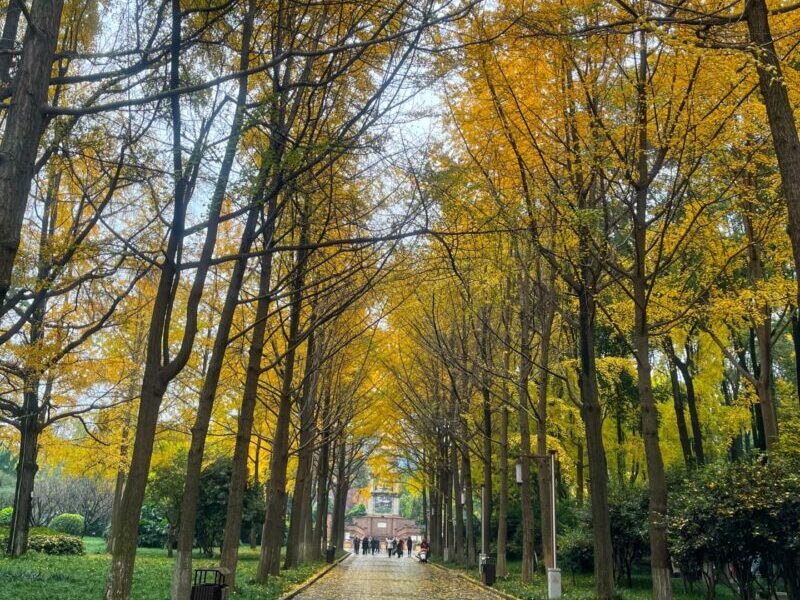
Chengdu People’s Park (人民公园), also known as Renmin Park, offers a refreshing escape from the hustle and bustle of modern life. It’s a perfect spot for both locals and visitors to slow down, unwind, and experience the essence of daily life in Chengdu.
The park is filled with numerous trees, beautiful flowers, and serene lake.
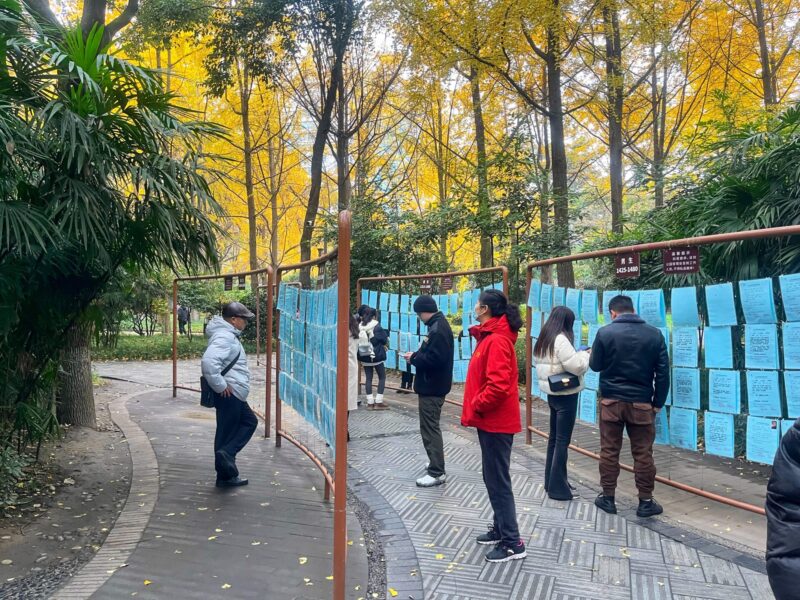
One interesting feature we discovered was the Matchmaking section, where parents of unmarried sons and daughters meet to exchange their children’s details in hopes of finding a suitable match.
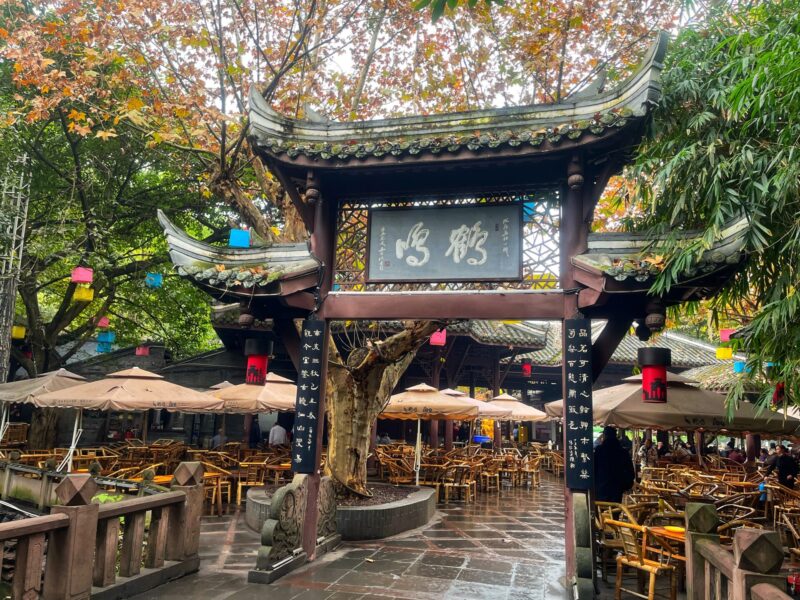
A must-visit within the Chengdu People’s Park is the HeMing Teahouse (鹤鸣茶社), which has been in operation since 1923. The ambiance has remained largely unchanged over the years, providing a lovely experience in Chengdu.
For the best views of the park, choose a table by the lake. The staff will provide a menu, or you can scan a QR code to order tea and snacks.
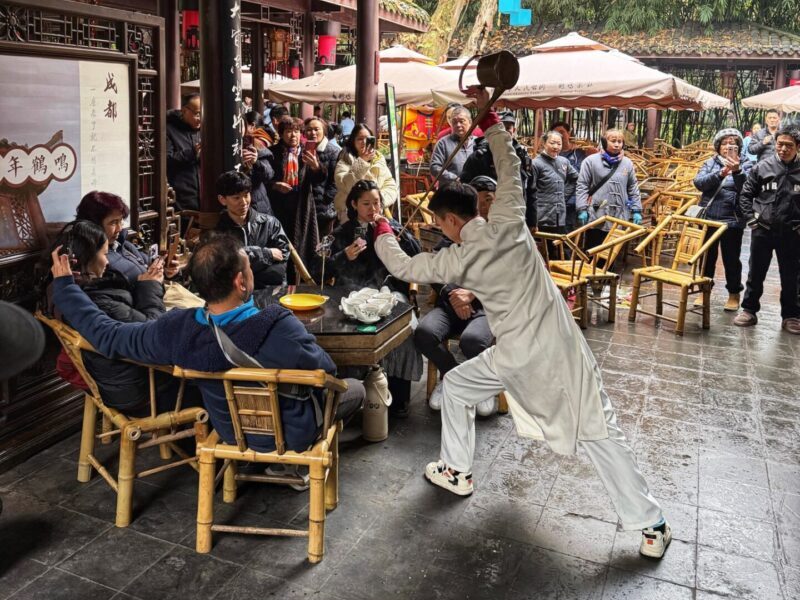
Sitting in bamboo chairs while sipping tea with a lakeside view is a delightful way to spend your time. You can also order the type of tea, where the highly trained staff demonstrates the art of tea pouring in front of you. Be sure to set aside at least two hours to fully enjoy the tea and scenery.
We also tried the ear wax cleaning service, and it was quite an experience! The practitioners were careful and skilled. Overall, it’s a charming glimpse into the old Chengdu.
People’s Park (人民公园)
Opening Hours: Always open.
Address: No.12 Shaocheng Road, Citang Street, Qingyang District.
Admission Fee: Free!
Recommended Visiting Time: 1-2 hours.
Kuanzhai Valley
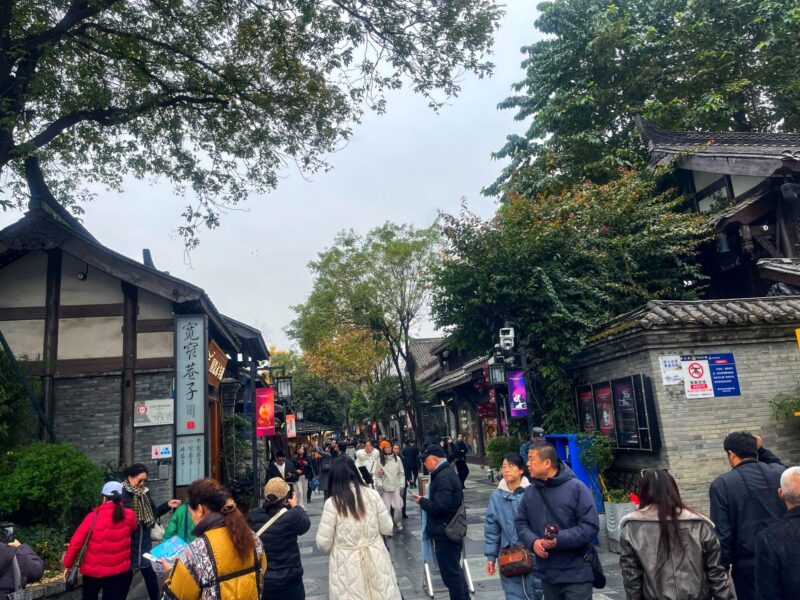
Kuanzhai Alley (宽窄巷子) consists of two ancient alleys known as the Wide Alley (Kuan) and the Narrow Alley (Zhai). As their names suggest, “Kuan”(宽) means wide, and “Zhai”(窄) means narrow. These two alleys, along with the third “Well” Alley (Jing Xiangzi/井巷子), run parallel to each other and are lined with historic homes and shops.
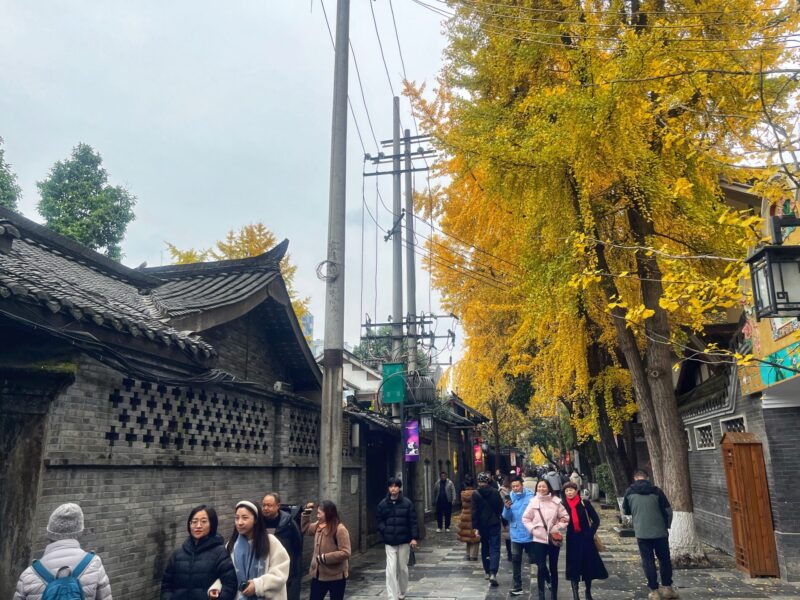
The Kuanzhai ancient streets feature many well-preserved, renovated, and rebuilt buildings from the Qing Dynasty, making them a cultural treasure of Chengdu. Some of these structures are over 200 years old and today they’re conserved and revitalized to be a shopping district.
Although the area has become heavily commercialized, it remains a paradise for photographers.
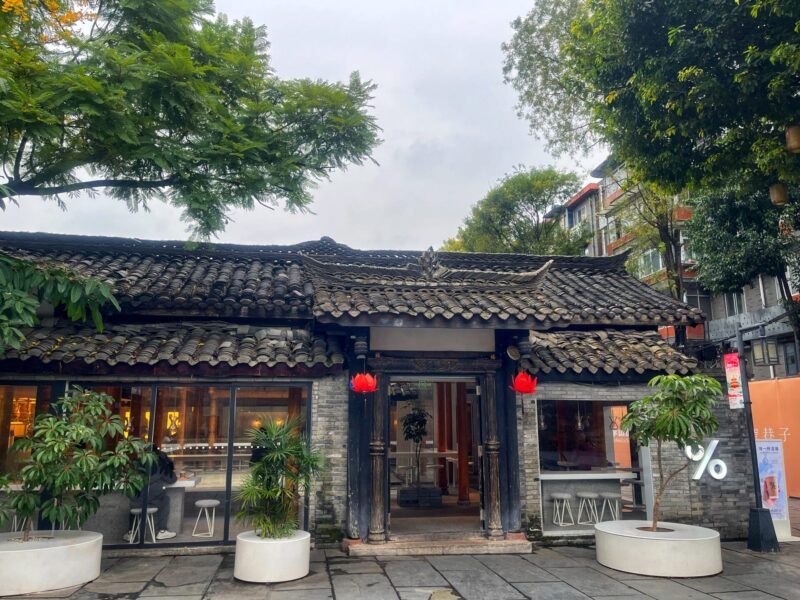
Kuanzhai Alley is a wonderful place to stroll, explore small shops, and participate in a Sichuan tea ceremony. Numerous restaurants and shops offer a variety of local Sichuan dishes, many of which are notably spicy. You can enjoy delicious and authentic spicy Sichuan food here.
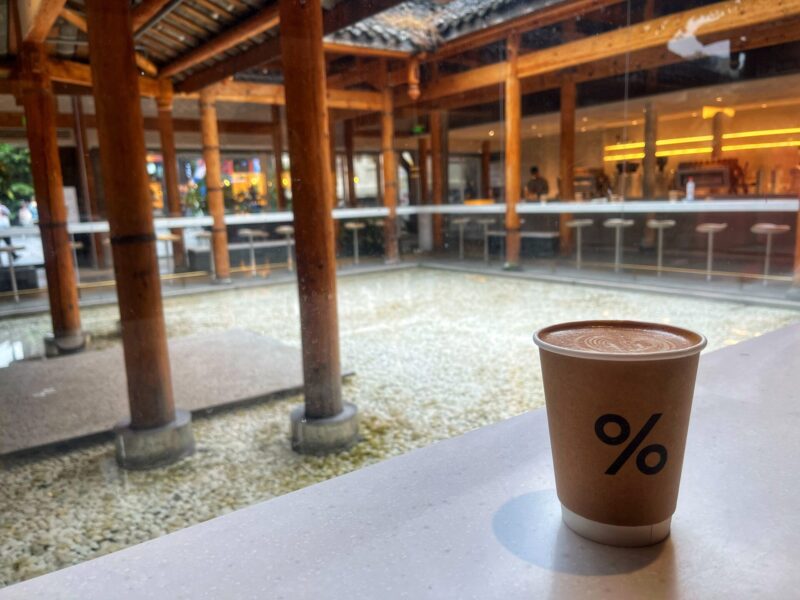
While the area can be quite crowded and touristy, taking a leisurely walk down the streets and exploring the tea houses can easily take up half a day or more. Visiting Kuanzhai Alley is a must on your Chengdu itinerary to fully experience the charm of its ancient buildings.
Kuanzhai Alley(宽窄巷子) )
Opening Hours: Always open. But most restaurants and snack bars will closed at 22:00.
Address: Near Changshun Street, Qingyang District, Chengdu City.
Admission Fee: Free!
Recommended Visiting Time: 2 -3 hours.
Chengdu Travel Tips: Both Jinli and Kuanzhai Alley have similar shops and offerings. If you’re short on time during your stay in Chengdu, it’s best to choose one to visit. Compared to Jinli Pedestrian Street, Kuanzhai Alley has a more local vibe and is highly recommended.
Wenshu Yuan Monastery
A visit to the beautiful Wenshu Yuan Monastery (文殊院) demonstrates that faith is still vibrant in modern China.
The monastery was quite active, and it was interesting to observe the monks during their daily activities. The surrounding gardens were lovely and walkable, with numerous little buildings and pathways to explore. Visitors can light a candle in memory or for reflection. The exit gate leads to a charming pedestrian street filled with various small restaurants and shops. We spent about an hour there. It’s a lovely place to sit and relax for a while, providing a wonderful escape!
Wenshu Yuan Monastery (文殊院)
Opening Hours: Daily from 8:00 to 17:00
Address: No.66, Wenshuyuan Street, Qingyang District, Chengdu.
Admission Fee: Free!
Getting there: 15 minutes drive from Kuanzhai Valley.
Nearest Metro Station: Wenshu Monastery Station at Chengdu Metro Line 1
Recommended Visiting Time: 1-2 hours
Anshun Bridge
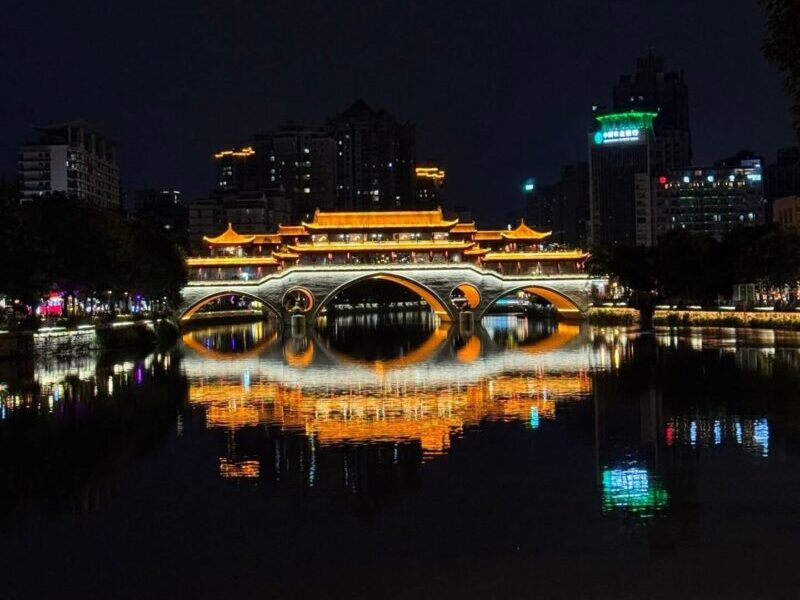
If you are still excited and looking for things to do at night for your Chengdu itinerary, head to Anshun Bridge (安顺桥).
The renowned Anshun Bridge, also known as Dongmen Bridge, is a historic and beautifully illuminated covered bridge situated in the heart of Chengdu. This bridge features architecture from the Qing Dynasty and serves as a significant landmark for the city. It is particularly breathtaking at night when vibrantly lit.
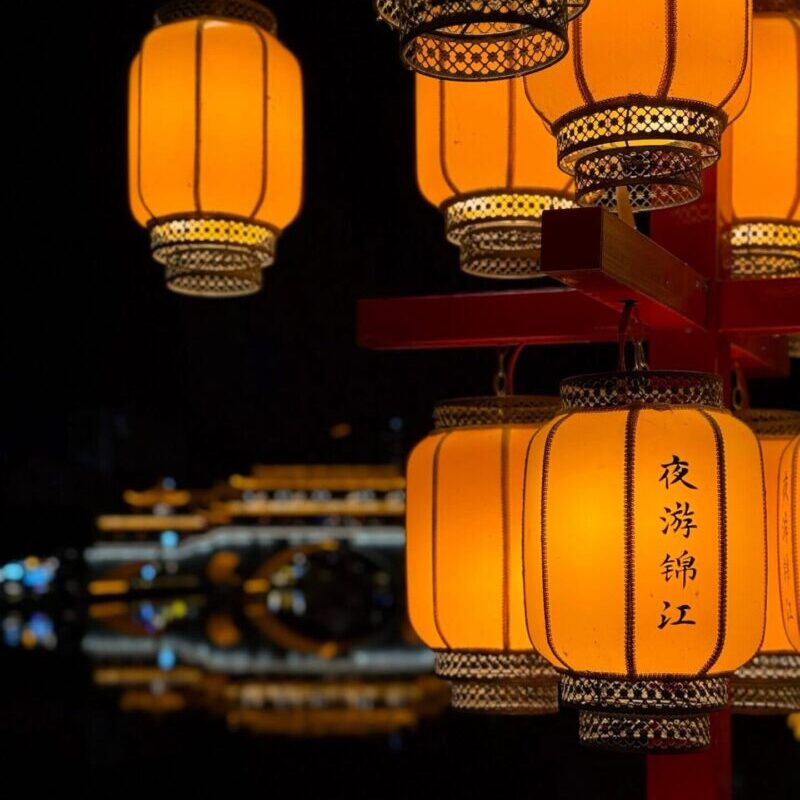
The area around Anshun Bridge features a lively riverside scene with a bar street nearby, making it an ideal spot to relax or grab a bite to eat. Along the riverbank, you’ll find well-maintained gardens and unique buildings, contributing to the picturesque atmosphere.
You can also enjoy a boat ride on the river, which lasts about 20 minutes and costs RMB 115 per person. However, I found the boat ride to be less worthwhile, as there isn’t much to see beyond the short journey. Instead, I would recommend spending your money on trying out local delicacies.
Anshun Bridge (安顺桥)
Opening Hours: Always open.
Address: 66 Binjiang East Road, Jinjiang District, Chengdu.
Admission Fee: Free!
Getting there: 20-minute walk from Chun Xi Road, or you can take a Didi ride (opposite the Shangri-La Hotel Chengdu).
Nearest Metro Station: Dongmen Bridge station, followed by a 15-minute walk.
Recommended Visiting Time: 1-2 hours
Day 3: Giant Panda Breeding Research Base, Dongjiao Jiyi
There are many panda sanctuary centers in Chengdu. You don’t have to visit all of them, however, it’s essential to see at least one during your trip. The Giant Panda Breeding Research Base (成都大熊猫繁育与研究基地), also known as Xiongmao Jidi (熊猫基地), is the most famous and a must-visit attraction in Chengdu.
We spent more than half a day at Xiongmao Jidi to meet HuaHua and other adorable giant pandas. Later that day, we went to Dongjiap Jiyi while heading back to downtown.
Chengdu Research Base of Giant Panda Breeding (Xiongmao Jidi)
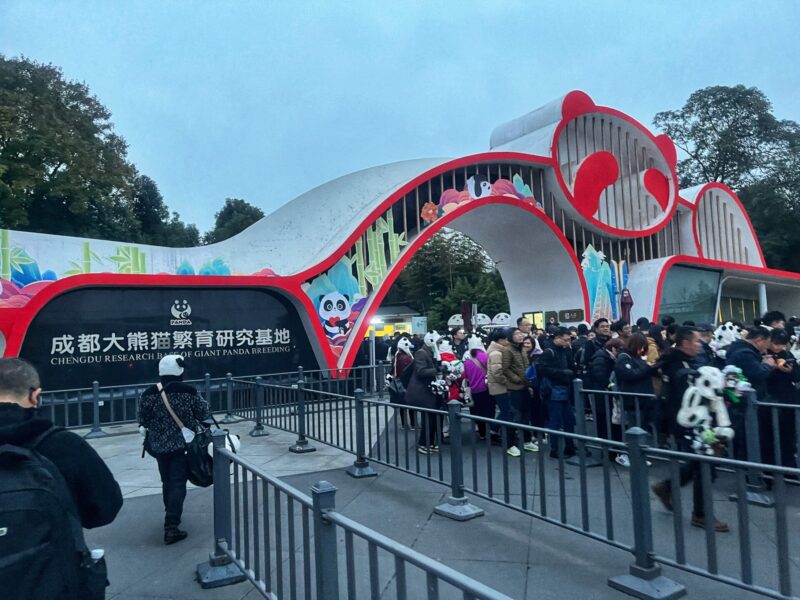
On Day 3 of the Chengdu itinerary, we visited the famous Chengdu Research Base of Giant Panda Breeding, located just 10 kilometers from downtown Chengdu. We took a Didi e-hailing ride early in the morning to avoid the crowds.
Purchase the XiaoMao Jidi Entrance Ticket
For travelers from outside of China, remember to pre-book your tickets for entry (we used Trip.com). Purchase your tickets online in advance and show the QR code and passport validation at the entrance for easy access.
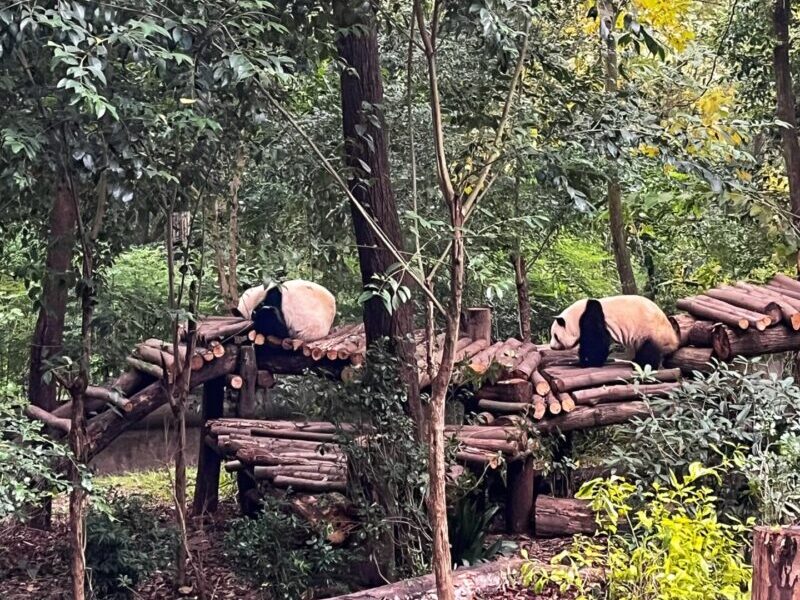
We started our visit at the South Gate, the closest spot to meet the renowned panda celebrity, HuaHua (花花/荷花), along with her less famous sister, YeZi (荷叶).
The adorable HuaHua has a birth defect that gives her a short neck, making her resemble like a teddy bear. She gained fame after a video of her went viral on social media, leading to long queues of locals and tourists eager to take photos and videos of her. The lines were indeed crazy!
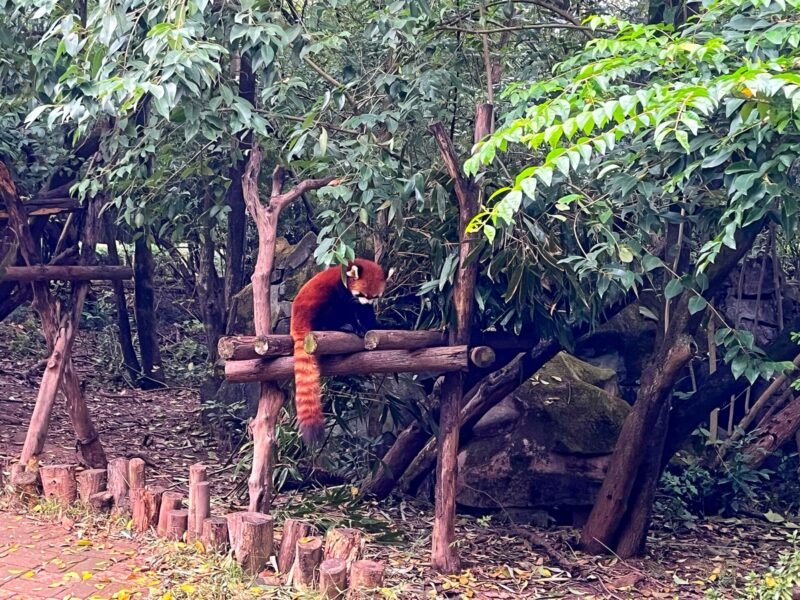
In addition to meeting HuaHua, there are plenty of other adorable pandas and red panda to see at Xiongmao Jidi.
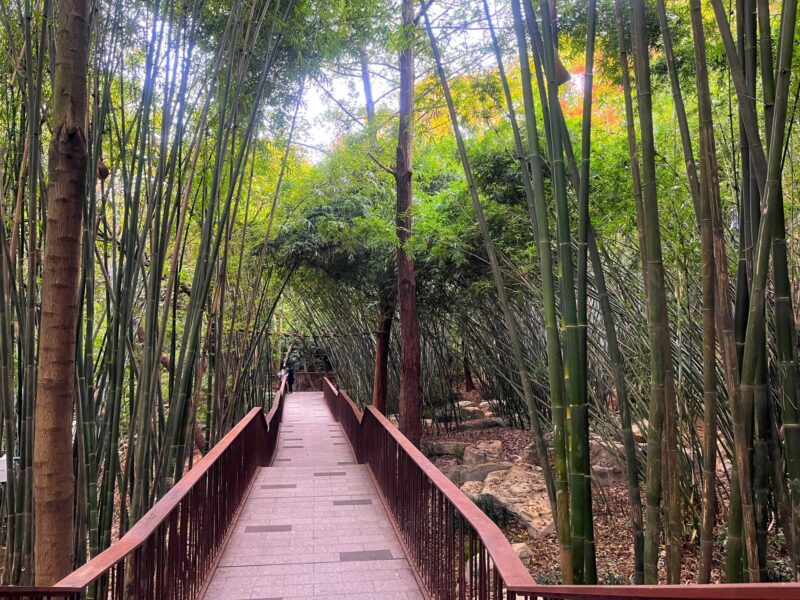
The Giant Panda Breeding Research Base is an impressive facility, covering a vast area. The grounds are beautifully laid out. You can easily spend a couple of hours wandering through the park, stroll through the lovely bamboo forest, spotting more giant pandas and red pandas.
READ MORE: Trip to Giant Panda Breeding Research Base
Giant Panda Breeding Research Base / Xiongmao Jidi (熊猫基地)
Address: No.1375 Panda Avenue, Northern Suburb, Chenghua District, Chengdu.
Opening Hours: Daily from 7:30 to 18:00
Admission Fee: 58 RMB per person! Get the Entrance Ticket from Trip.com.
Recommended Visiting Time: 3 to 4 hours!
Dongjiao Jiyi
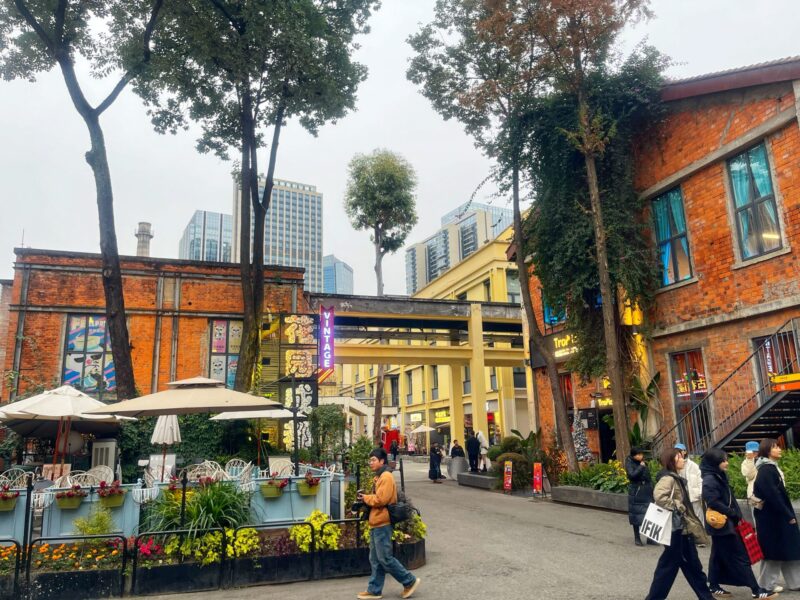
On our way back from Xiongmao Jidi, we stopped by Dongjiao Jiyi (東郊記憶). Dongjiao Jiyi, also known as Chengdu Eastern Memory, is a cultural hub in Chengdu. It has been transformed from an old electronics factory area from the 1960s into a trendy and creative space.
The area features coffee shops and stylish photo spots, making it an ideal destination for those seeking to revisit the old memories of Chengdu.
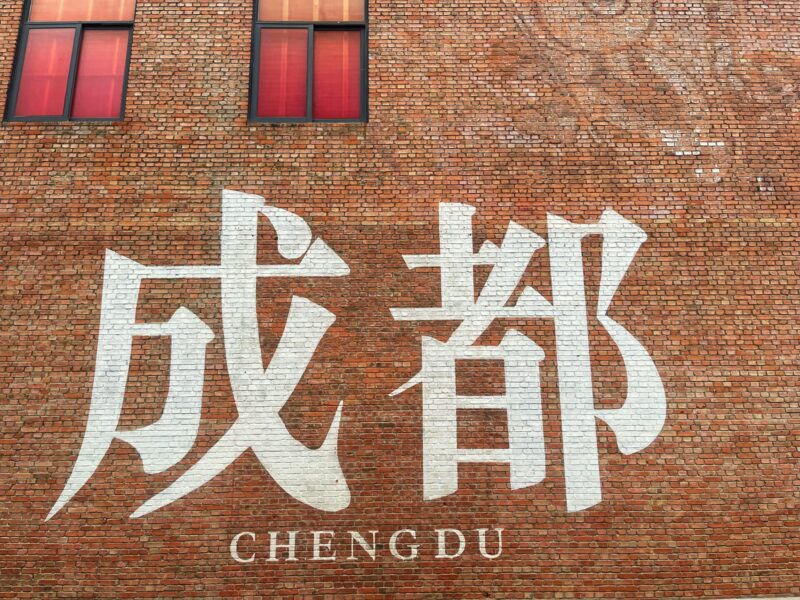
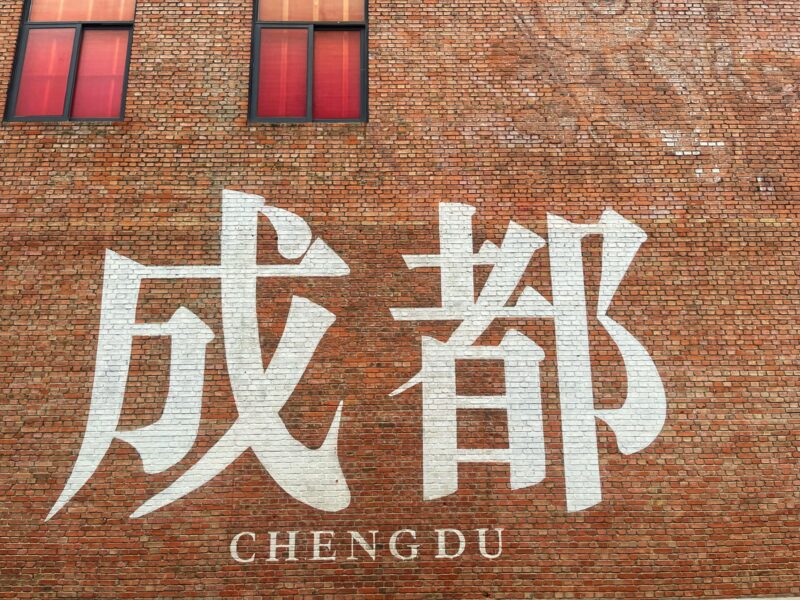
The “Chengdu” in Brickwall – Popular Photography Spots at Dongjiao Jiyi, Chengdu.
While it may not be a must-visit location for a Chengdu itinerary, it can be a nice addition to your plans, especially for an evening tea break or dinner after visiting Xiongmao Jidi.
Dongjiao Jiyi (東郊記憶)
Address: East Area, No.111 South Jianshe Road, Chenghua District.
Opening Hours: Always open. But most restaurants and snack bars will closed at 22:00.
Admission Fee: Free!
Recommended Visiting Time: 1-2 hours.
Day 4 – 6: Chengdu Side Trips
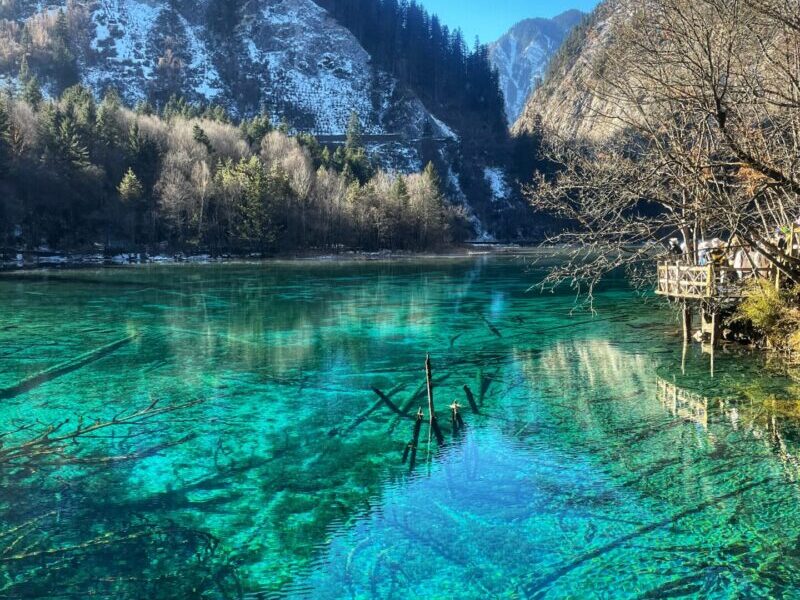
If you’re in Chengdu for a while, consider exploring the areas beyond the city. Here are five of the most popular and interesting trips you can take from Chengdu. Be sure to check out our travel guide blog for more detail.
Jiuzhaigou Valley (九寨沟), also known as Jiuzhaigou National Park, is the most popular destination in Sichuan Province. Most visitors fly into Chengdu and then travel to Jiuzhaigou. This park is renowned as the Most Beautiful Waterscape in China and is designated a World Natural Heritage Site. It is often referred to as the Paradise for Photographers.
Read More: Trip to Jiuzhaigou: A Travel Guide blog
Huanglong National Park (黄龙) is famous for its stunning calcified scenery. Along the 7 km of valleys, you will encounter a variety of uniquely shaped, colorful calcified ponds, caves, waterfalls, streams, and stones. This extraordinary landscape has earned Huanglonggou the titles of “Heaven Lake”.
Read More: Huanglong Itinerary: A Travel Guide Blog
Leshan (樂山) is a historical and cultural city in China, making it a popular side trip from Chengdu. This destination with its Leshan Giant Buddha (樂山大佛) attracts numerous tourists with its unique charm and rich cultural ambiance. It is best enjoyed in conjunction with a visit to Mount Emei for a multi-day trip.
Emeishan City boasts a rich culture and a long history of over 1,400 years. It is named after the world-famous Mount Emei (峨眉山), one of the “Four Great Buddhist Mountains in China,” known for its deep Buddhist heritage.
Read More: Trip to Leshan Itinerary: A Travel Guide Blog
Dujiangyan (都江堰) is known for the Dujiangyan Irrigation System, which is referred to as the “Origin of the Land of Abundance.” This 2,000-year-old irrigation system is celebrated as the forerunner of global conservation culture. It is the oldest and only non-controlling irrigation system in the world that is still in use today.
Read More: Trip to Dujiangyan Itinerary: A Travel Guide Blog
Day 7: ChunXi Road, TaiKoo Li, Daci Temple
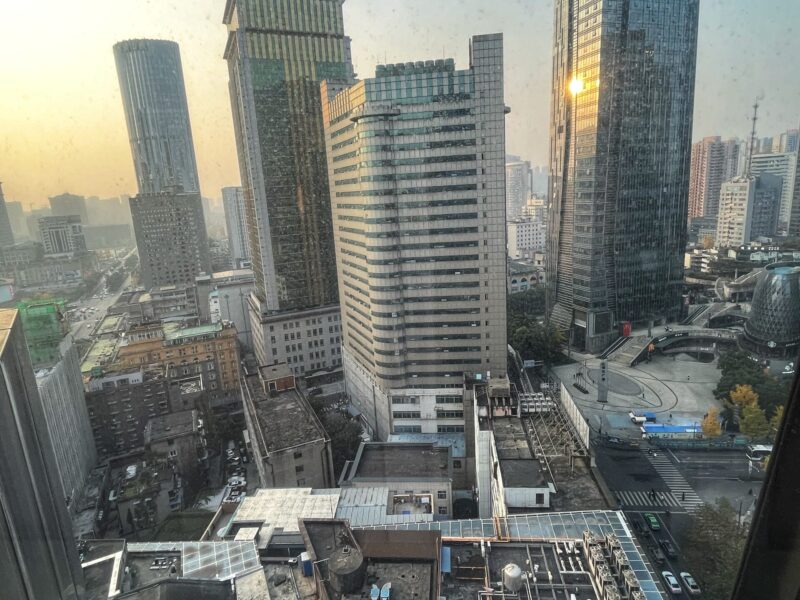
On the last day of our Chengdu itinerary, we didn’t plan too many activities since we were exhausted from our previous tours. Instead, we decided to relax by strolling around the downtown area and enjoying some local cuisine. We are staying in the Taikoo Li district, which offers a variety of food options!
When we came back from Jiuzhaigou and Huanlong National Park trip, we decided to stay nearby ChunXi Road area before ended our Chengdu trip. We stayed in Mercure Chengdu Chunxi Taikoo Li which is conveniently located near the vibrant Chunxi Road and Taikoo Li. Our stay experience did not disappoint; it exceeded our expectations. One of the best stay in Chengdu.
Chengdu Travel Tips: If you are looking for more budget option, you may consider Ibis Hotel Chengdu Taikoo Li Chunxi Road. It is a mid-range option located right next to the Hotel Mercure ChunXi Road.
ChunXi Road and Taikoo Li
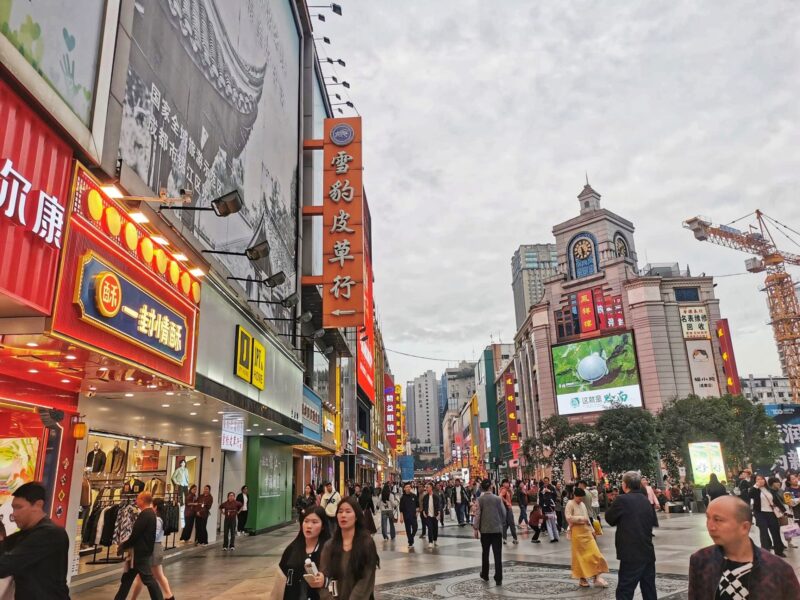
ChunXi Road (春熙路) and TaiKoo Li (太古里) are lively pedestrian shopping streets in Chengdu, comparable to Nanjing Road in Shanghai or Beijing Road in Guangzhou. This area is filled with numerous department stores and shopping centers, including souvenir shops and upscale boutiques, ensuring that there is something for every shopper.
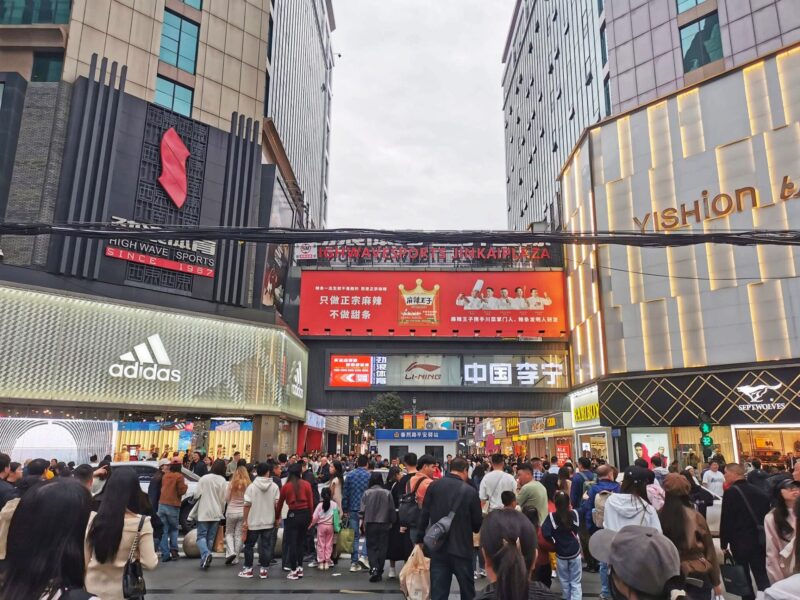
ChunXi Road is specifically known for its local brands, while TaiKoo Li is home to high-end luxury shops. The streets are bustling with a variety of shops and restaurants, and they come alive at night with vibrant neon lights. In addition to shopping, visitors can enjoy a wide array of eateries and food courts offering options that range from traditional local cuisine to international dishes.
One popular attraction in the area is the impressive 3D video wall located at the junction, which showcases realistic videos that are best appreciated at night.
Hanging Panda at Chengdu International Finance Square (IFS)
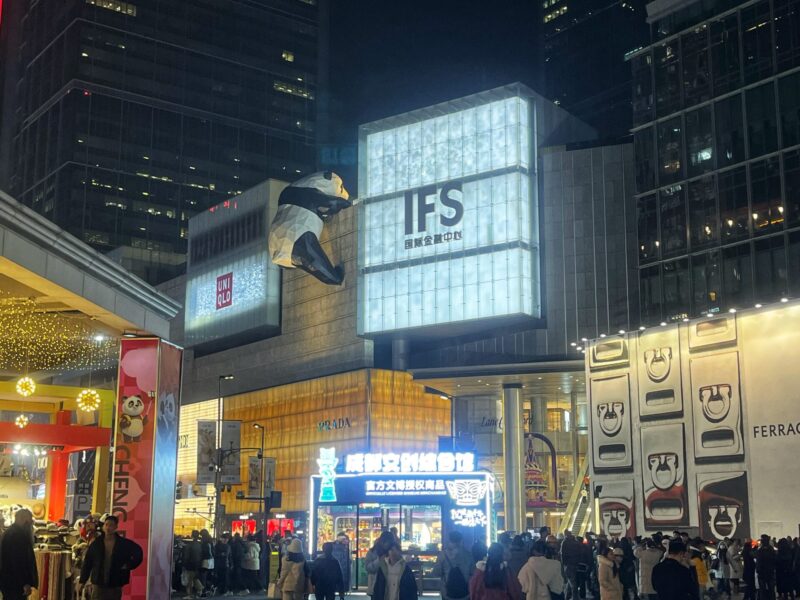
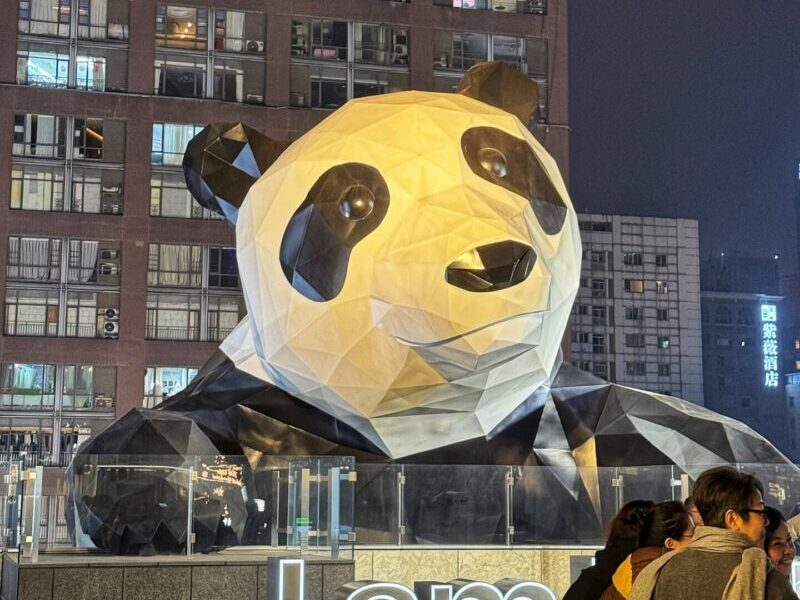
The area is also near the Chengdu International Finance Square (IFS), famous for its enormous panda sculpture that hangs onto the building. This panda is approximately 49 feet tall and made up of more than 4,000 triangular pieces.
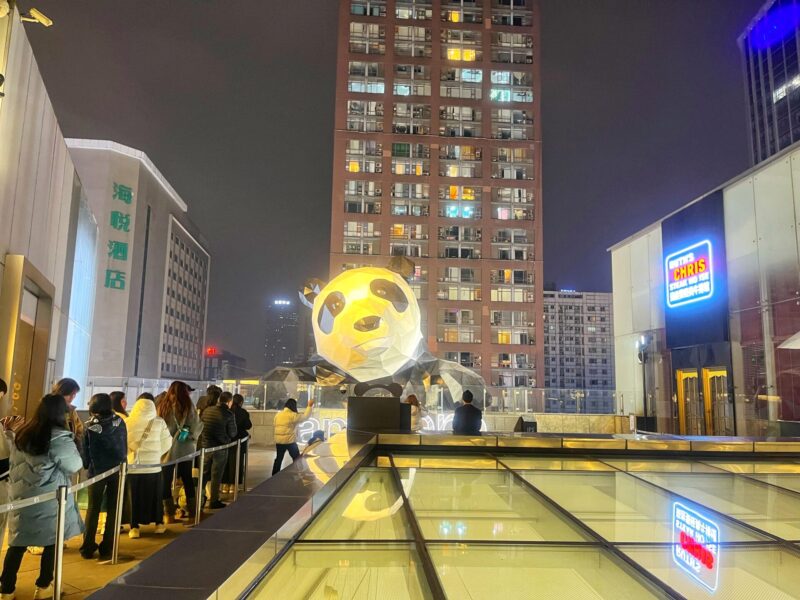
Visitors can take photos of the giant panda statue not only from the ground level but also from the rooftop, which is a well-known photography spot. We also had our dinner at a restaurant located here.
Daci Temple
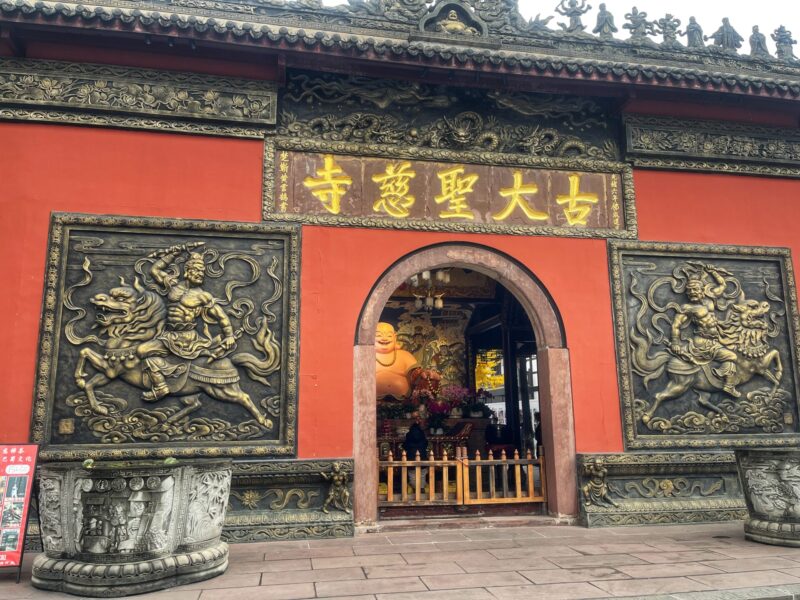
Daci Temple (大慈寺) is located in the bustling shopping area of TaiKoo Li, and next to ChunXi Road. This tranquil sanctuary offers a contrast to the surrounding modernity, showcasing beautiful Buddhist architecture in the heart of the city center.
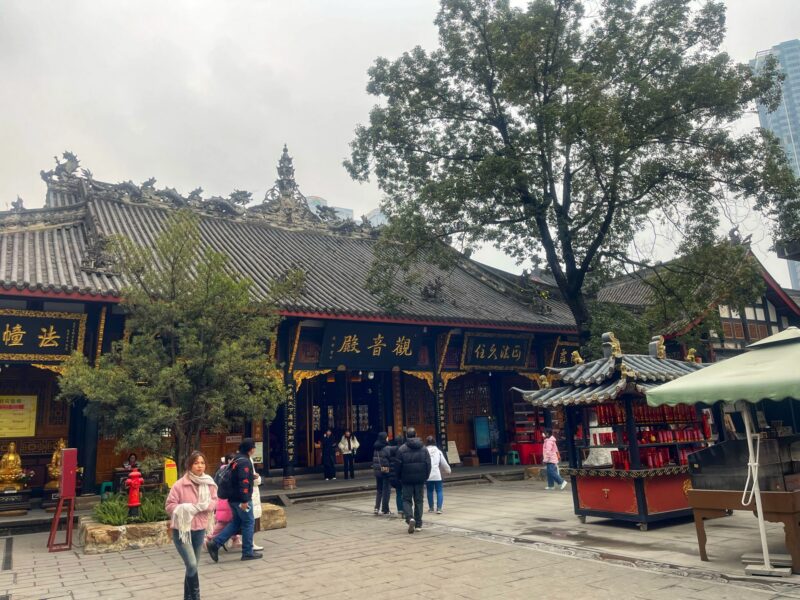
With a history spanning approximately 1,600 years, Daci Temple is a significant Buddhist site. The renowned monk Xuan Zang (600-664) from the Tang Dynasty traveled from Xi’an to Chengdu to study Buddhism and was ordained at Daci Temple in 622.
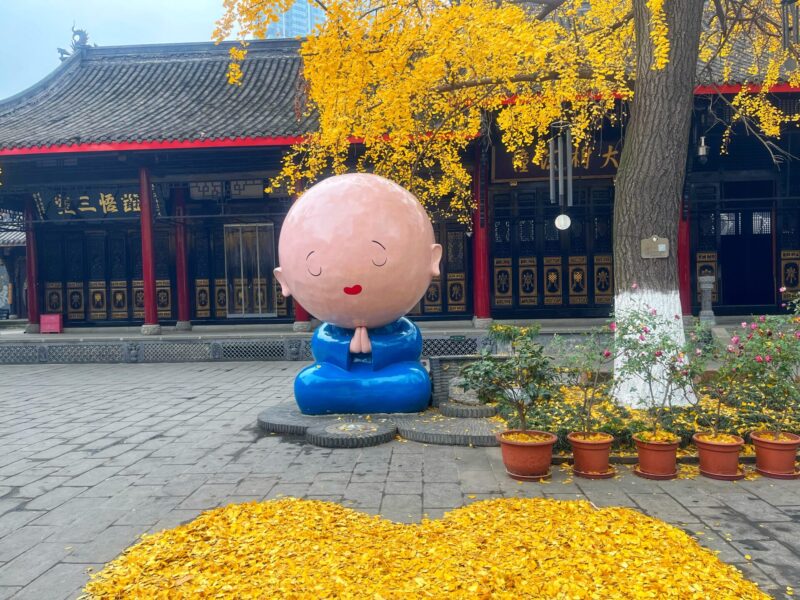
Daci Temple with little monk sculpture – Chengdu Popular Photography Spots.
While the temple itself is intriguing, those who have visited other Buddhist temples in China may not find it necessary to make a special trip. However, if you are in the area and have the time, it serves as a pleasant stop. Entrance is free, though there is limited information available about the temple, and very little is provided in English.
Daci Temple (大慈寺)
Opening Hours: Daily from 8:00 to 17:30
Address: No.1 Dacisi Street, Jinjiang District, Chengdu. Note: next to Taikoo Li & Chunxi Road.
Admission Fee: Free!
Recommended Visiting Time: 30 minutes.
More Chengdu Travel Guide
Next, we would like to share our tips for traveling in Chengdu to help you make the most of your trip!
How Many Days for Chengdu itinerary: Your Chengdu itinerary can vary in length and theme, tailored to fit different budgets and plans. Chengdu is a big city and you won’t run out of things to do here.
If you have the time, it’s recommended to spend at least 2 to 3 days in Chengdu to enjoy a leisurely tea time in People’s Park, savor local cuisine, meet the adorable pandas, and watch an impressive face-changing Sichuan Opera show. I have organized this Chengdu travel blog into a 3-day itinerary for exploring the city in slower pace, plus a few additional days for visiting the outskirts.
In my opinion, many of the city’s attractions in China are quite similar, so you can shorten your visit in Chengdu if you’ve already experienced other cities in China. I recommend spending more time on side trips to locations such as the Leshan Giant Buddha, Mount Emei, Jiuzhaigou Valley, and other natural sites if you want to explore more of Sichuan’s stunning natural and cultural wonders.
Before you decide where to go in Chengdu based on Instagram photos, take some time to do a bit of research. This Chengdu itinerary is a great starting point, and I encourage you to follow my travel advice..
Overall: A Visit to Chengdu
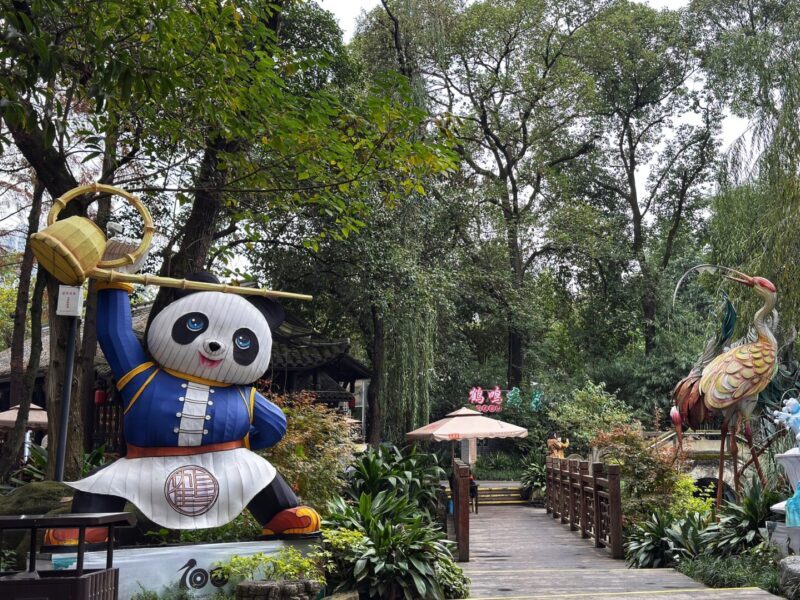
Overall, I hope you enjoyed this quick and easy travel guide to the Chengdu itinerary. This was not my first visit to Chengdu, and I still want to return to explore more and indulge in the local cuisine. There is so much more to do and see in Chengdu, and I feel that there are still many experiences waiting to be discovered. I can’t wait for my next visit!
Related Chengdu Travel blog:
- Where To Stay in Chengdu: Best Areas and Hotels
- Chengdu Hotel Review: Nostalgia Hotel Kuanzhai Alley Chengdu
- Chengdu Hotel Review: Mercure Chengdu ChunXi Taikoo Li Hotel
- Trip to Chengdu Research Base of Giant Panda Breeding (Xiongmao Jidi)
- Chengdu Food Guide: Where and What to Eat in Chengdu
- Trip to Leshan Itinerary: A Travel Guide Blog
- Trip to Dujiangyan Itinerary: A Travel Guide Blog
Traveling to Chongqing? Read more our Chongqing travel blog:
- 3 to 5 Days Chongqing itinerary: A Travel Guide Blog
- Where To Stay in Chongqing: Best Areas and Hotels
- Longmenhao and Xiahaoli Old Street Travel Guide Blog
- Day Trip to Wulong Karst itinerary: A Travel Guide Blog
If you plan to visit Sichuan and surrounding areas, be sure to check out our travel blog below:
- How To Spend Your 7-Days Sichuan Itinerary
- Jiuzhaigou Itinerary: A Travel Guide Blog
- Jiuzhaigou Orange Hotel Review (Jiuzhaigou Scenic Area)
- Huanglong Itinerary: A Travel Guide Blog
- Dagu Glacier Itinerary: A Travel Guide blog
- Bipenggou Itinerary: A Travel Guide Blog
- Mount Siguniang Itinerary: A Travel Guide Blog
Alternatively, consider exploring the Western Sichuan Large Tourist Loop, which includes a hiking trip:
- Western Sichuan Hiking Trip: 5-Day Kangding, Yading, Danba itinerary
- Daocheng Yading Itinerary: A Travel Guide blog
Traveling Xi’An and looking for inspiration? Read more our Xi’an travel stories: