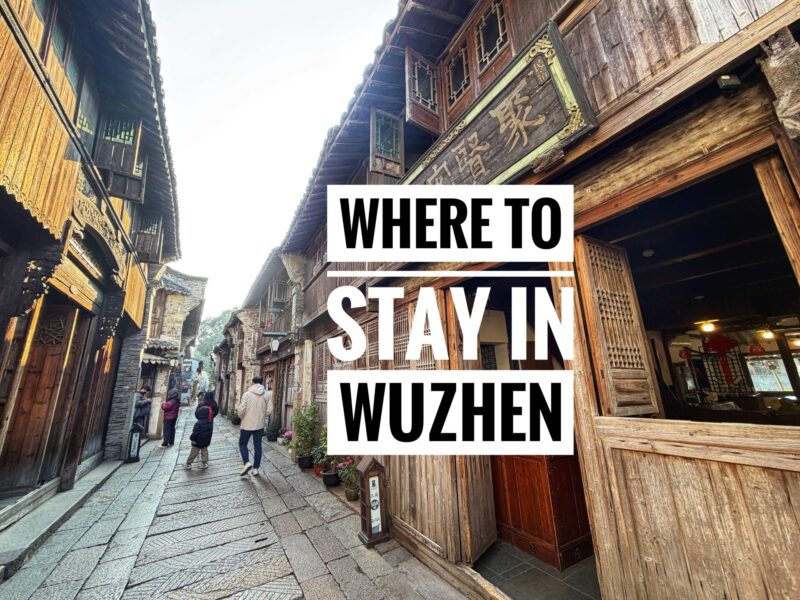
For accommodations in Wuzhen, consider staying at a hotel or a guesthouse in the Wuzhen Scenic Area if you are looking for where to stay in Wuzhen.
When visiting the Shanghai-Hangzhou area, be sure not to miss one of the ancient water towns. Wuzhen ranks among the six most famous water towns in the region and is often dubbed the “Venice of the East.” This charming and peaceful town offers a unique perspective on its timeless beauty. The watertown features ancient structures that line the meandering rivers, along with numerous workshops, shops, and exhibitions that contribute to its romantic and serene atmosphere.
You can choose to take a day trip to Wuzhen or stay overnight nearby or within the Wuzhen Ancient watertown.
However, if your budget and schedule allow, consider spending a night in the Xizha Scenic Area to fully experience its unique charm. We would like to share our wonderful one-night stay at the Wuzhen Homestay and offer tips on where to stay in Wuzhen.
Where To Stay in Wuzhen: Within or Outside Xizha Scenic Area?
When deciding where to stay in Wuzhen, there are a few options.
The Xizha Scenic Area is the main attraction for visitors, so it’s best to stay nearby or within this area. While accommodations inside the Wuzhen Scenic Area tend to be more expensive, they are highly recommended if possible.
Stay Within the Wuzhen Xizha Scenic Area:
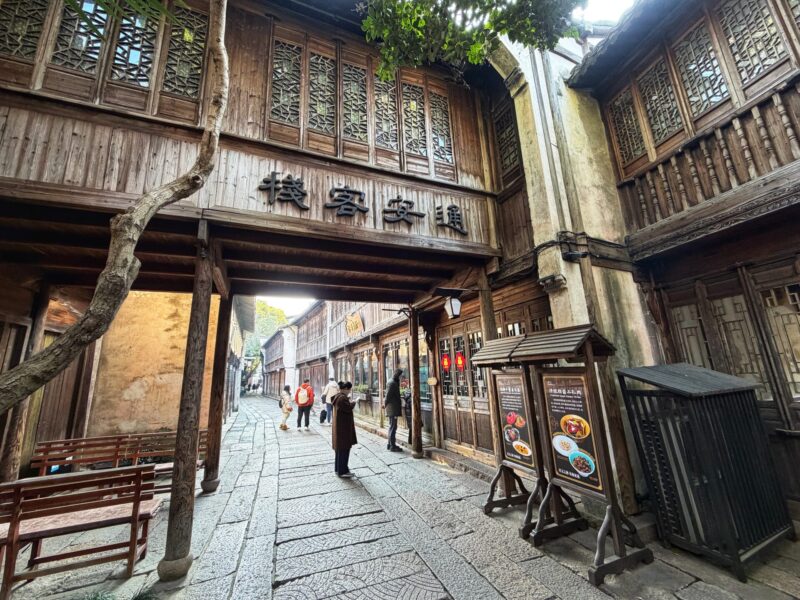
Wuzhen Tong’an Inn: This tavern-style hotel boasts an incredibly convenient location, situated right next to the tourism center. The rooms are clean, comfortable, and quiet, making for a pleasant stay.
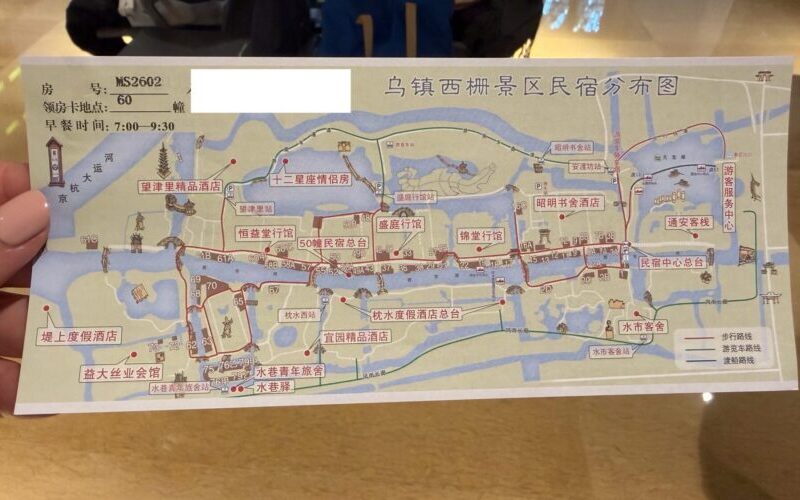
Wuzhen Homestay (Wuzhen Minsu): This local homestay is managed by the Wuzhen Tourism Center. Your room will be randomly assigned from among 70+ blocks of local residences within the Scenic Area. Although it may not offer a hotel-class experience, staying at the Wuzhen Homestay provides exceptional hospitality and a cozy, comfortable environment.
When considering a stay in Wuzhen, it’s important to weigh the pros and cons to make an informed decision.
After conducting some research, we found that there are limited accommodation options if you choose to stay inside the XiZha Scenic Area. You can either stay at the Wuzhen Hotel or opt for a Wuzhen Homestay run by local residents.
While the Wuzhen Hotel is quite expensive, it offers excellent quality and service. In contrast, Wuzhen Homestay provides a unique opportunity to experience the ambiance of the ancient water town. Within the Wuzhen Xizha Scenic Area, there are over 70 blocks of local residences, all managed by the Wuzhen Tourism Center to ensure quality control. During check-in, the Tourism Center assigns your room.
After careful consideration, our group decided to stay at the Wuzhen Homestay.
My One Night Stay at Wuzhen Homestay
To be honest, I didn’t have high expectations for it. We chose to stay within the XiZha Scenic Area to fully enjoy the nightlife and local charm. Staying at the Wuzhen Guesthouse was more affordable compared to the Wuzhen Hotel. In the end, our one-night stay at the Wuzhen Homestay turned out to be one of the most memorable parts of our trip.
I would like to share my experience staying overnight at Wuzhen Homestay.
Wuzhen Homestay – Check-in Process
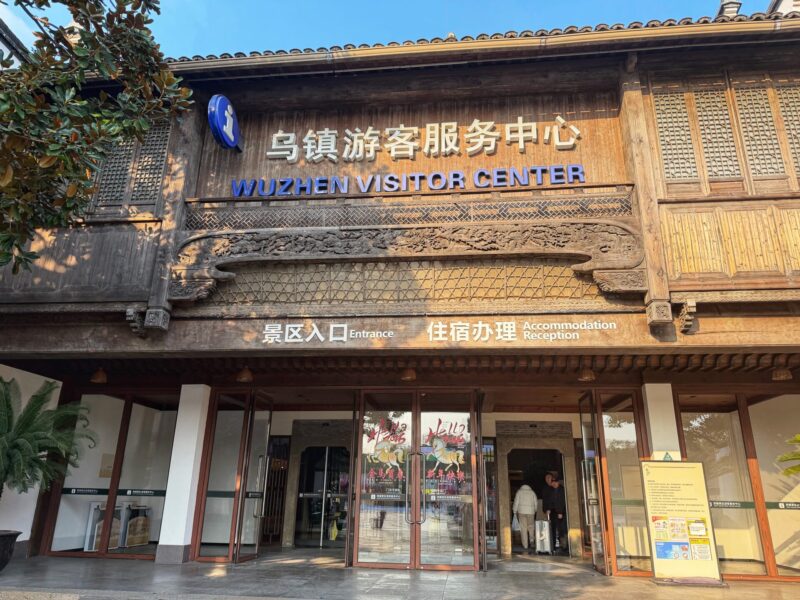
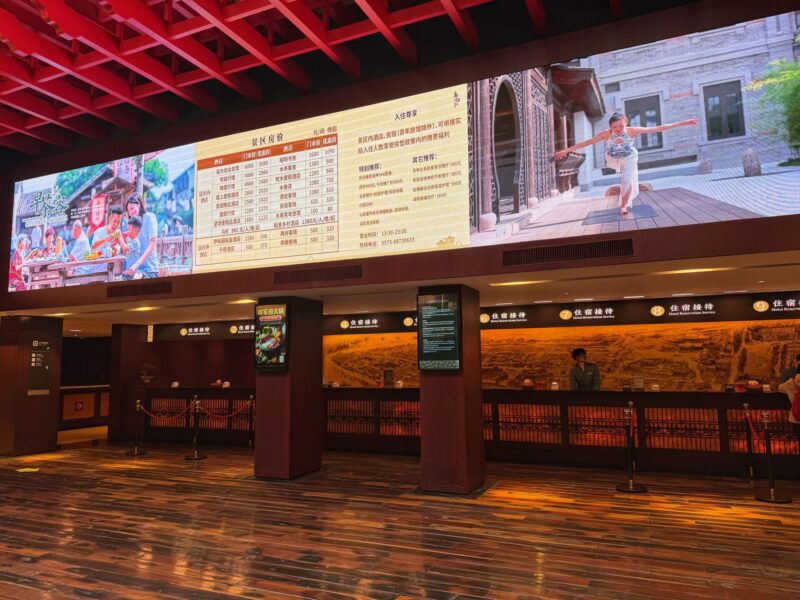
Wuzhen accommodation reception is located at the Wuzhen Visitor Center, in the Xizha Scenic Area. It was a smooth and efficient check-in process.
Upon arrival, we received our room assignment, and the receptionist kindly explained the major attractions in Wuzhen, the buggy services available (outer ring of scenic area), and the functionality of their Wuzhen mini app. Everything was organized.
You can also book a breakfast option to try the morning tea called “zao cha ke” (早茶客) at the morning market (水上集市) or choose to have breakfast at the guesthouse.
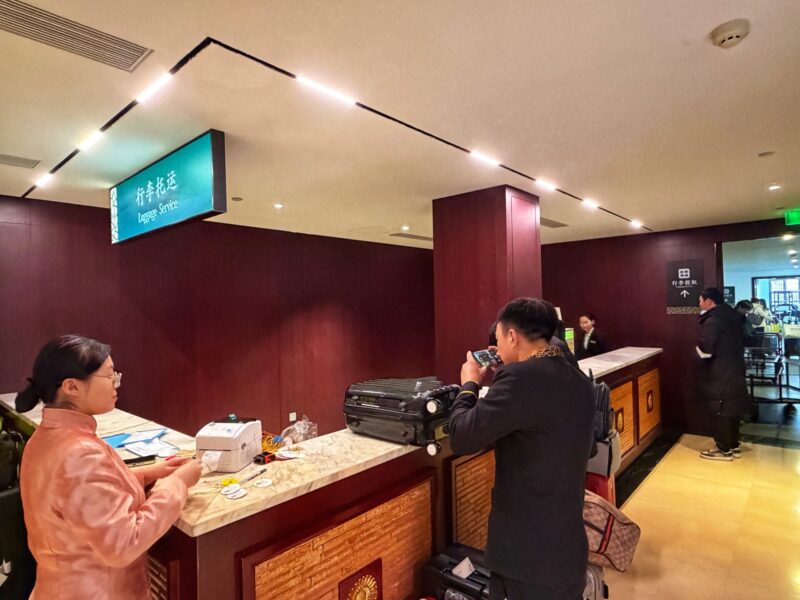
Additionally, we arranged for the luggage transport service straight to the Homestay, allowing us to explore the area before heading to our guesthouse.
Please note that the luggage transport service requires about 1.5 hours for processing during check-out. You will need to book it using the Wuzhen Mini App.
Our Wuzhen Homestay
Wuzhen is a picturesque water town established over 1,300 years ago. The streets are vibrant with souvenir shops, restaurants, exhibitions, and local residences that have been converted into guesthouses. Our Wuzhen Guesthouse is located at Block#60, which is near the end of the scenic area.
After entering Scenic Area, we took a leisurely stroll along the main road to find food and explore.
Upon reaching our guesthouse, our room was ready for check-in, and our luggage had already been delivered there.
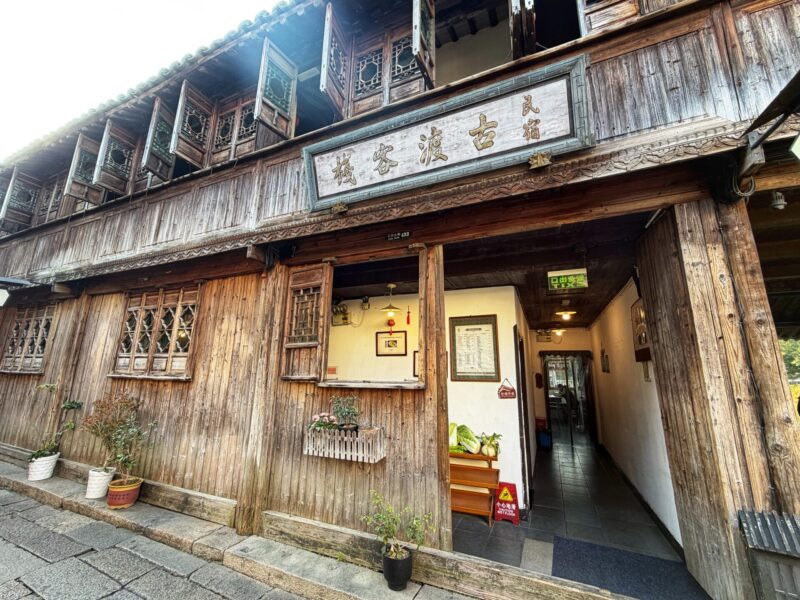
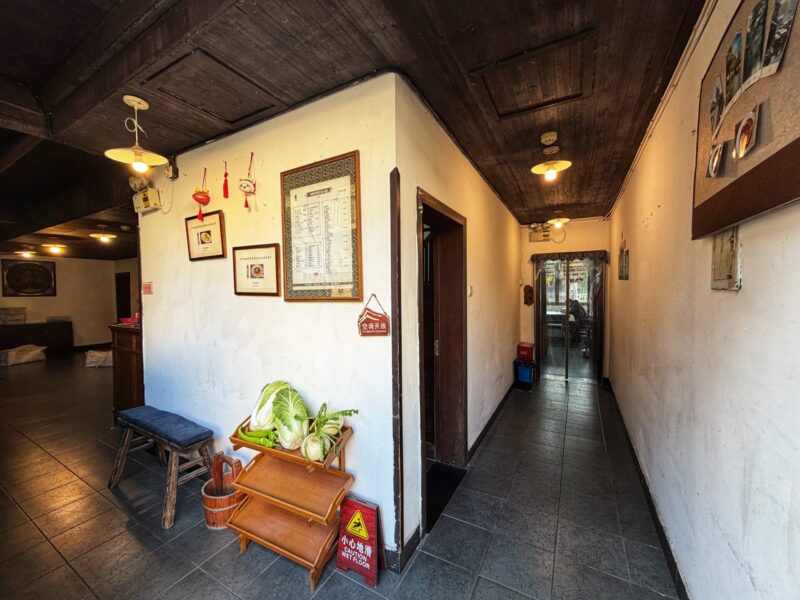
The homestay is a two-storey wooden building with a limited number of four rooms. Please note that this is a heritage building without a lift, so guests staying on the second floor will need to carry their luggage upstairs.
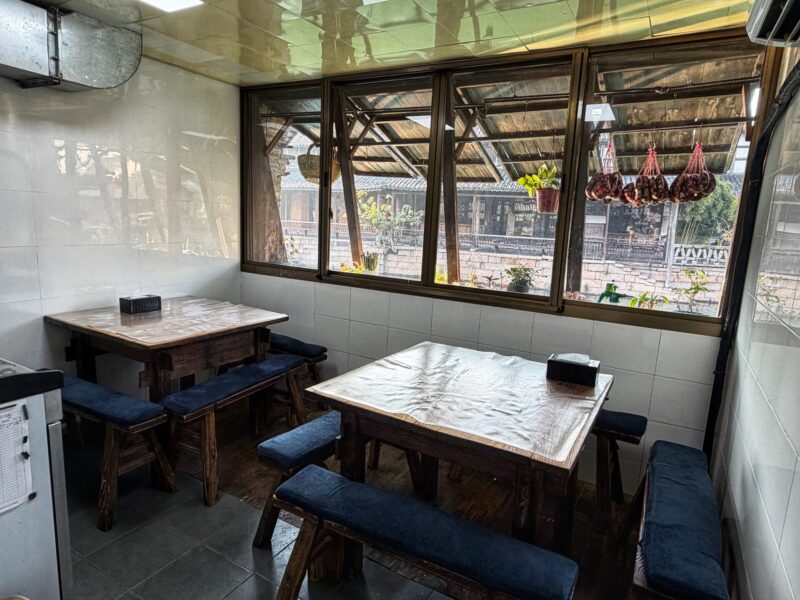
The ground floor includes a restaurant with a limited number of tables.
The Room
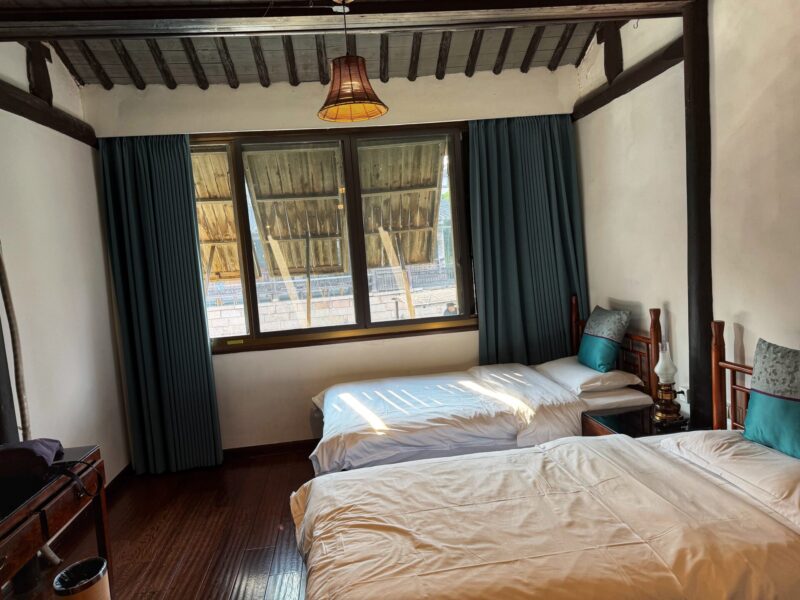
Here’s our room!
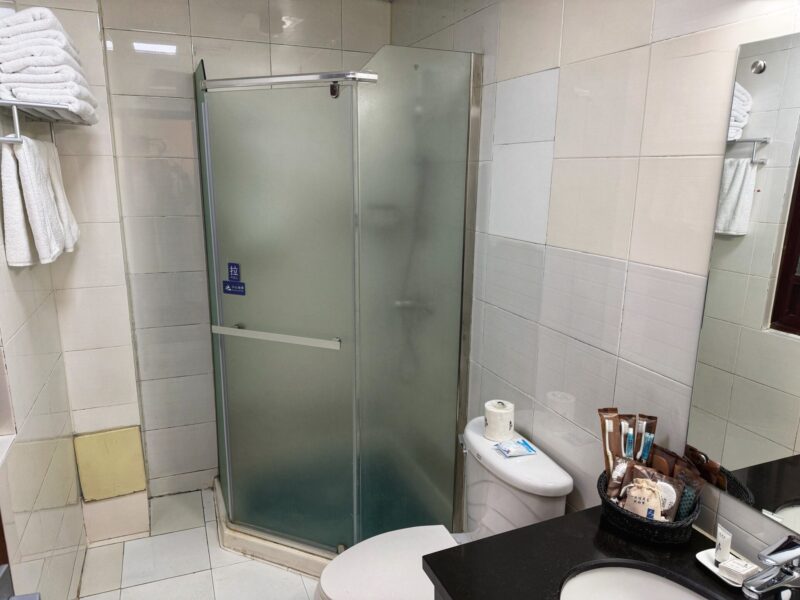
The room was clean, cozy, and beautifully decorated with wooden details that complemented Wuzhen’s historic atmosphere. Despite its rustic appearance, the room was equipped with modern amenities such as air conditioning, Wi-Fi, and bathroom facilities.
However, please be aware that the room is not very soundproof due to the wooden structure, so you can hear some noise from passing boats. The cleanliness was satisfactory.
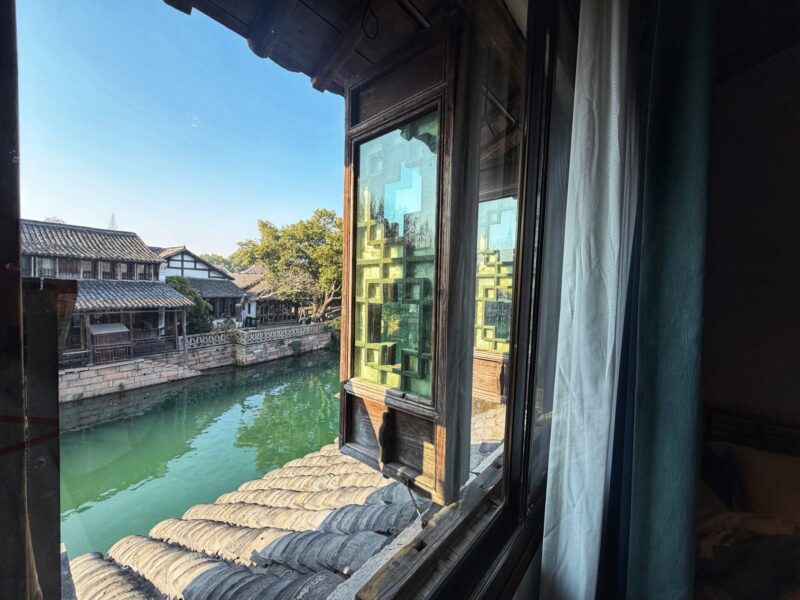
Our room provided a beautiful view of the riverside, and we especially enjoyed the scenery from the window. Overall, the room provided a peaceful and enjoyable stay. We were all very satisfied.
Friendly Host
Our hosts were friendly and made our stay very pleasant. We were warmly welcomed with a local sweet dessert soup.
Although we had booked morning tea for breakfast and didn’t get the chance to try their food, we decided to make a reservation for dinner. We enjoyed a wonderful home-cooked meal prepared by the host. The portion was generous, delicious, and reasonably priced. I loved their local cuisine.
Location
When staying in Wuzhen Homestay, your room will be randomly assigned upon check-in. There are over 70 guesthouses in the Wuzhen scenic area, starting from the tourist visitor center. We stayed at Minshu#60, which was quite a walk from the entrance and located at one end of the Xizha scenic area. However, I assure you, it was worth the stroll. Although we could have taken a shuttle, we chose to walk along the main Xizha Street.
Location-wise, we found it very convenient to stay in this area because there are many famous snack houses, making it perfect for food enthusiasts. Staying in the XiZha scenic area allowed us to enjoy night walks and early morning strolls with fewer crowds.
Buggy Service
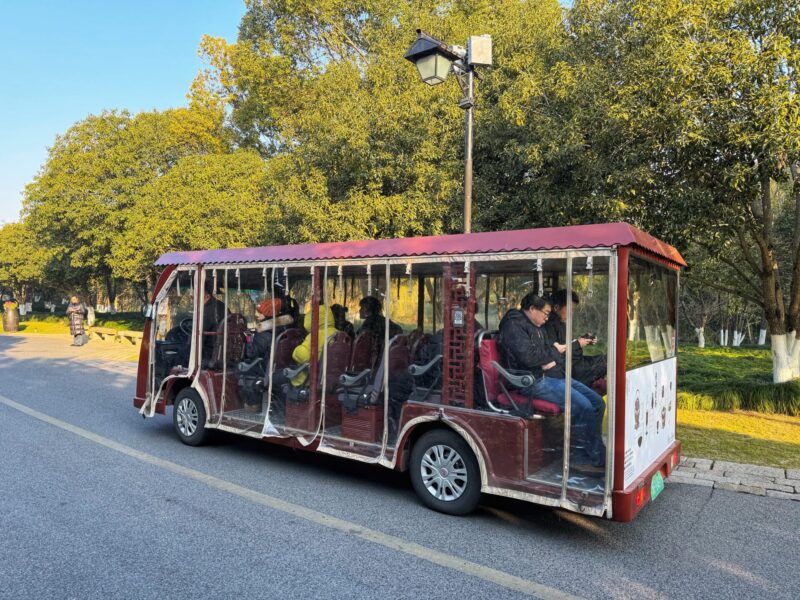
For those staying further in the scenic area, there is a complimentary buggy service to bring you closer to your guesthouse, which is very convenient!
Please double-check the location of the buggy service pickup point near your accommodation. It runs quite frequently, and you can also schedule the pickup time using the Wuzhen mini app.
Overall: Staying in Wuzhen Xizha Scenic Area
All in all, we highly recommend staying for one night in the Wuzhen XiZha Scenic Area if you’re considering where to stay in Wuzhen. You have the option of a comfortable hotel or a local guesthouse.
During our visit, we chose to stay at a Wuzhen homestay and it made my visit feel more authentic and enjoyable. It was a fantastic experience, and highly recommended. Although the one-night stay in Wuzhen can be costly, the experience is priceless. Additionally, your stay includes an unlimited entry pass to the scenic area and complimentary breakfast. The option to switch to morning tea by the waterside is worth CNY30 per person.
Final Wuzhen Accommodation Tip – we booked Wuzhen Homestay through Trip.com, where we found the best rates for hotel bookings in China. Check for room rates now!
In short, if you’re looking for a place that blends history, comfort, and local warmth, I highly recommend choosing a homestay in Wuzhen.
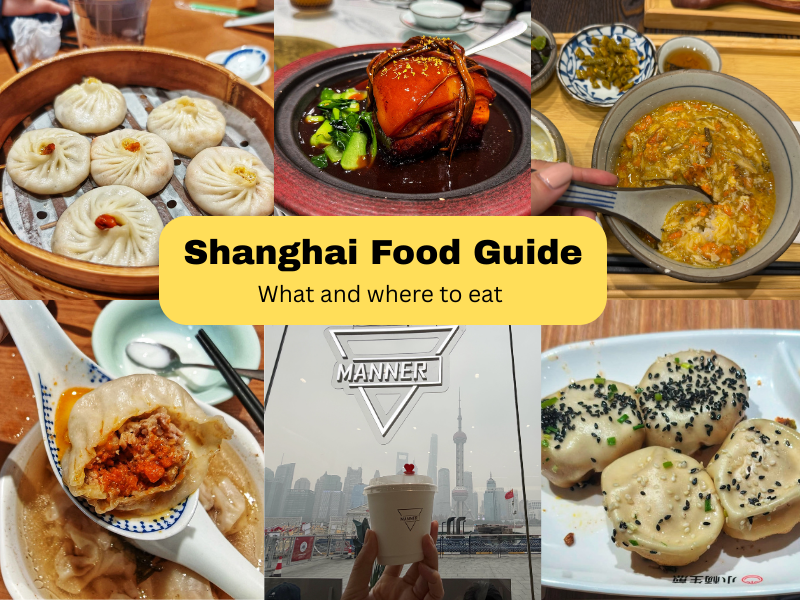
This Shanghai Food Guide serves as a great starting point, showcasing some of the city’s most popular foods and dining spots if you are looking for what and where to eat in Shanghai!
Shanghai is one of China’s most popular tourist destinations, attracting millions of visitors each year. It is undoubtedly the most visited city in the country. With so many tourists flocking to Shanghai annually, it’s no surprise that the city boasts a wide array of excellent food and restaurants.
When exploring the must-try foods in Shanghai, you’ll discover that the local culinary culture emphasizes wholesome ingredients and a delightful balance of taste and health. There are countless eateries throughout the city, ensuring you can enjoy outstanding Shanghai cuisine at any time of the day, no matter where you are.
I had heard so much about Shanghai, especially its famous soup dumplings and other delicious dishes. When I visited, I was eager to immerse myself in the local food scene.
If you’re traveling to Shanghai for the first time and wondering what to eat and where to find it, continue reading this Shanghai Food Guide. I’ll highlight some must-eat local foods and recommend several places where you can enjoy these specialties.
Shanghai Food Guide: Must-Try Food in Shanghai
Shanghai offers a wide variety of dining and food options, which can be overwhelming when deciding where and what to eat in Shanghai. To assist you in your Shanghai food exploration, we have compiled a list of must-try foods in our Shanghai Food Guide.
Shanghai Food Guide – What and Where to Eat:
Xiao Long Bao (Steamed Soup Dumplings)
Sheng Jian Bao (Pan-Fried Buns)
Crab Roe Rice or Noodles
Shanghainese Local Food / Benbang Cuisine: Braised Pork Belly, Pork Chop with Rice Cake, Songshu Guiyu, Lion’s Head Meatballs, Crab Roe Tofu, and more.
Jianbing (Chinese Crepe)
Cong You Bing (Scallion Pancake)
Cong You Ban Mian (Scallion Oil Noodles)
Old Shanghai local pastry: Butterfly Pastry at Park Hotel Deli, QingTuan from Shen Da Cheng
Imperial Style Banquet Style Dining: Gong Yan
This Shanghai Food Guide highlights some of the best and most popular culinary experiences you can find in Shanghai. Let’s start your food adventure!
Xiao Long Bao (Steamed Soup Dumplings)
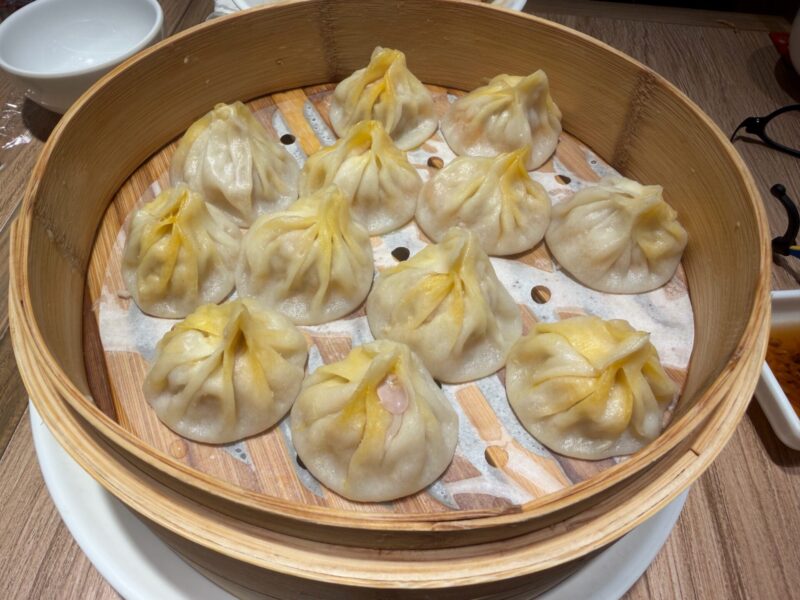
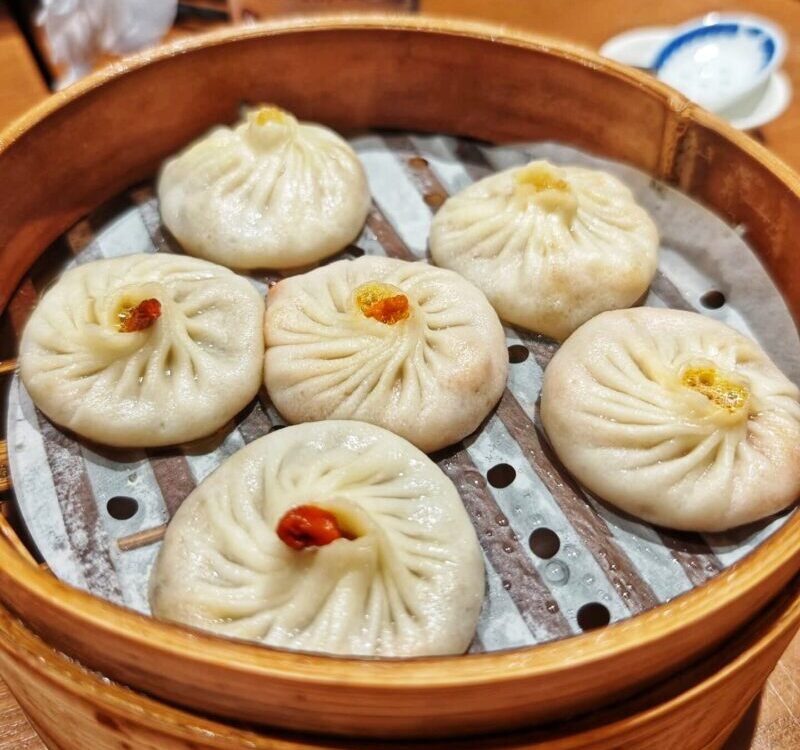
You can’t visit Shanghai without trying Xiao Long Bao (steamed soup dumplings).
These thin-skinned dumplings are filled with pork and piping hot broth. To enjoy them, pick up a Xiao Long Bao with chopsticks, dip it in vinegar, or add some chili for a bit of spice. You can also place a few slices of ginger on top. Before taking a bite, carefully bite a small hole in the dumpling and suck out the soup. Each bite is an explosion of fresh flavor. Truly heavenly.
In Shanghai, you’ll find various fillings for soup dumplings, including pure pork, crab meat, crab roe, prawn, and more.
Where’s the best place to eat Xiao Long Bao in Shanghai?
Jia Jia Tang Bao (佳家汤包)
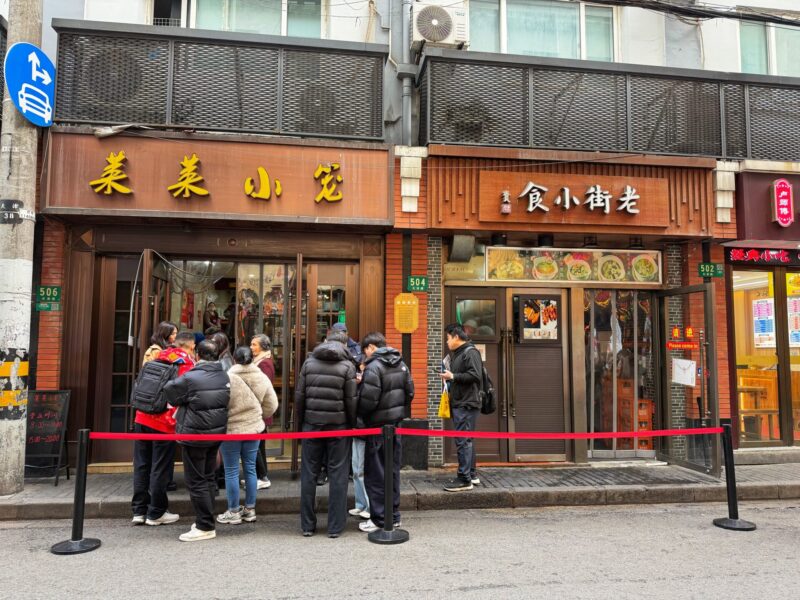
Lai Lai Xiao Long Bao (莱莱小笼) – We loved this most!
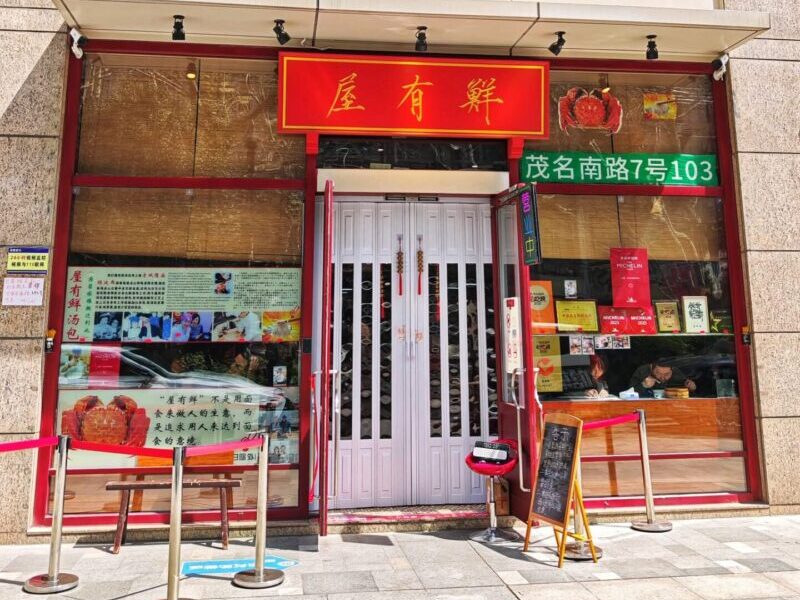
Wu You Xian (屋有鲜)
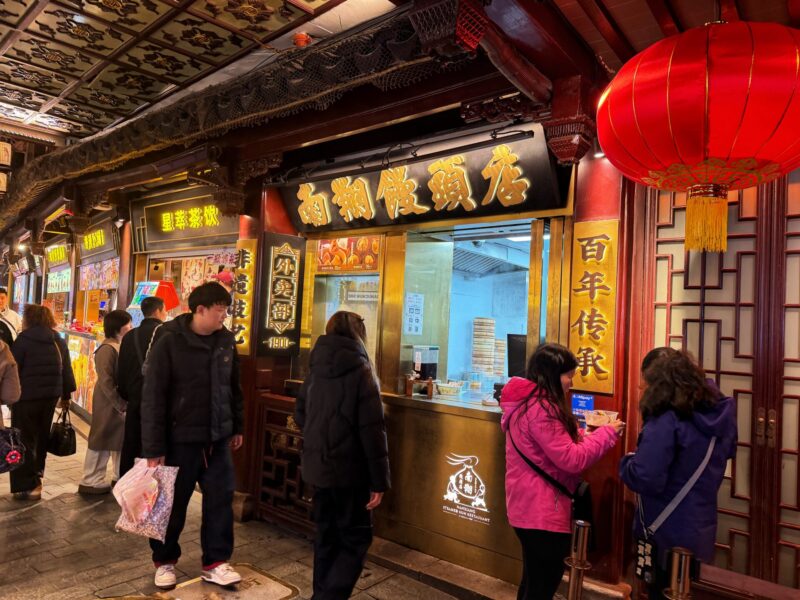
Nanxiang Mantou Dian (南翔馒头店)
Jia Jia Tang Bao – Fresh Meat Xiao Long Bao
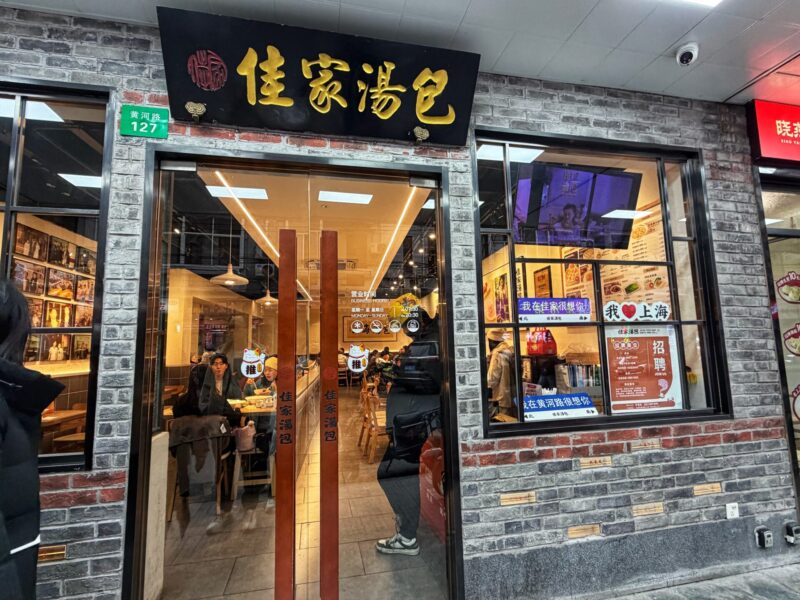
Located on Huanghe Road, Jia Jia Tang Bao (佳家汤包) is a must-visit restaurant in Shanghai. Their Xiao Long Bao is among the most famous in the city, attracting both locals and tourists alike. It’s no surprise to see long lines of people queuing for their dumplings.
During our visit to Jia Jia Tang Bao Restaurant, we ordered their famous fresh pork soup dumpling, crab dumpling, and cong you ban mian (Scallion Oil Noodles).
Everything is made fresh, and our order arrived at the table in about 10-15 minutes. The Xiao Long Bao from Jia Jia Tang Bao was exceptional and quickly became one of our favorite dishes from our Shanghai Food Guide.
Lai Lai Xiao Long (莱莱小笼) has earned a strong reputation and is highly rated by locals. It is also featured in the Michelin Bib Gourmand for its high-quality food.
This eatery is relatively small, but the turnover is fast. Be prepared to share tables with others, especially during peak dining hours. The service involves queuing, ordering, and paying at the counter. Next, you can grab a seat and wait for your food.
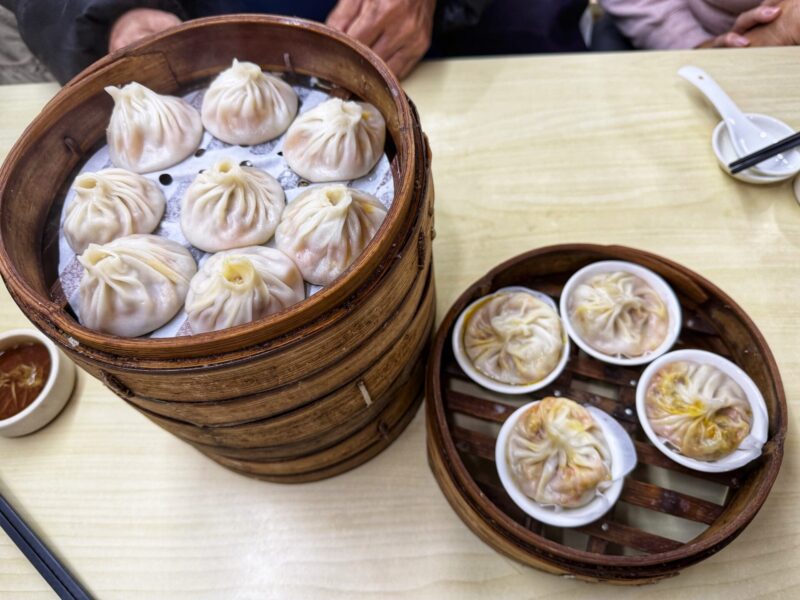
The xiao long bao at Lai Lai is made fresh and served piping hot!
We ordered the pure pork, crab, and crab roe varieties to try. All types of xiao long bao from Lai Lai Xiao Long are excellent! They have a nice size, paper-thin wrappers, generous broth, and perfectly seasoned pork filling.
Lai Lai Xiao Long (莱莱小笼) Address: 1/F, 900 Food City, No. 50 Wanhangdu Road.
Wu You Xian – Crab Roe Filled Xiao Long Bao
Nestled along Maoming South, Wu You Xian (屋有鲜) has quietly established itself as a favorite among locals seeking an authentic experience of xiao long bao. With high ratings on Dianping and recognition as a 1-star Michelin Guide restaurant, we knew we had to pay a visit.
The crab roe xiao long bao from Wu You Xian is their must-order food, featuring a thin, elastic skin that encases a flavorful broth and delicately seasoned crab filling.
In short, we were particularly impressed by their crab roe-filled xiao long bao, which is generously packed and rich in flavor. For anyone craving crab roe xiao long bao, Wu You Xian is highly recommended.
Wu You Xian (屋有鲜) Address: 103, 7 Maoming South Road.
Nanxiang Mantou Dian
If you visit Yu Garden, you can’t miss Nanxiang Mantou Dian (南翔馒头店), a historic Shanghai restaurant established in 1900. Located near Yu Yuan Garden in Old City Shanghai, it is famous for inventing xiaolongbao, the delicate dumplings filled with broth.
Their xiaolongbao are so beloved that they have branches overseas, making it a culinary landmark in the City God Temple area of Shanghai.
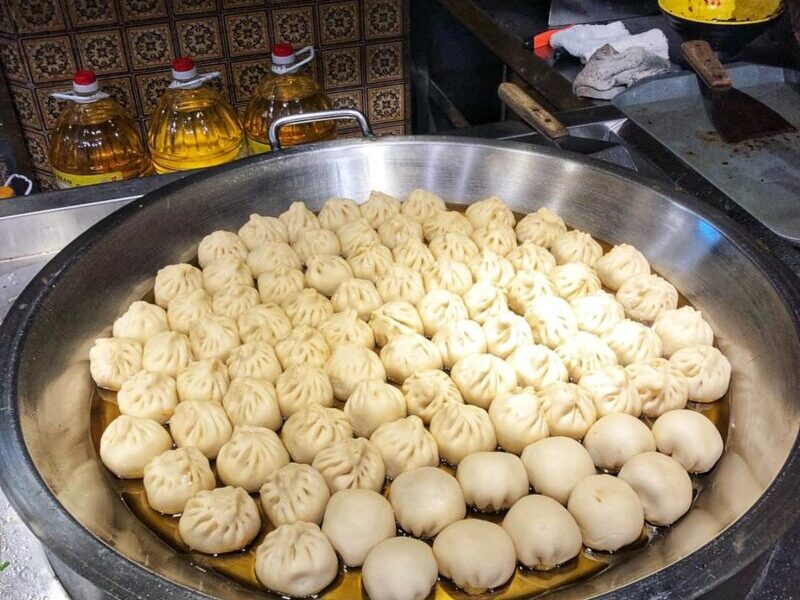
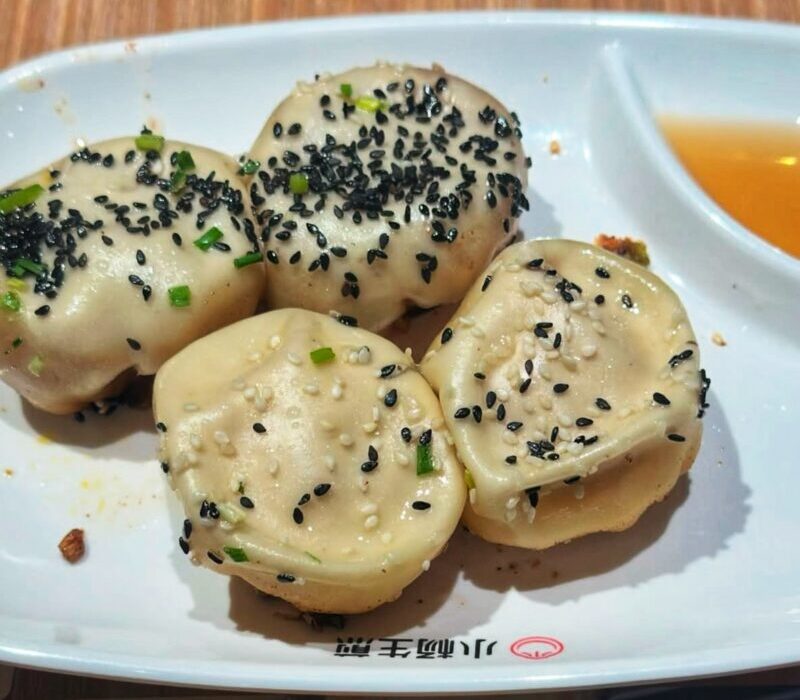
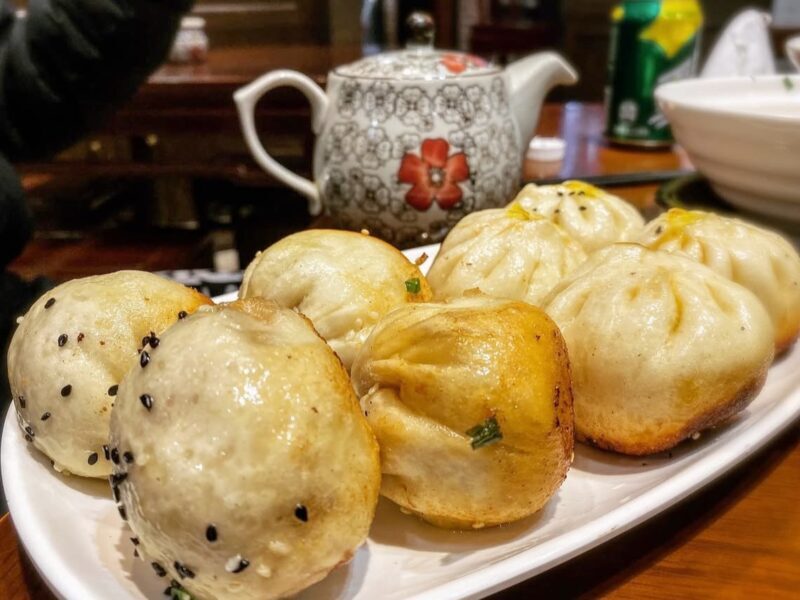
Sheng Jian Bao (生煎包) is a type of Shanghainese pan-fried bun. It is a staple breakfast item in Shanghai, often sold at morning street stalls. Similar to the well-known xiao long bao, these buns are filled with pork and hot soup. However, sheng jian bao has a thicker coating and features a pan-fried bottom instead of being steamed. They are often topped with sesame seeds and scallions.
During our trip to Shanghai, we tried both xiao long bao and sheng jian bao. I personally preferred the thinner skin of the xiao long bao, but others might enjoy the crisp, pan-fried bottom of the sheng jian bao more.
Where’s the best place to eat Sheng Joan Bao in Shanghai?
Yang’s Fried Dumplings (小杨生煎)
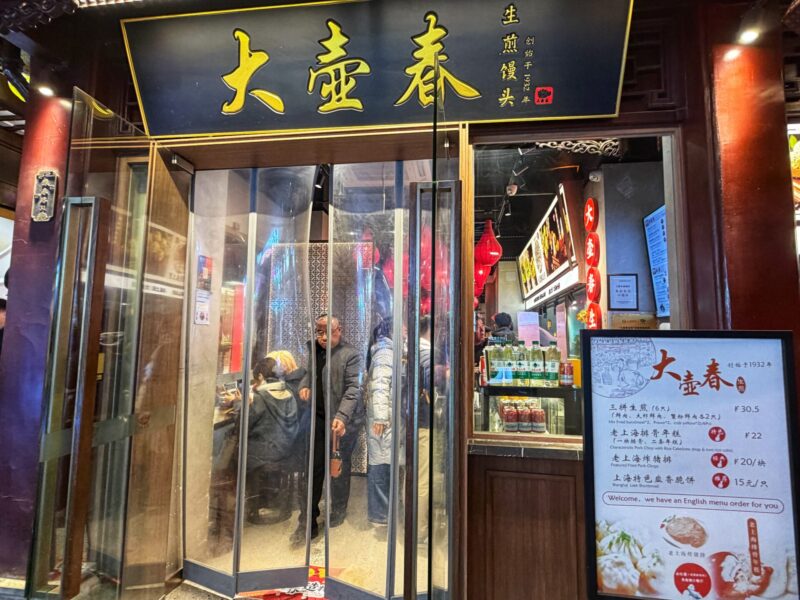
Da Hu Chun (大壶春)
Yang’s Fried Dumpling
If you’re looking for a place to eat sheng jian bao in Shanghai, one of the most famous spots is Yang’s Fried Dumplings (小杨生煎).
There are numerous Yang’s outlets spread throughout the city. Fortunately, there’s even a Yang’s dumpling location on Huanghe Road, directly across from Jia Jia Tang Bao, so you can enjoy both!
Da Hu Chun
Another popular spot to enjoy Sheng Jian Bao in Shanghai is Da Hu Chun (大壶春). Established in 1932, Da Hu Chun has been serving Sheng Jian Bao in Shanghai for nearly 100 years and is a favorite among locals. The prices are also very affordable.
There is a variety of steam-fried dumpling flavors to choose from, including classic plain pork dumplings, prawn, crab roe, and even those filled with goose liver. Compared to other brands we tried, their Sheng Jian Bao from Da Hu Chun is fluffier.
Da Hu Chun (大壶春) has multiple locations in Shanghai, but the one on Sichuan Middle Road is the most popular and has received a Bib Gourmand rating.
Crab Roe Rice / Crab Roe Noodles
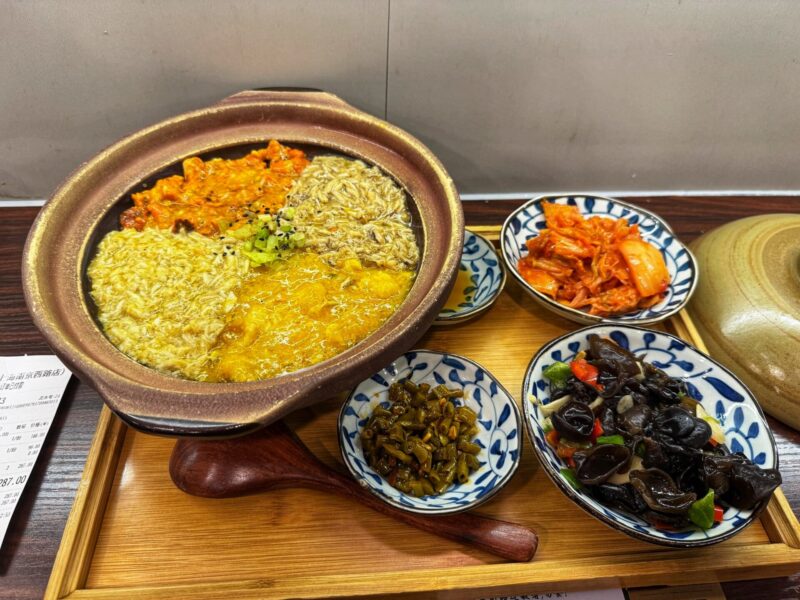
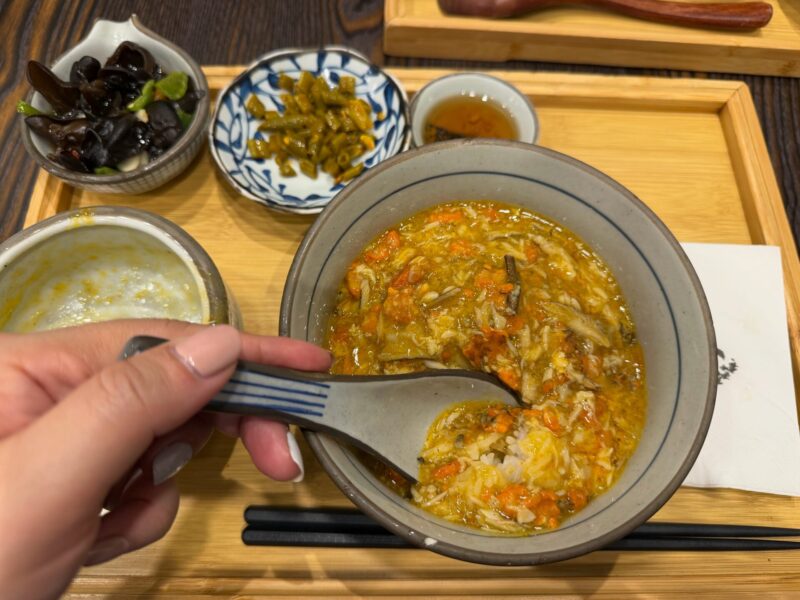
One of the must-try dishes in Shanghai is the flavorful crab roe dish: Crab Roe rice (蟹粉捞饭) or Crab Roe Noodles (蟹黄面). This dish is rich, delicious, and packed with umami flavor. You can mix the creamy, succulent crab roe gravy with your choice of rice or noodles, creating a dish that bursts with flavor.
The tender crab meat in the creamy roe gravy is simply heavenly!
If you’re looking to taste crab roe dishes, we highly recommend visiting Xie San Bao(蟹叁宝). It has a few branches in Shanghai and even Guangzhou. Their crab roe rice is topped with a generous portion of both crab and crab roe.
We tried two popular menu items from Xie San Bao: Rice with Crab Meat Sauce (蟹黄捞饭) and Xie Jia Yan (蟹家宴). We also shared our Xie San Bao food review if you want to know what to order.
It was so delicious and unforgettable. We even returned to sample it again during our food trip to Guangzhou.
Shanghainese Local Food / Benbang Cuisine
Shanghainese local food, also known as Benbang cuisine (本帮菜), represents the authentic culinary tradition of Shanghai. The term “Benbang” translates literally to “local cuisine.” This style of cooking is characterized by rich sauces and spices, as well as fresh and delicate flavors.
There are many signature Shanghainese dishes to enjoy at various restaurants. A hallmark of Shanghai cuisine is the use of soy sauce, which gives dishes a vibrant red and shiny appearance.
To fully experience Shanghai, it’s essential to explore its Shanghainese restaurants. You can choose between fine dining establishments and local home-cooked spots to savor the authentic flavors of the city. Recommended restaurants for a genuine taste of Shanghainese local cuisine include:
Ren He Guan (人和馆)
Old Jesse (老吉士) Address: 41 Tianping Road.
Rui Fu Yuan (瑞福园)
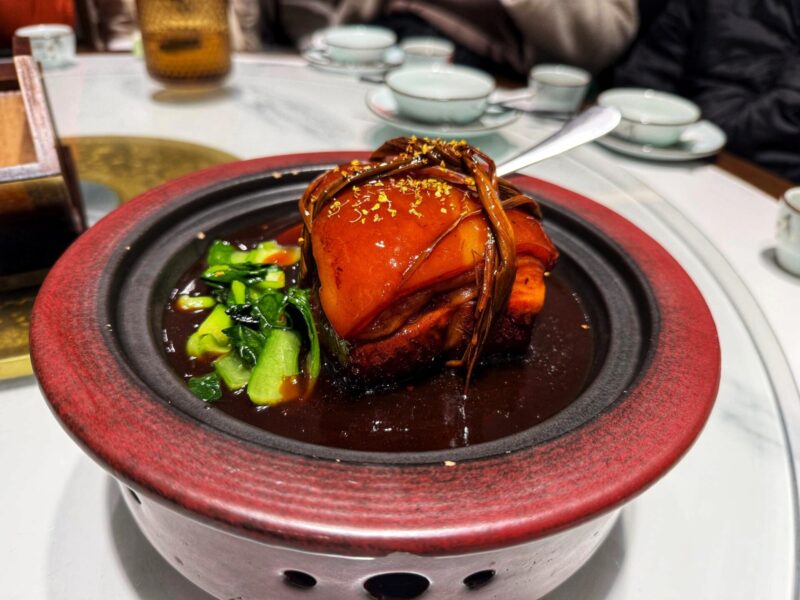
Braised Pork Belly
Here are some of the most popular local dishes you can order while food hunting in Shanghai:
Braised Pork Belly (Hong Shao Rou, 红烧肉) is a classic Shanghainese comfort dish made with thick-cut pork belly braised in soy sauce, sugar, and Chinese cooking wine. The result is tender, melt-in-your-mouth meat coated in a glossy, caramelized glaze. This dish has a rich flavor that is slightly sweet and savory, with layers of fat and lean meat that balance perfectly on the palate.
Pork Chop with Rice Cake
Pork Chop with Rice Cake (排骨年糕) is a local specialty that is commonly ordered. The pork ribs are coated in a red, sweet, sticky soy-based sauce, while the rice cakes are slippery and soft. Both the ribs and rice cakes are deep-fried to perfection.
Songshu Guiyu
Sweet and Sour Mandarin Fish (Songshu Guiyu, 松鼠桂鱼) is a famous Jiangnan-style dish often served in restaurants or traditional eateries in Shanghai. The whole fish is deboned, scored, and deep-fried until golden before being topped with a bright-red sweet and sour sauce. It’s shaped like a squirrel’s tail through a special cutting and frying technique.
This dish combines crispy skin with tender white flesh, balanced by a vibrant sauce that is tangy and sweet, representative of Shanghai’s flavors.
Lion’s Head Meatball
Lion’s Head Meatballs (Shizi Tou, 狮子头) are large meatballs stewed or braised with napa cabbage in a light broth or soy-based sauce. They are named “Lion’s Head” because the meatballs resemble the head of a lion, symbolizing strength and prosperity. The texture is soft and juicy, and the meatballs absorb deep flavors while remaining moist inside. This dish is one of the representative specialties of Shanghai.
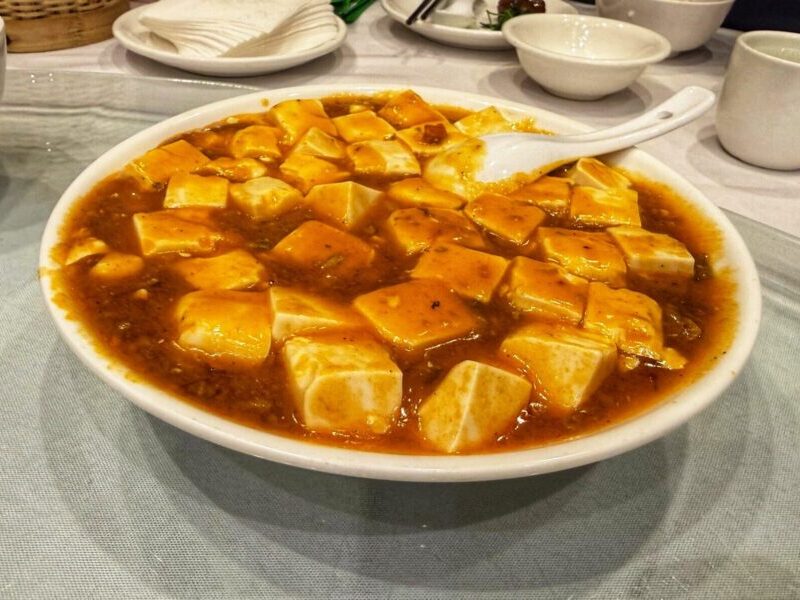
Crab Roe Tofu
Crab Roe Tofu (Xie Fen Tofu, 蟹粉豆腐) is a famous Shanghainese dish. This delicacy features soft tofu braised in a rich and savory sauce made with real crab meat and roe. The sauce is thickened with egg whites and cornstarch, creating a flavorful coating for the tofu. The rich, fresh crab roe sauce perfectly complements the soft tofu, making it an excellent dish to enjoy with rice.
Jianbing (Chinese Crepe)
Shanghai Jianbing and Cong You Bing
Jianbing (煎饼), also known as a Chinese crepe, is one of China’s most beloved street snacks. This dish consists of a thin crepe that is layered with egg, herbs, cuibing (脆饼) or baocui (薄脆), chili paste, fermented bean paste, and sometimes meat. The light, thin, and crispy Jianbing is an excellent choice for starting the day. If you’re particularly hungry, you can top it with youtiao (油条) for added flavor and texture.
Jianbing is typically enjoyed for breakfast alongside hot soy milk. You can find Jianbing stalls throughout the city at any time, but most Jianbing carts in Shanghai traditionally close by 10 a.m.
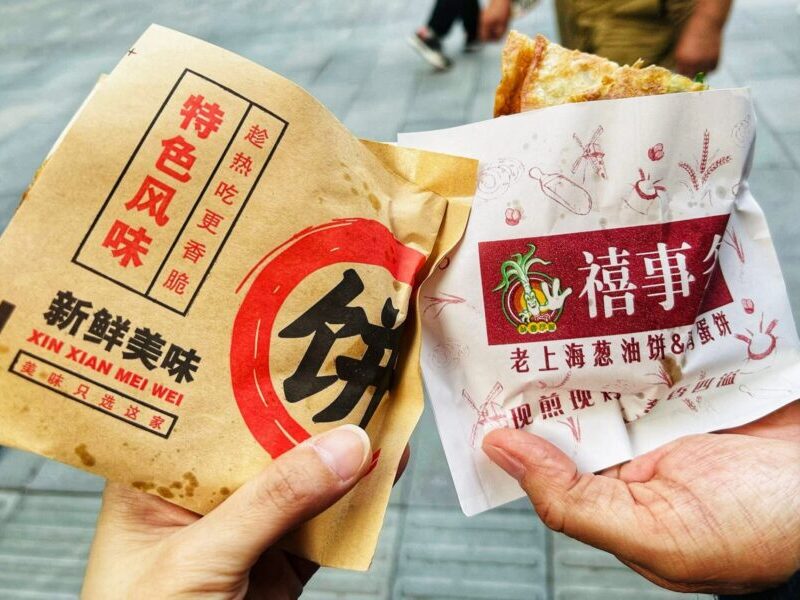
Cong You Bing (Scallion Pancake)
Cong you bing (葱油饼) refers to Chinese scallion pancakes, which are a type of savory flatbread made from layered wheat dough filled with scallions and sometimes pork. Similar to Jiabing, cong you bing is a traditional street food and popular breakfast item.
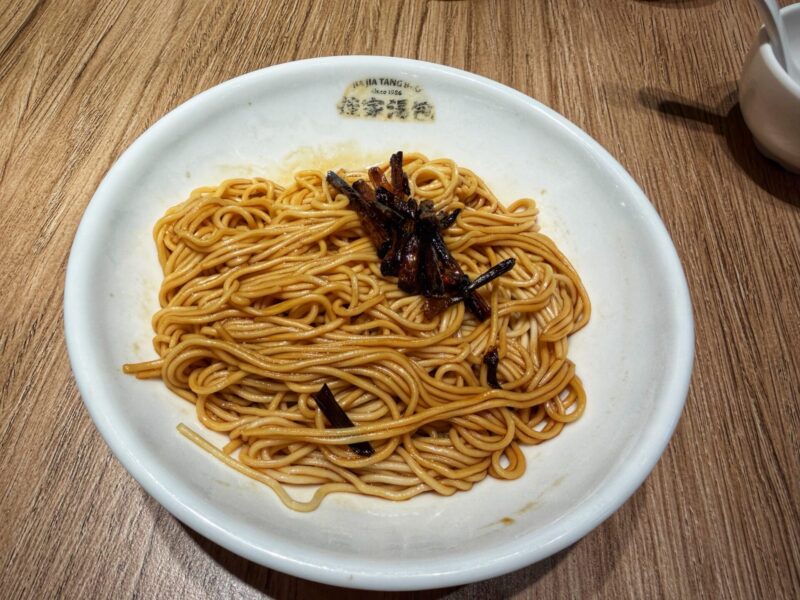
Cong You Ban Mian (Scallion Oil Noodles)
Scallion Oil Noodles (cong you ban mian, 葱油拌面) are a classic noodle dish from Shanghai. This simple yet hearty dish features tender noodles tossed with fragrant scallion oil, soy sauce, and crispy fried green onions. You can enjoy cong you ban mian at street vendors or in any Shanghainese restaurant.
I had my cong you ban mian at Jia Jian Tang Bao, which tasted good!
Butterfly Pastry at Park Hotel Deli
If you want to experience the old Shanghai pastry scene, you must not miss this one.
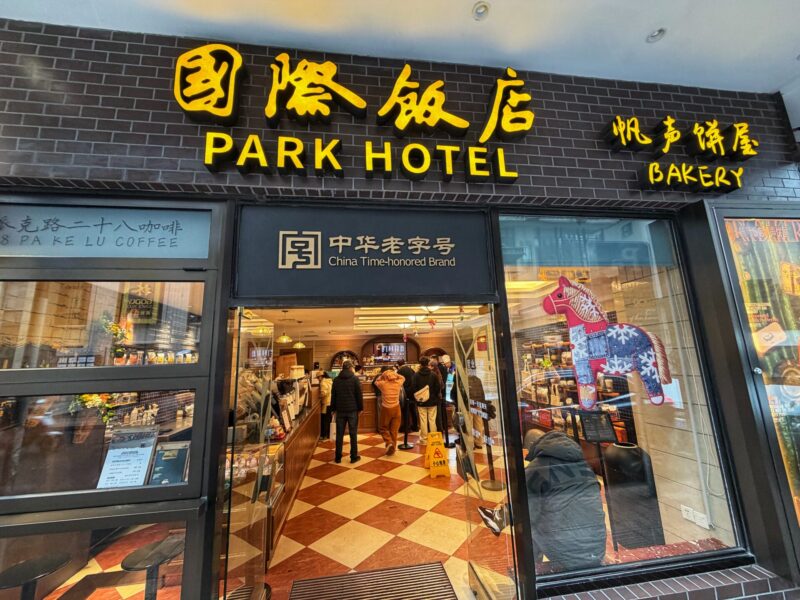
Park Hotel Deli (国际饭店西饼屋), located on Huanghe Road next to the People’s Park, is a popular bakery renowned for its butterfly-shaped pastries, which attract long lines of eager customers. The Park Hotel Deli is situated within the historic Park Hotel and has been making these pastries since the 1930s. They claim to still use the same recipe created by their French pastry chef nearly 100 years ago.
The Western-inspired butter palmiers, known as Butterfly Pastry (蝴蝶酥), are the most popular items on the menu.
Please note that a long queue often forms outside the bakery daily starting at 8 a.m. when it opens. On average, you may need to wait at least 30 minutes or more to get your turn for the palmier. Sometimes, the wait can exceed 2 hours!
We tried the Butterfly Pastry, and it was full of flavor and buttery goodness, with delightful layers of crispiness. It remained crispy even after some time! You can buy some as souvenirs, but be cautious about exposing them to air for too long, as they are susceptible to moisture, which can affect the taste.
Park Hotel Deli (国际饭店西饼屋) Address: 170 Nanjing Road West. Business Hours: 8:00 to around 20:00 (depending on inventory) Price: CNY 32 for a bag of butterfly pastries.
QingTuan from Shen Da Cheng
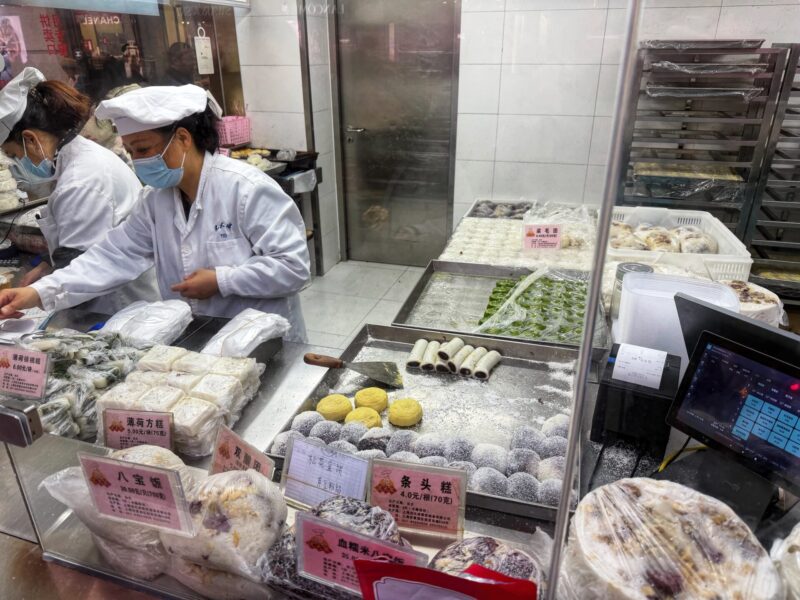
Shen Da Cheng (沈大成) is a long-established brand that has been selling locally flavored snacks, dumplings, noodles, and Shanghainese cuisine since 1875. It specializes in old Shanghai pastries and is renowned for its flavors and outstanding quality.
Some of its popular offerings include glutinous rice balls (qingtuan, 青团), sticky rice cake bars (tiaotougao, 条头糕), shuangniang tuan (双酿团), jin tuan (金团), and various traditional Shanghai snacks.
The Shen Da Cheng Restaurant is prominently located at the intersection of East and West Nanjing Pedestrian Street. It has two levels: the first level is dedicated to noodles and quick bites (with a pastry window for takeaway), while the second level is a dine-in restaurant offering a variety of authentic old Shanghai cuisine.
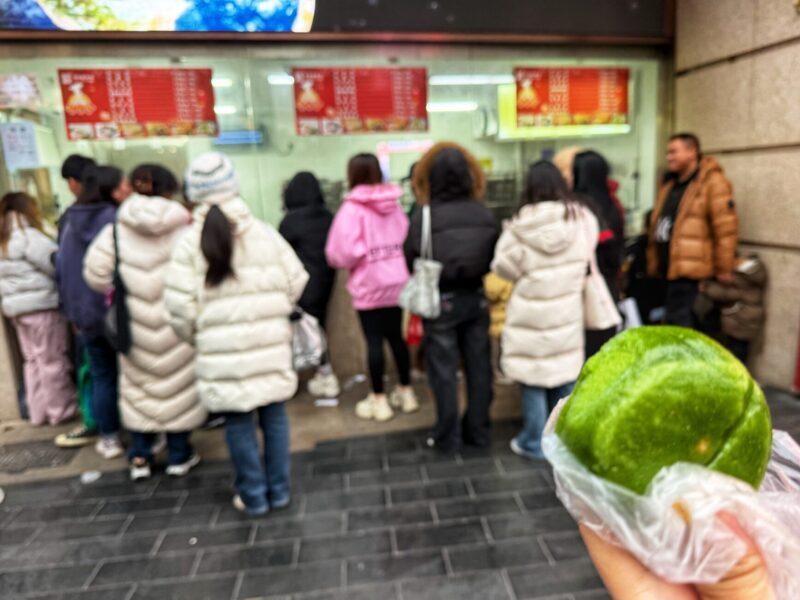
During our visit, we tried Shen Da Cheng’s local pastries, and we particularly enjoyed their freshly made qingtuan (green glutinous rice balls). The qingtuan are available with classic fillings like sweet red bean paste, as well as modern twists featuring savory options such as salted egg yolk and pork floss, fresh meat, or even crayfish. They are known for their vibrant green color and chewy texture.
In our opinion, the sweet red bean paste filling is still the best!
Shen Da Cheng (沈大成) Address: 636 Nanjing East Road, Huangpu District. Business Hours: Daily from 9:00 to 23:00
Imperial Style Banquet Style Dining – Gong Yan
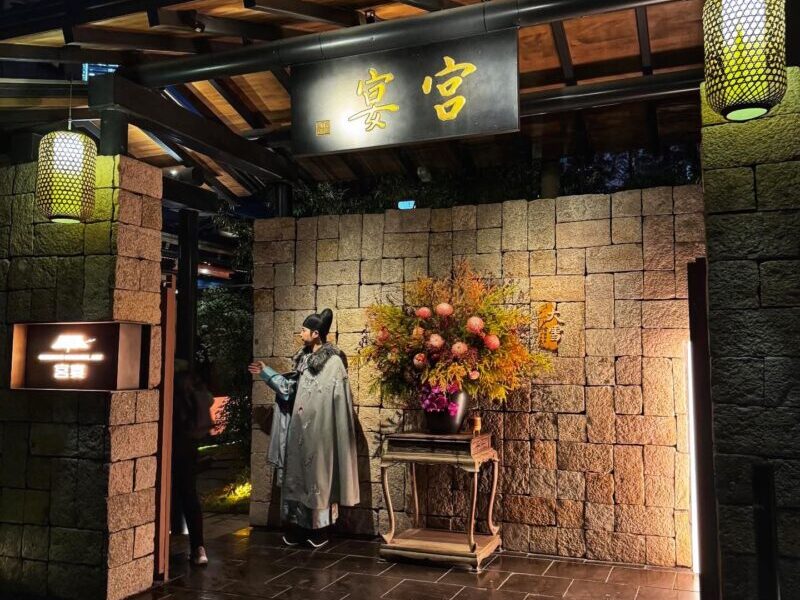
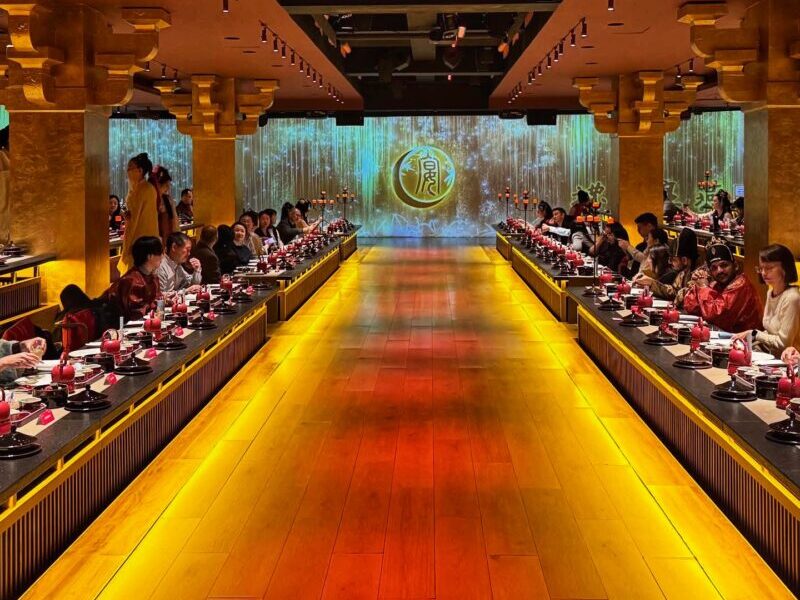
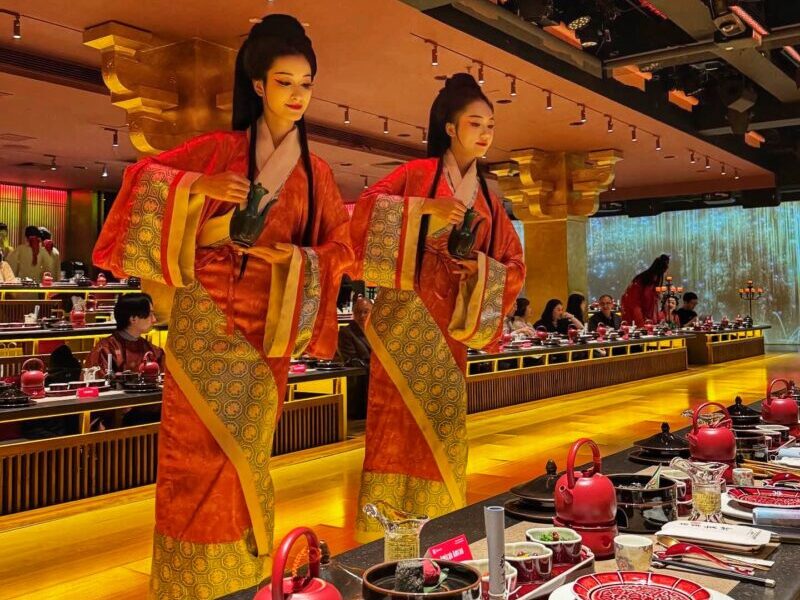
For an unique culinary experience in Shanghai, consider trying the Imperial Style Banquet Dining – Gong Yan (宫宴). This immersive dining event is highly popular in China, as it recreates the grandeur of ancient imperial banquets, where every guest is treated like royalty.
During the experience, you can dress in traditional attire and enjoy an exquisite eight-course meal while watching captivating performances.
The entertainment throughout the dinner includes beautiful shows and interactive elements, making it a memorable feast. Once-in-a-lifetime experience!
Here are a few tips for your Gong Yan experience:
If possible, try to get front-row seats to enhance your view of the performances.
Consider adding on the costume package for around $30, which includes makeup.
Arrive early to dress up, as costume selections are first-come, first-served.
Don’t forget to carve out time for photos in your costumes! Enjoy your royal dining adventure!
Where To Eat in Shanghai
If you’re looking for fantastic places to sample local food in Shanghai, here are a few options:
Wujiang Road Food Street (吴江路小吃街) is one of Shanghai’s most iconic food streets, featuring numerous stalls, snack bars, and quick eats. It’s a local favorite for dinner and late-night snacks.
Huanghe Road (黄河路) is a short but vibrant food street filled with affordable eateries, noodle shops, and dumpling houses. Here, you can find popular spots like Jia Jia Tang Bao and Yang’s Dumplings, along with other beloved local dishes.
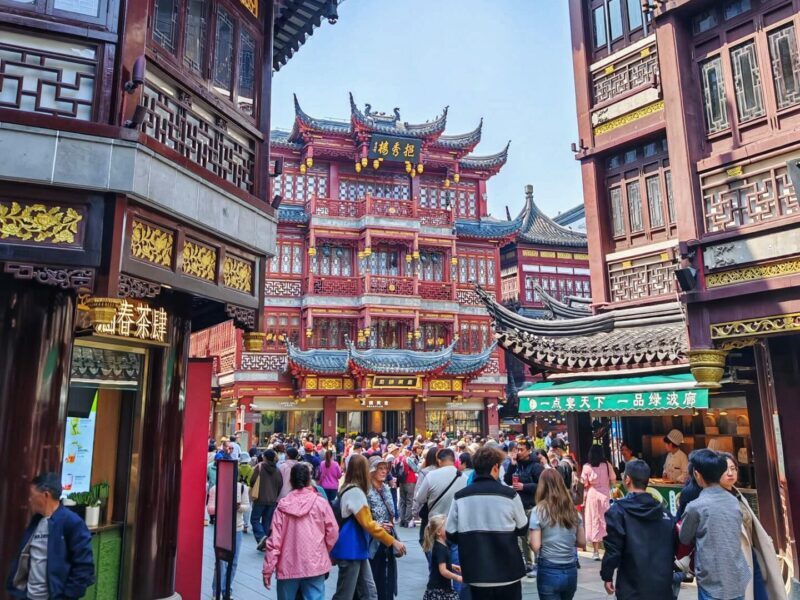
The Old Town near Yu Garden (上海老城街) offers a mix of tourist-friendly shops and hidden culinary gems. While some establishments cater to tourists, many stalls and family-run restaurants are tucked away in side alleys or quieter corners. This area is great for getting a genuine taste of what Shanghai has to offer.
Overall: Shanghai Food Guide Lists
All in all, we hope this Shanghai Food guide is helpful to find some of the best food to eat. Shanghai is truly a destination for food lovers, offering insights into its rich history, culture, and influences. From steaming baskets of xiaolongbao and pan-fried buns to the mouthwatering Shanghai Bengbang cuisine, there are countless delicious dishes and hidden gems awaiting discovery.
Whether it’s your first visit or a return trip, be sure to set aside time and appetite for all the incredible food!