Last updated on September 13th, 2026
Explore the Southern Xinjiang Taklamakan Desert itinerary featuring breathtaking desert landscapes, visits to canyons and the Sand Kingdom, as well as essential attractions and cultural sites.
Xinjiang is a vast region characterized by diverse landscapes, offering unforgettable travel adventures. Even if your trip focuses solely on Southern Xinjiang, the attractions will provide a remarkable variety of scenery. The Southern Xinjiang travel itinerary can be divided into two loop routes: the Taklamakan Desert Loop and the Pamir Plateau Loop.
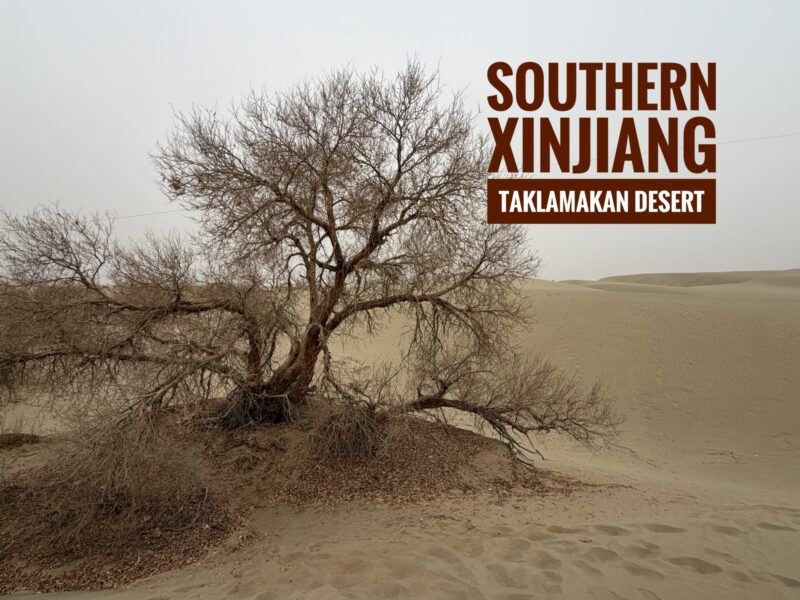
On the Southern Xinjiang Taklamakan Desert Loop (南疆-塔克拉玛干沙漠), you’ll encounter deserts, sand dunes, and oases, creating a truly unique experience. This route showcases the awe-inspiring and varied landscapes of western China. After some time in the Taklamakan Desert, you will be greeted by snow-capped mountains and mesmerizing lakes in the Pamir Plateau Loop, offering an entirely different experience.
In this Southern Xinjiang Taklamakan Desert Travel Guide blog, we’ll share how we spent our days in the region, including activities and sights to see, along with all the helpful information you’ll need to plan your itinerary for the Taklamakan Desert.
Southern Xinjiang itinerary: Taklamakan Desert Route
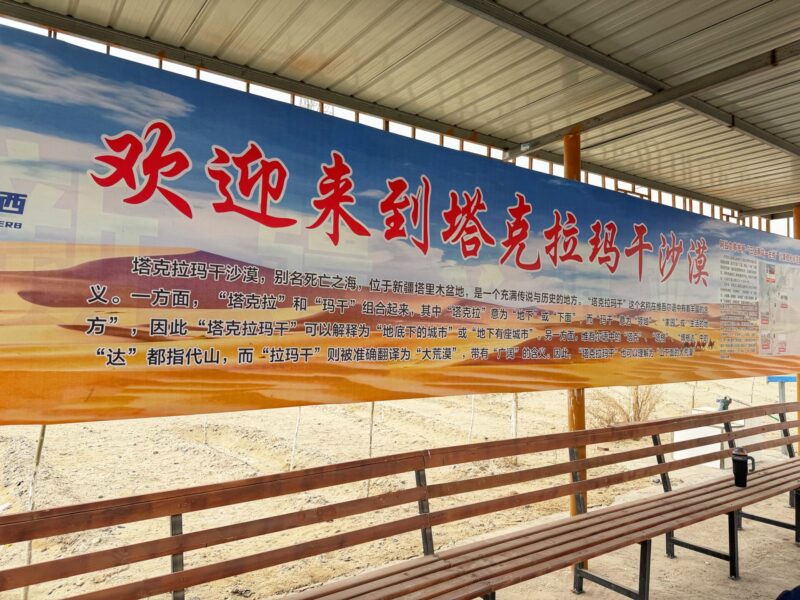
Our Southern Xinjiang Taklamakan Desert itinerary will take us to explore the stunning sand dunes, canyons, and the sand kingdom. We will start in Kashgar and visit several attractions and cities along the way. After completing a loop, we will return to Kashgar, concluding our 5-day adventure. Below is a detailed guide on how to plan an amazing five days along the Taklamakan Desert route in Southern Xinjiang.
Southern Xinjiang Taklamakan Desert Route Itinerary:
- Day 1: Travel from Kashgar to Aksu, with a visit to the Dawakun Desert.
- Day 2: Wensu Grand Canyon
- Day 3: Cross the Taklamakan Desert Highway and arrive in Hotan.
- Day 4: Spend the day exploring Hotan.
- Day 5: Visit the Xitiya Ancient City and Shache, then return to Kashgar.
After completing the Taklamakan Desert route itinerary, we highly recommend your next stop be the Pamir Plateau, which offers another incredible travel experience. If you need assistance planning your trip to other locations in Southern Xinjiang, be sure to check out:
- Ultimate Southern Xinjiang Travel Guide blog
- Kashgar: When Ancient Past Meet Present
- Southern Xinjiang: Pamir Plateau Itinerary
Day 1: Kashgar – Dawakun Desert – Aksu
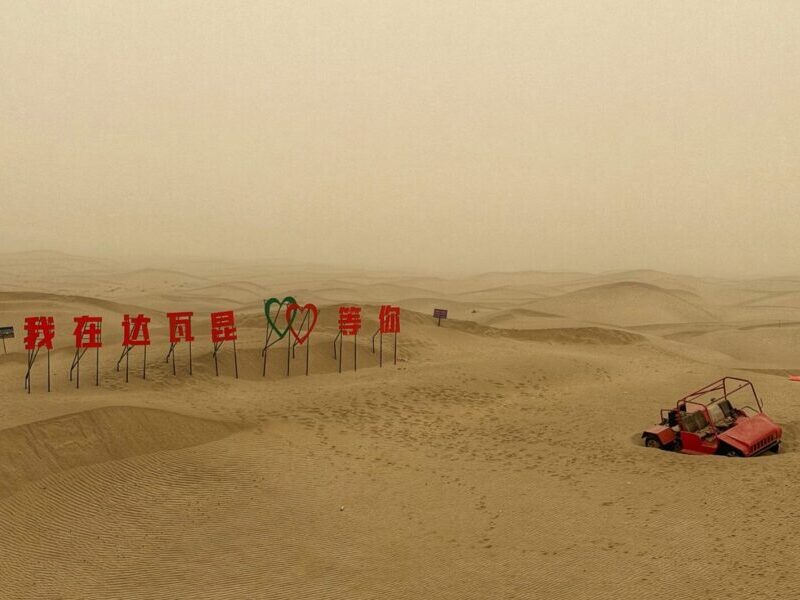
Today, we will begin our itinerary for the Southern Xinjiang Taklamakan Desert Route. We departed at around 8:30 AM, as we had a considerable distance to cover. After a two-hour drive, we arrived at our first destination: the Dawakun Desert.
Dawakun Desert (达瓦昆沙漠) is located about 110 km (70 miles) from Kashgar. Unlike the nearby Taklamakan Desert, which is mainly for sightseeing, the Dawakun Desert is a popular destination for those seeking a desert experience.
Travelers can easily access the scenic area to enjoy the towering sand dunes without having to venture deep into the uninhabited wilderness.
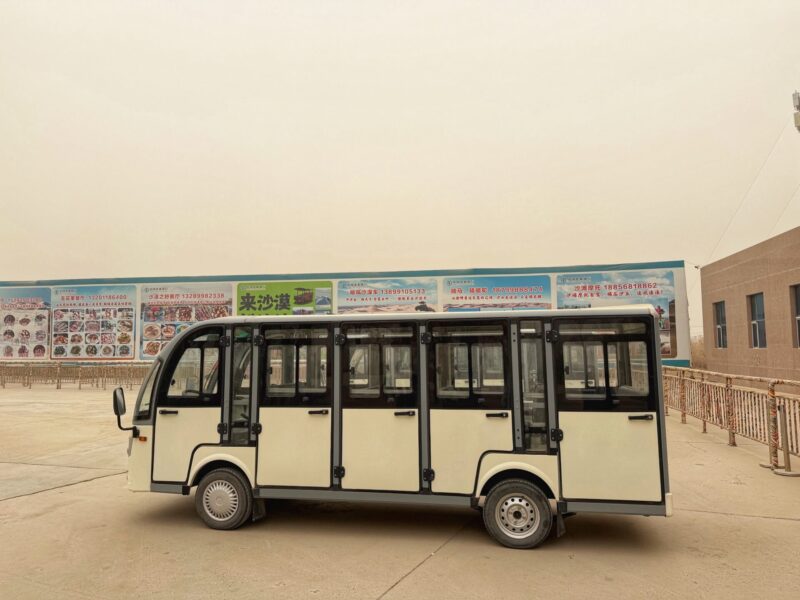
Upon entering the park by shuttle bus, you can choose to explore either the theme park area or the desert area.
In the theme park, you’ll find exhibitions, sculptures, and a lake where you can take leisurely strolls. For those seeking more excitement, head to the desert area, where you can select from various desert activity experiences for an additional fee.
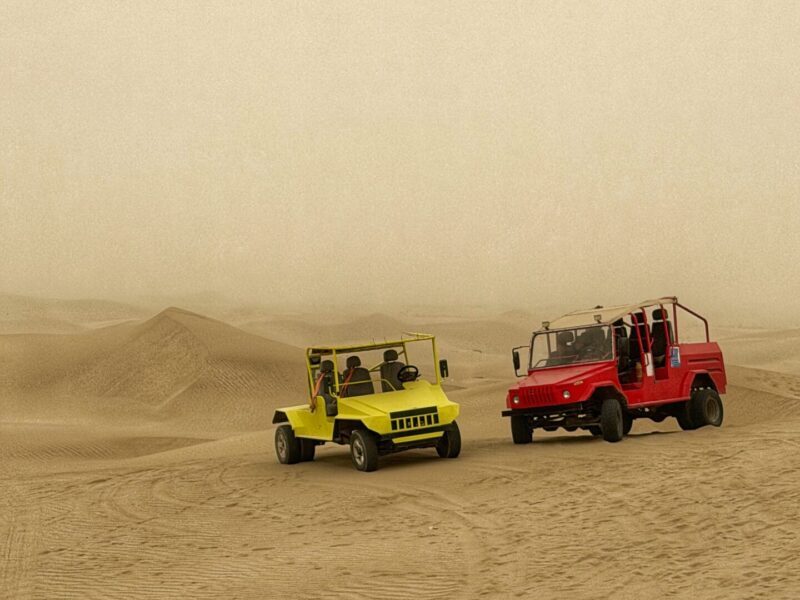
The Dawakun Desert offers two main desert experiences for visitors to enjoy.
Desert Buggies and ATVs: Visitors have the opportunity to experience the thrill of off-road vehicles as they race across the steep sand dunes. The 10-minute ride will take you to the heart of the Tawakun Desert Scenic Area. This experience comes highly recommended; otherwise, you would have to walk there, which can be quite challenging. The cost is CNY 120 for a return journey.
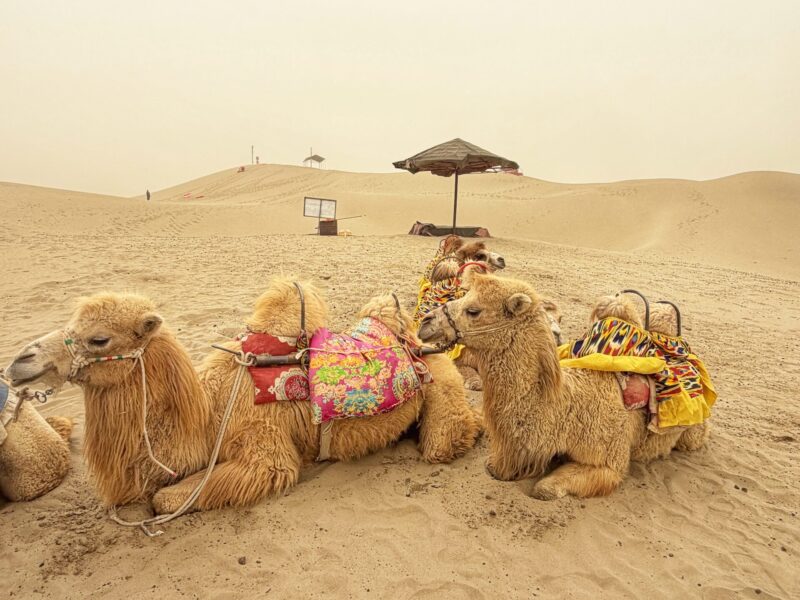
Camel Trekking: At the Dawakun Desert Scenic Area, you can opt for camel rides, which offer a slower-paced experience of the desert. The cost is CNY 100 for about 15-minutes ride.
Buddle packages are priced at CNY 190, which is slightly cheaper. There are also other desert experiences available, such as photoshooting tour or a deep desert diving experience. However, we believe these two options are the most unique for travelers to enjoy the desert.
We decided to participate in both activities, and we genuinely had a great time. At the Tawakun Desert Scenic Area, we also enjoyed sand skating, which was a lot of fun for us.
We spent about 2 to 3 hours exploring the desert. After that, we continued with a 4-hour drive to Aksu, where we took the opportunity to relax and rest at the hotel.
Dawakun Desert (达瓦昆沙漠)
Getting there: Approximately 110 km with 120-minutes drive from Kashgar.
Admission Fee: CNY 40 for the entry and CNY 10 for the shuttle bus. The desert experience is optional with an additional fee.
Suggested Time Spend: Approximately 3 – 4 hours.
Stay: Accommodation at Aksu
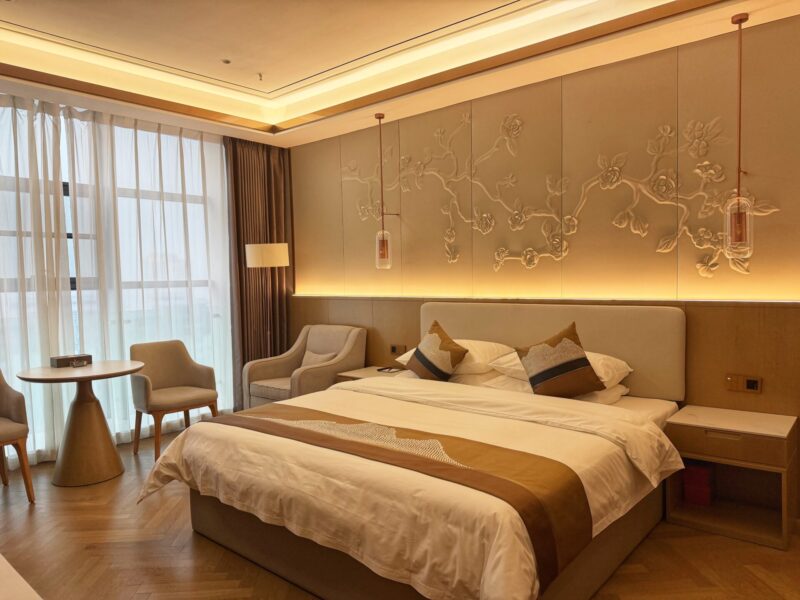
Our Stay at Aksu: The Aksu hotel is situated in the downtown area. The hotel is modest yet comfortable, making it a pleasant place to stay. Furthermore, compared to accommodations in Kashgar, it offers more spacious rooms at a significantly lower rate.
We had our dinner at the nearby restaurant recommended by the staff. The food was so good.
Day 2: Wensu Grand Canyon
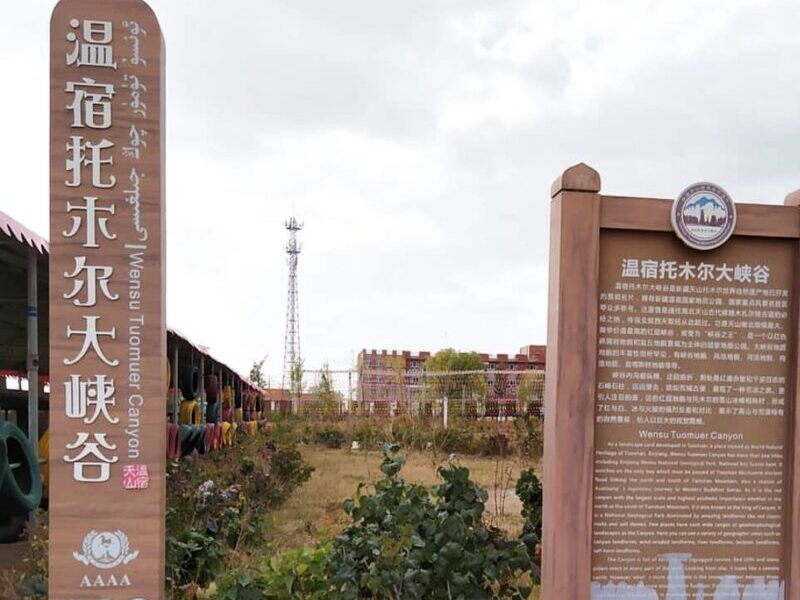
The next morning, we headed to the Wensu Grand Canyon, which took about 1.5 hours from the hotel.
Wensu Grand Canyon (温宿大峡谷) is also called Xinjiang Tianshan Tomur Scenic Area Grand Canyon (天山托木尔大峡谷). The canyon is located 83 kilometers north of Aksu City, and is an ideal destination fo a 1-day or 2-day excursion from the Aksu city center. Often referred to as the “King of Canyons,” it features dramatic red Danxia landforms and impressive salt karst caves.
Upon arrival at the visitor center, we purchased our admission tickets and had the option to board the rugged shuttle bus. The entrance fee to the park is 36 RMB, and the mandatory shuttle bus costs 60 RMB per person. If you’re driving a 4WD, you can also register to drive directly into the canyon area.
Xinjiang Tianshan Tomur Scenic Area Grand Canyon Admission Ticket
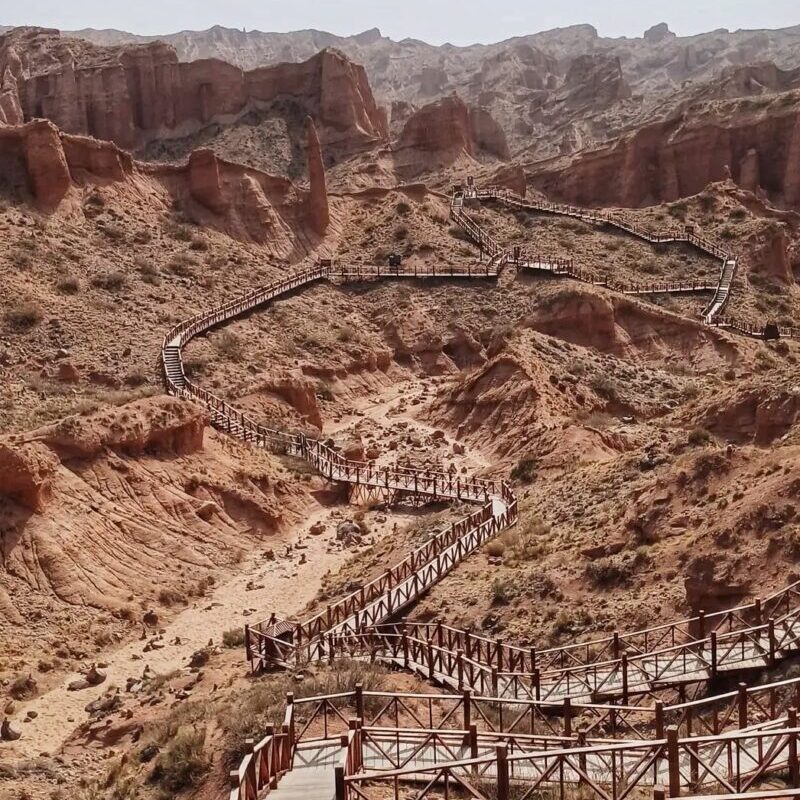
There are several valleys to explore, and we chose the most popular hiking trail. From the visitor entrance, we took a rugged bus shuttle that drove us deep into the canyon to the main terminal station (Valley 4), which took about 40 minutes.
At Valley 4, there is a primary observation deck where we enjoyed panoramic views of the stunning landscape. The view was so breathtaking!
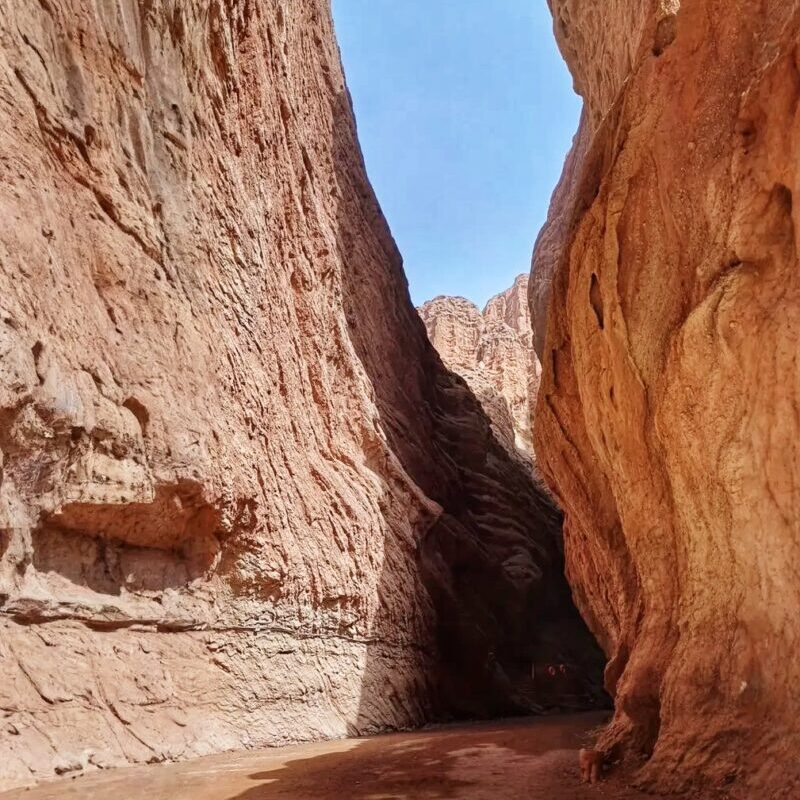
After spending some time exploring the area, we hiked back down from Valley 4 through the scenic sections toward Valley 3. The trail passes through the iconic “Skyline” (一线天), where the canyon narrows down to a breathtaking sliver. The entire hiking journey took us about 3 hours, including rest breaks. From the Valley 3 bus stop, we took a 35-minute shuttle bus ride back to the entrance.
In total, we spent about 6 hours at the Wensu Grand Canyon.
Wensu Grand Canyon (温宿大峡谷)
Getting there: Approximately 83 km with 90-minutes drive from Aksu.
Admission Fee: CNY 36 for the entry and CNY 60 for the shuttle bus. Check for package options.
Suggested Time Spend: Approximately 5 – 6 hours.
Stay: Accommodation at Aksu
Our Stay at Aksu: We spent our second night at the Aksu Hotel. After our canyon trip, we were so tired that we enjoyed an incredibly deep sleep.
Check for the room rate for hotels in Aksu
The breakfast at the Aksu Hotel was excellent, featuring a wide variety of food options. However, coffee was not available. After having breakfast, we began our journey. The trip from Aksu to Hotan is approximately 500 kilometers and takes about 6 to 7 hours.
Day 3: Cross the Taklamakan Desert Highway – Hotan
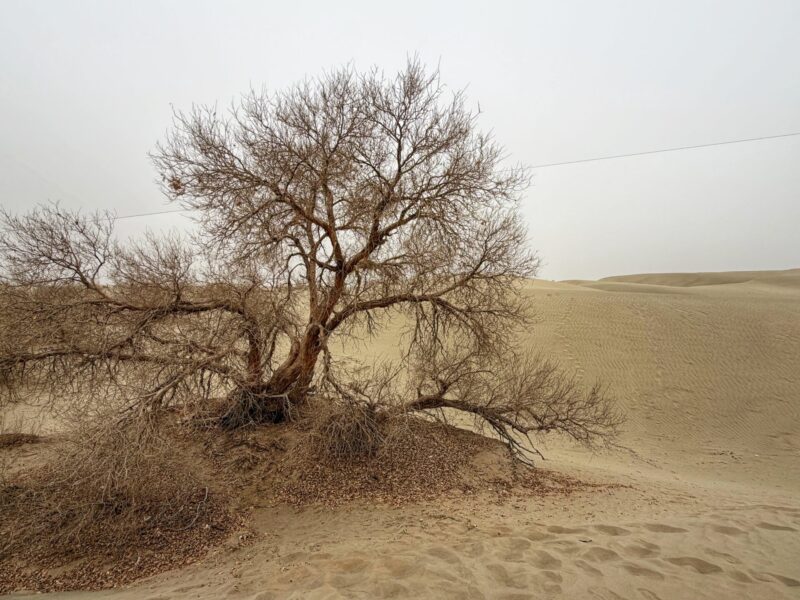
The following day 3 itinerary, we crossed the Taklamakan Desert (塔克拉玛干沙漠) using the Tarim Desert Highway (塔里木沙漠公路). This highway, spanning a total length of 522 kilometers (with 446 kilometers located in a shifting sand region), holds the title of the longest road built in an area of shifting sand dunes.
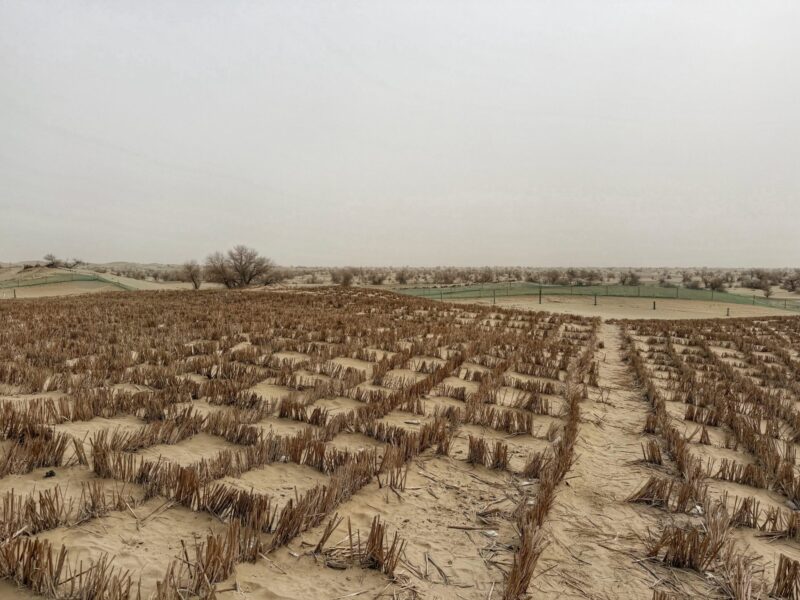
Constructed in the 1990s for the petroleum industry, the highway features planted shrubs on both sides to prevent it from being engulfed by the shifting sands. Additionally, 108 water stations maintain the greenery along the highway.
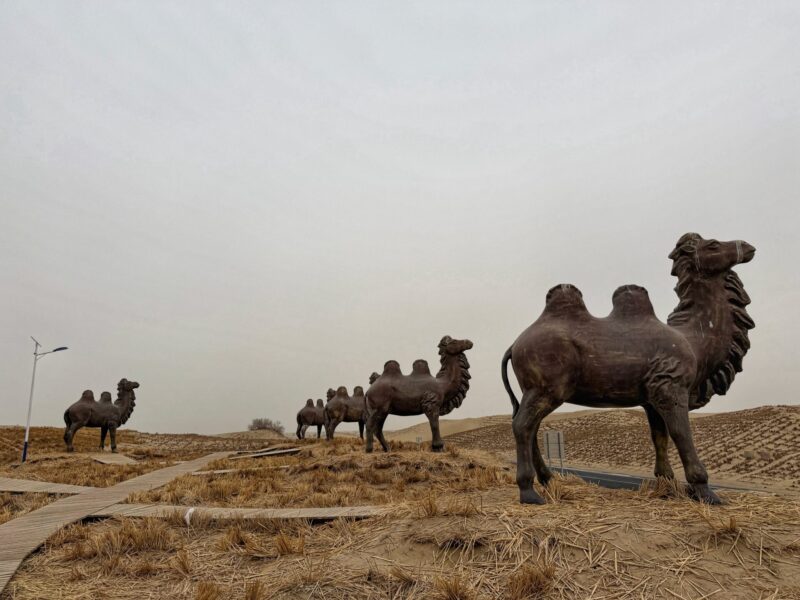
This Taklamakan Desert Highway drive will take most of the day. Keep in mind that this is a long drive with very limited food options and service stations. So it’s best to bring along snacks and light bites. We had a simple lunch at one of the rest areas along the highway.
During the long journey, we made several pit stops where we could get out and take photos. By the end of the day, we arrived in Hotan to rest and recharge. We visited the night market to sample local delicacies.
Taklamakan Desert (塔克拉玛干沙漠)
Distance/Time: Approximately 500 km (around 6-7 hours by car).
Hotan Night Market
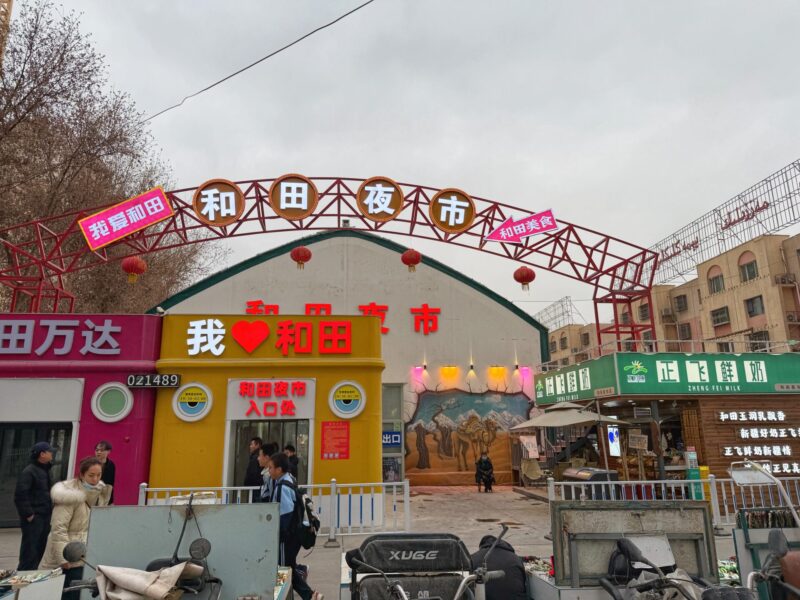
The Hotan Old Night Market (和田老夜市) is a must-visit destination in Xinjiang, renowned for its vibrant food scene. Located on Renmin West Road, it features a sprawling greenhouse-style hall layout with 260 stalls that offer a wide variety of authentic Xinjiang food, all made with quality ingredients at reasonable prices.
Xinjiang Hotan Travel Tips: There are two night markets in Hotan, Hotan Old Market (located on Renmin West Road) and the Hotan New Market (found on Aqale East Road). The Old Night Market is closer to the downtown area and has a more lively atmosphere, making it highly recommended for visitors. If you only have one
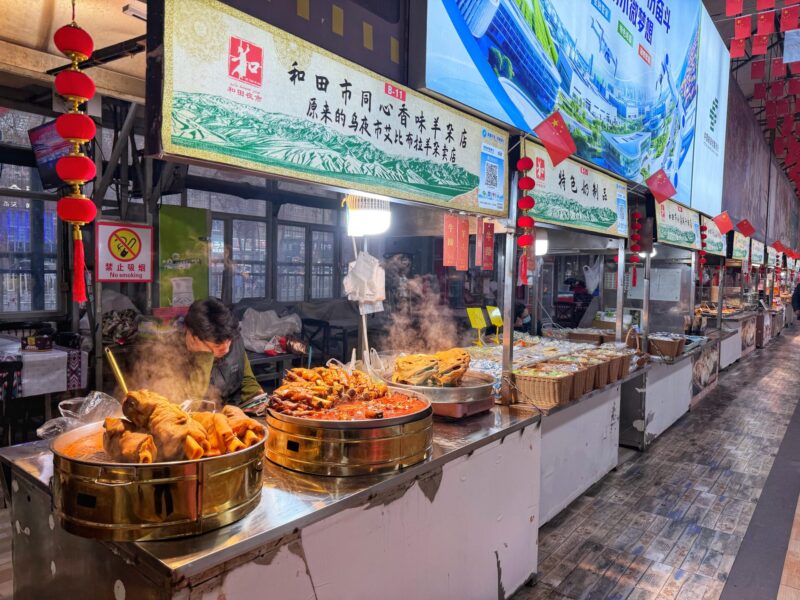
The Hotan Night Market opens at 8 PM. The entire street buzzes with life, creating a lively and festive atmosphere. Be sure to try the Red Willow Grilled Meat, Whole Roast Lamb, Grilled Lamb Ribs, Roast Buns, and the unique Stuffed Lamb Stomach.
Don’t miss the signature dish called Three Eggs One Star, which consists of quail, chicken, and goose eggs grilled together.
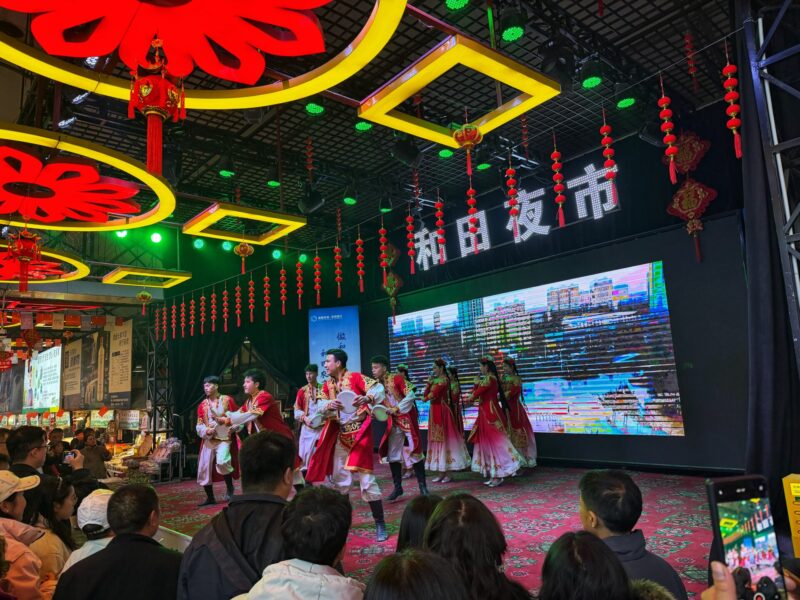
Free performances are held daily all year round at Hotan Night Market. The lively atmosphere is enhanced by local performances, making the Hotan Night Market a paradise for food lovers. You definitely won’t leave hungry!
Hotan Old Night Market (和田老夜市)
Address: Renmin West Road (beside the Capital Garden Community)
Operating Hours: 20:00 to 02:00 (the next day).
Admission: Free!
Stay: Accommodation in Hotan
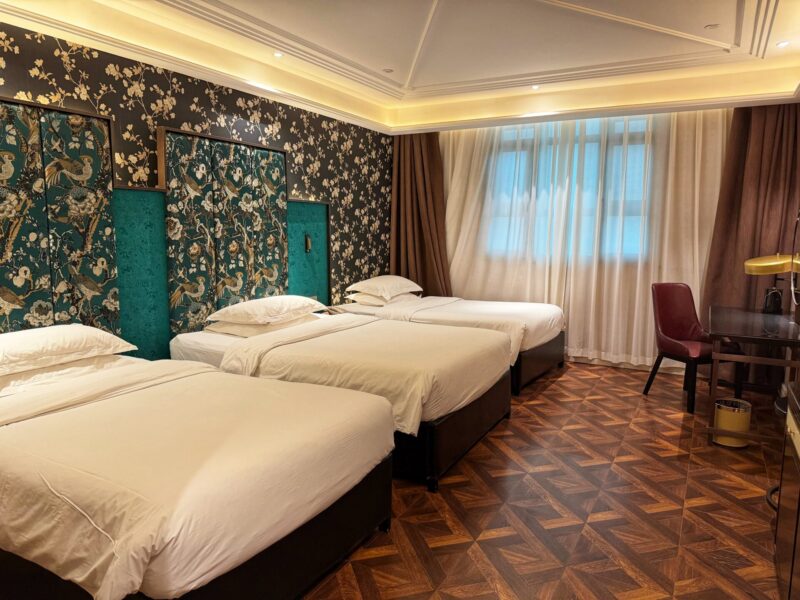
Our stay at Hotan: The hotel is situated in the center of Hotan, conveniently close to the Hotan Night Market and the Hotan Tuancheng Scenic Area.
While the lobby is fairly ordinary, the room was well-equipped with great facilities. It was spacious, clean, and tidy. The breakfast offered a wide variety of options and was very plentiful, providing excellent value for money.
Check for Hotan room availability: JinJiang Metropolo Hotels (Unity Plaza Store).
Day 3: Explore Hotan
Hotan, known as Hetian (和田) in Chinese, is famous for being the source of some of the finest nephrite jade in the world. To be honest, Hotan city may not be particularly captivating, but it serves as the main gateway to the Taklamakan Desert.
We spent one day exploring Hotan city. During the day, take a leisurely stroll through the Yotkan Ruins to step back in time to the ancient Western Regions. Next, visit the Jade Dragon Kashgar River to witness where Hotan jade is collected. In the evening, be sure to check out the Hotan New Night Market for local food. We indulge in Southern Xinjiang’s delicacies and experience the vibrant local nightlife.
Day 3 Souther Xinjiang Taklamakan Desert itinerary:
- Explore Hotan City (和田)
- Yotkan Ancient City (约特干故城)
- Jade Dragon Kashgar River (玉龙喀什河)
- Hotan Old Night Market (和田老夜市) / Hotan New Night Market(和田新夜市)
Yotkan Ancient City
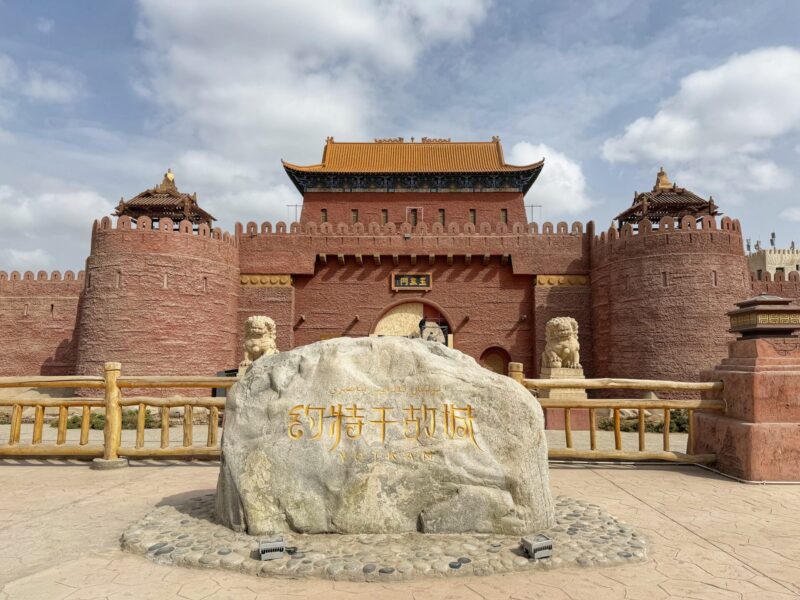
Located west of Hotan, the Yotkan Ancient City (约特干故城) date back to the 3rd-8th centuries and may have served as the capital of the ancient Kingdom of Yutian.
The historical site preserves the remains of the ancient capital of the Kingdom of Khotan. While the original archaeological ruins are mostly buried underground, a massive and magnificent cultural theme park has been built nearby to bring that ancient history back to life.
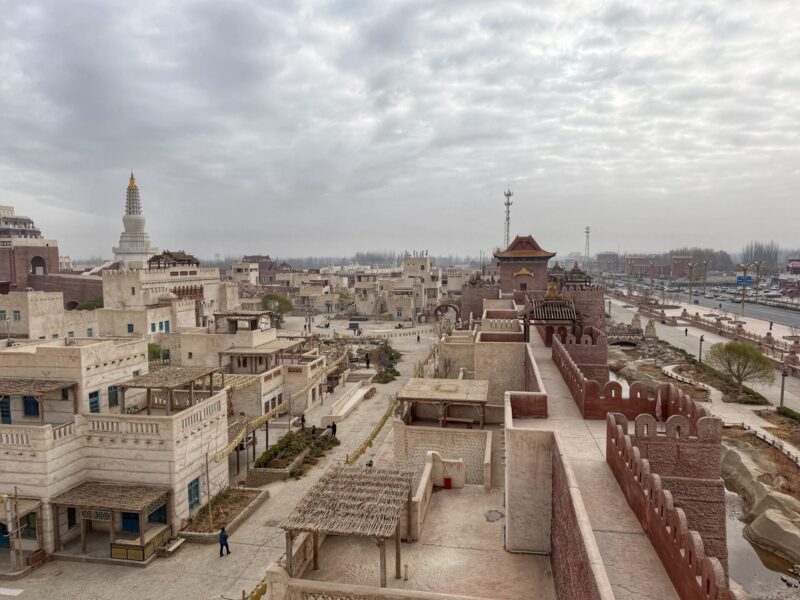
Today, Yotkan Ruins features a cultural park with architecture reminiscent of One Thousand and One Nights, including a reconstructed Buddhist pagoda and a royal palace inspired by the Potala Palace.
Yotkan Ancient City Admission Ticket
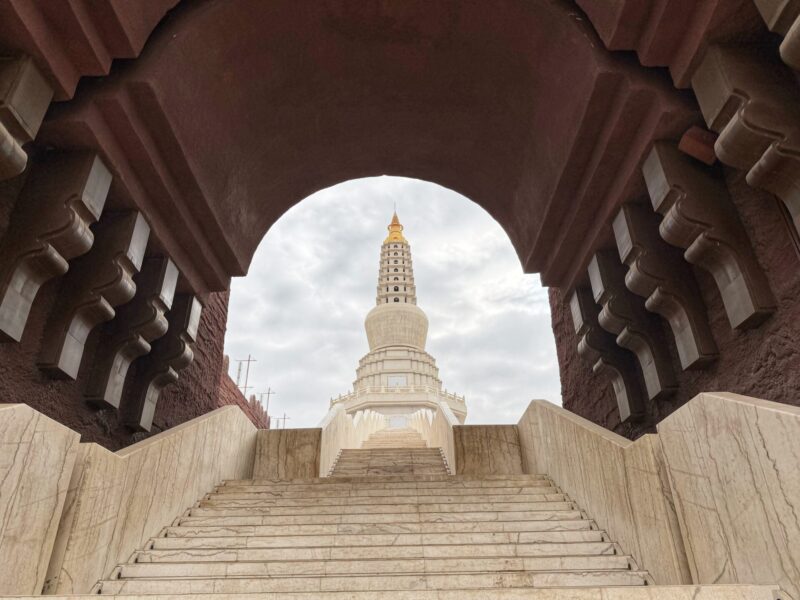
As you stroll through the ruins, you can feel the weight of ancient history. The site offers immersive performances, allowing you to move with the story and interact with the environment. This unique experience brings the ruins to life and offers a deeper connection to the rich culture of the Western Regions.
Yotkan Ancient City (约特干故城)
Admission Fee: 220 CNY for daytime visits. Additional costs apply for the nighttime performance show, with ticket prices starting at 120 CNY. Check Ticket Packages.
Suggested Time Spend: 2 to 3 hours.
Jade Dragon Kashgar River
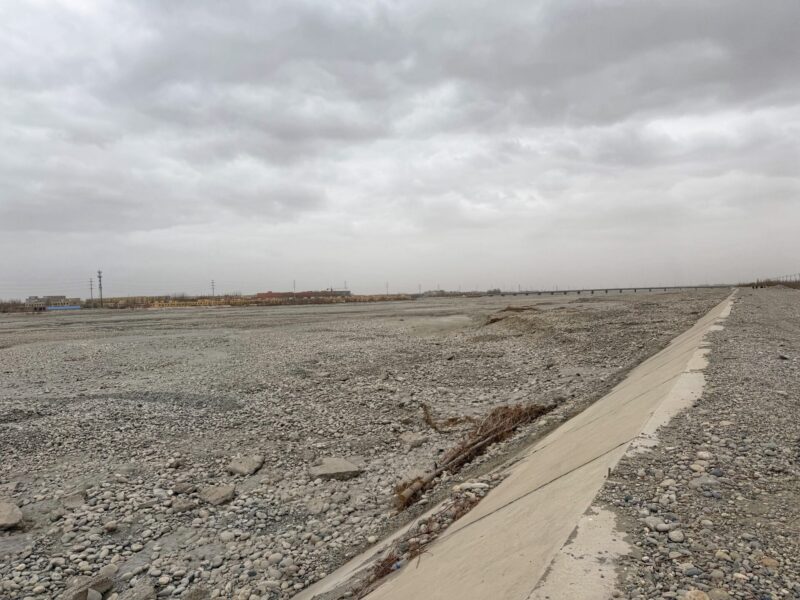
In the evening, we headed to the Jade Dragon Kashgar River (玉龙喀什河), known as the cradle of Hetian jade. Here, visitors can observe jade farmers searching for precious stones along the riverbanks. Finding high-quality jade requires experience, patience, and a bit of luck.
As we walked along the river, we feel the excitement of jade hunting and even have the opportunity to try digging for jade ourselves. The chances of finding jade are rare due to centuries of over-extraction. We view it as a peaceful stroll along the riverbank. While it may just seem like a river, it’s good to remember that this is where the world-famous Hotan jade originates.
If you’re looking for “real” jade, you can head directly to the Hotan Jade Capital Market (和田玉交易中心).
Jade Dragon Kashgar River (玉龙喀什河)
Admission Fee: Free.
Suggested Time Spend: 30 minutes.
Hotan New Night Market
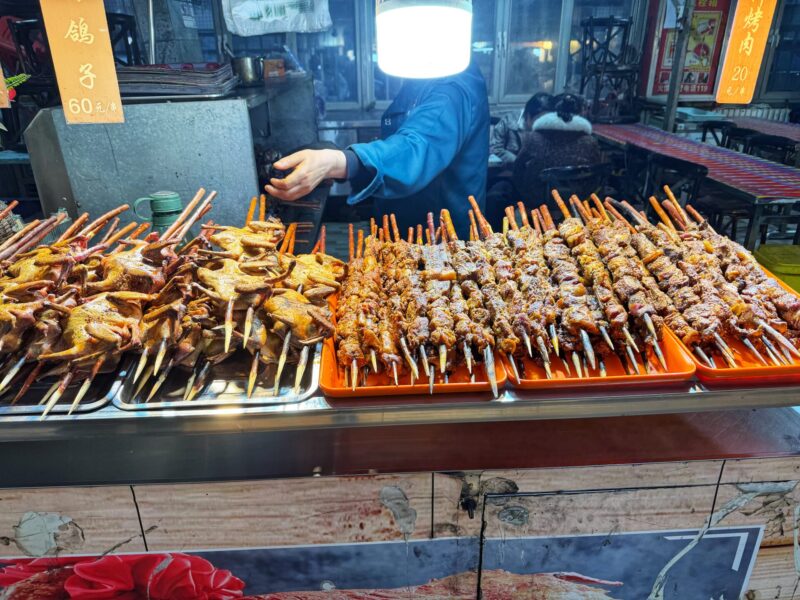
Additionally, the Hotan New Night Market (和田新夜市) offers a charming and nostalgic experience that feels like a feast from a bygone era. The market features a modern, spacious mall-style layout. While it offers a similar variety of food as the Old Market, the overall experience is different due to its contemporary setup. It’s another essential stop for food enthusiasts.
Hundreds of stalls serve classic Xinjiang snacks like Red Willow Grilled Meat, Grilled Lamb Kidneys, Braised Lamb Trotters, Hand-pulled Rice, Grilled Buns, and Yogurt Sticky Rice Dumplings. The variety is overwhelming, and you can wander freely between the stalls, sampling different dishes as you go. Each bite is a delight for your taste buds, leaving you feeling satisfied yet eager for more.
Hotan New Night Market (和田新夜市)
Address: No. 181, Aqale East Road
Operating Hours: 20:00 to 02:00 (the next day).
Admission: Free!
Stay: Accommodation in Hotan
Our stay at Hotan: It’s my second night at the Hotan JinJiang Metropolo Hotel (Unity Plaza Store). The location is convenient for shopping, dining, and exploring.
Check for room availability: JinJiang Metropolo Hotels (Unity Plaza Store).
Day 4: Hotan – Shache – Kashgar
After spending one day in Hotan, we will drive back toward Kashgar. During the road journey, we make a brief visit to Xitiya Ancient City (锡提亚迷城) and Shache (莎车).
Day 4 Souther Xinjiang Taklamakan Desert itinerary:
- From Hotan back to Kashgar
- Xitiya Ancient City (锡提亚迷城)
- Shache (莎车)
Xitiya Ancient City
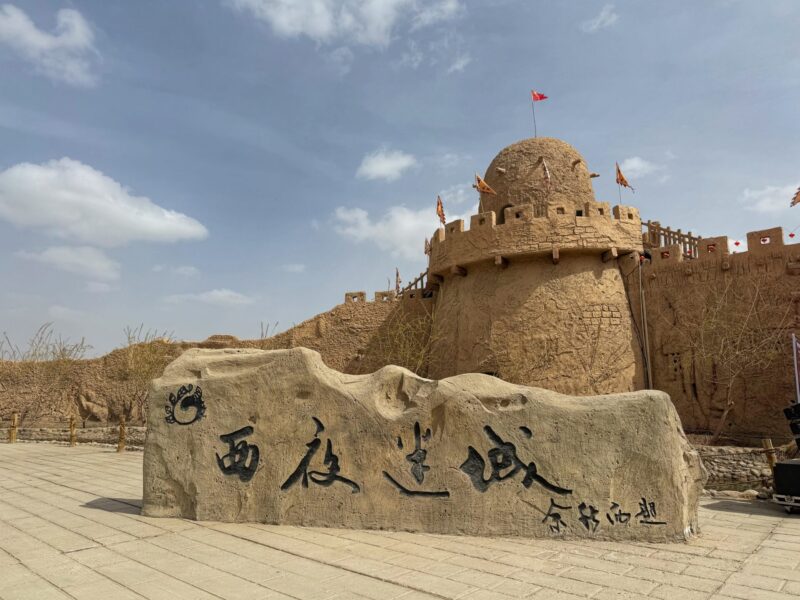
On Day 4 of our Southern Xinjiang itinerary, we first made a brief stop at the Xitiya Ancient City while traveling to Shache.
The Xitiya Ancient City (锡提亚迷城) is located in Luoke Township, approximately 11 kilometers east of Yecheng County. Historians believe the ancient city was established around the end of the 11th century.
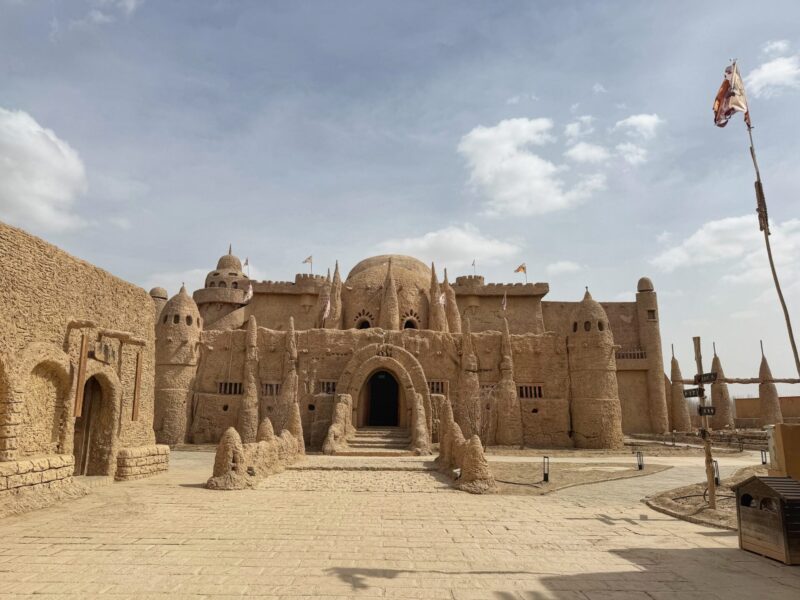
Although the original mud structures were largely destroyed or reclaimed for agriculture over the centuries, the site was masterfully restored in 2012 using traditional rammed earth architecture. Today, Xitiya Ancient City serves as an immersive open-air museum.
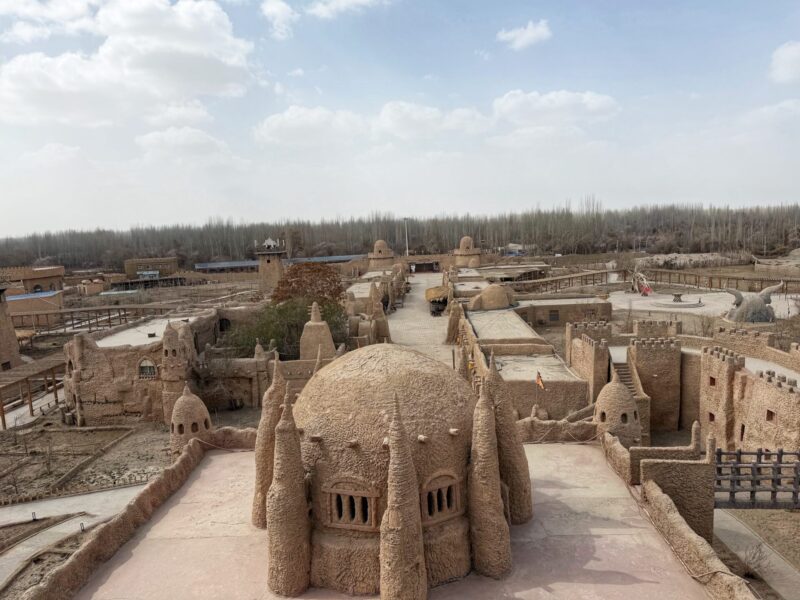
The Xitiya ancient desert site offers a genuine sense of what life was like in an ancient sand desert kingdom. The complex features beautifully reconstructed sand-toned castles, towering city walls, narrow alleys, and beacon towers that evoke the spirit of this historical era. We made a relaxing stroll visiting the site.
One of the best aspects of the area is that it is not overly crowded with tourists, allowing visitors to comfortably explore the ruins.
Xitiya Ancient City (锡提亚迷城)
Opening Hours: 10:00 AM to 20:00 (Summer) and 10:30 AM to 19:00 (Winter)
Admission Fees: CNY 30 for entry.
Suggested Time Spend: 1 to 2 hours for a relaxing stroll and photography tour.
Shache
Besides Kashgar, Shache is another of the most interesting areas in Southern Xinjiang.
Shache (莎车), also known as Yarkant was the historical, political, and cultural heart of the Yarkent Khanate, and it has deep historical roots and a distinct Uyghur character. This city is one of the birthplaces of Uyghur Muqam, a classical music and dance form recognized by UNESCO as Intangible Cultural Heritage, which is well preserved here.
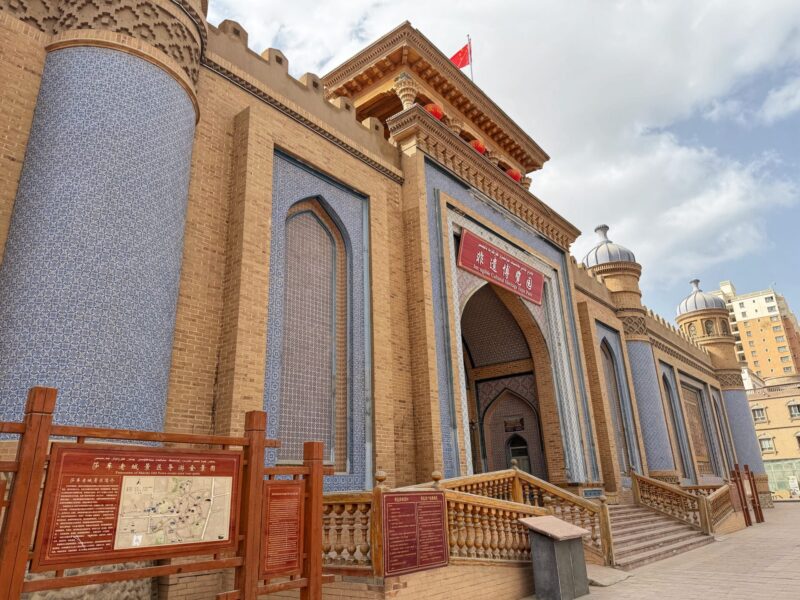
Shache Intangible Cultural Heritage Expo Park (莎车非物质文化遗产博览园) is a large and beautifully designed complex that serves as a living museum for Uyghur history, art, and music. The park is renowned for its magnificent palace-style architecture and is a venue for performances of the Twelve Muqam. Unfortunately, we were unable to visit during our time there, as the park was closed, but we were captivated by its exterior.
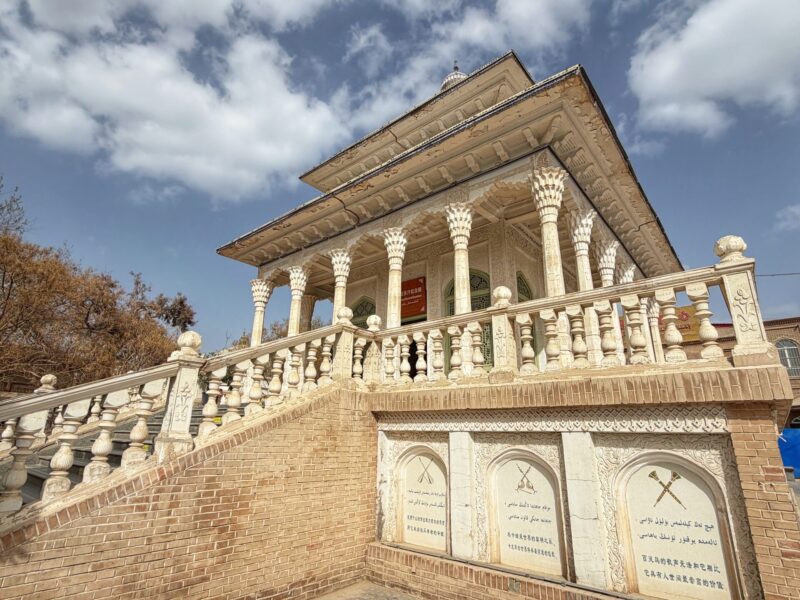
In the surrounding area, you can find several notable sites, including Yarkant Mansion (葉爾羌汗王宮), Shache King Cemetery (莎車國王陵), Altyn Mosque (阿勒屯清真寺), and the Mausoleum of Amannisa Khan (阿曼尼沙汗紀念陵).
Due to the limited time in Shache, we only had a brief stop at the nearby Kazanchi Folk Street (喀贊其民俗風景區). After this, we drove back and finally reached Kashgar for the night.
Overall: Trip to Southern Xinjiang Taklamakan Desert
All in all, we hope you enjoy reading our Southern Xinjiang Taklamakan Desert itinerary. We have organized the itinerary into two segments based on whether you have 5 days or 10 days to explore the area. While we believe that 4 to 5 days is sufficient to appreciate the beauty of the area, having more days will allow you to cover more ground. Feel free to check out our Xinjiang itinerary for additional trip planning ideas. Enjoy your adventure in Southern Xinjiang!
Lastly, this Southern Xinjiang itinerary is part of our Taklamakan Desert travel blog. Continue reading for more travel stories.