Last updated on September 12th, 2026
By following our ultimate Kashgar Travel Guide, here are some tips and the most exciting sights to include in your Kashgar itinerary.
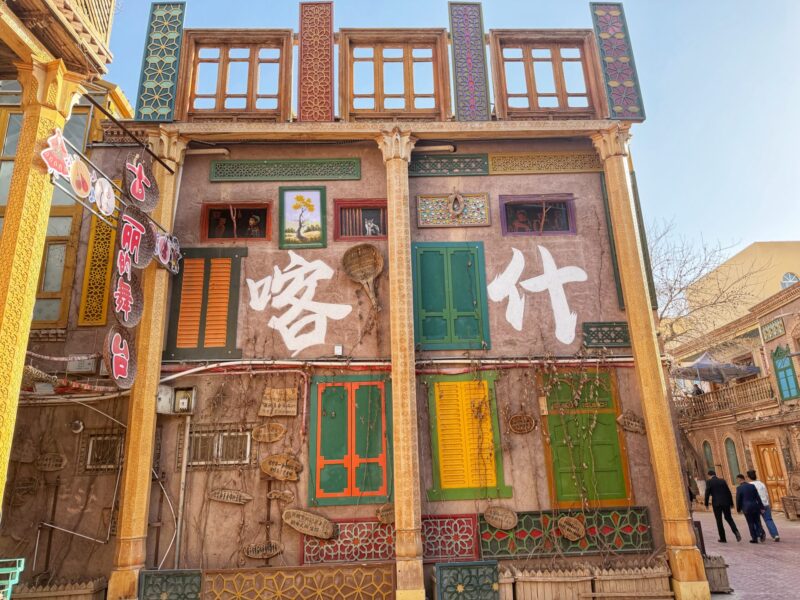
Kashgar or Kashi (喀什) is one of China’s oldest and most cherished religious cities. As an essential stop on any Xinjiang itinerary, Kashgar enchants visitors with its stunning beauty and traditional architecture. Located along the ancient Silk Road in the far west of the country, this remarkable city offers far more attractions than many visitors anticipate.
The main challenge when planning a trip to Kashgar is figuring out how to experience everything it has to offer. It’s possible to spend an entire day. or even weeks, exploring Kashgar and still not see everything. Given the multitude of options, it’s best to come prepared, knowing exactly what to visit and how to navigate the area.
We have compiled all the travel information into this ultimate travel guide to Kashgar. You will have all the essential information at your fingertips to make the most of your trip. Continue reading!
How To Get to Kashgar
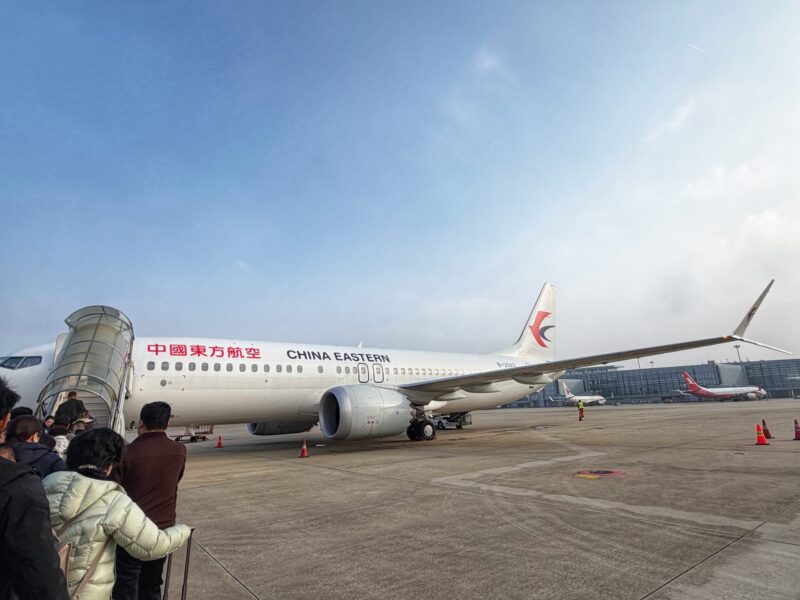
Kashgar and Urumqi are the only cities in Xinjiang with convenient flight options. Most visitors will fly into Urumqi, as it has more frequent flights and connections to most major cities in China. Kashgar, on the other hand, is smaller and has limited flight options. But it is an excellent starting point if your focus is on Southern Xinjiang. If your travel plans emphasize Southern Xinjiang and you need to reach Kashgar, here is a transportation guide to help you get there.
By Flight: Since Kashgar is quite far from other major cities in China, flying is often the most convenient way to reach it. The Kashgar International Airport (IATA: KHG), located in Kashgar City. It is the main airport serving the Southern region. There are domestic flights available from cities such as Beijing, Shanghai, Chengdu, and Guangzhou, along with limited international flights from Pakistan.
Pro Tips: I recommend checking Trip.com for flight options when traveling in China.
By Train / High-Speed Train: Kashgar is connected to other regions within Xinjiang by long-distance overnight trains. Although most trains take a significant amount of time, the good news is that the Urumqi-Kashgar High-Speed Railway opened in December 2024, reducing travel time to as little as 11 hours from either Urumqi South Station or Turpan North Station. Be sure to book your train tickets in advance via Trip.com.
Where To Stay in Kashgar
Kashgar is one of the popular destinations to visit in Xinjiang, and its infrastructure has definitely improved in recent years. You’ll find many newer hotels, which can be viewed positively or negatively depending on your perspective. As long as you stay within the downtown area of Kashgar, you shouldn’t have any trouble getting around.
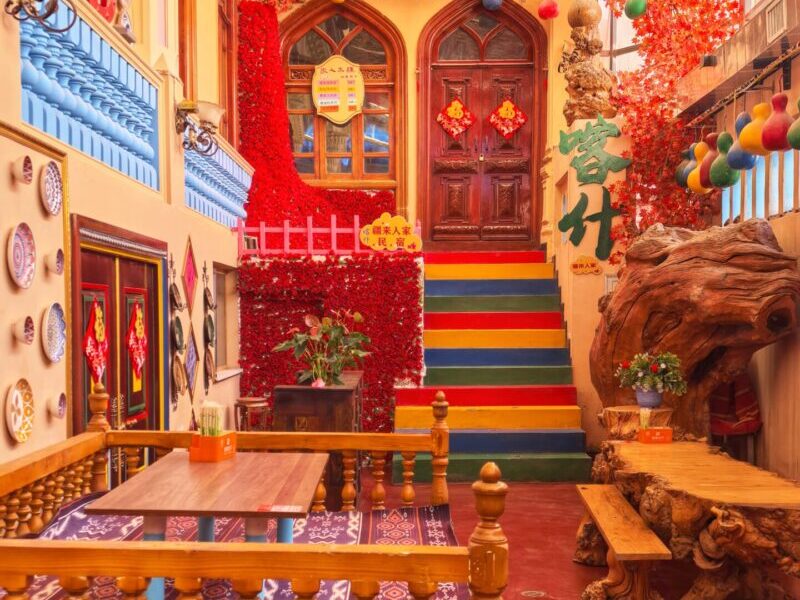
If you’re seeking guesthouses in the Old City, you’ll find traditional Uyghur-style courtyard architecture. These accommodations are typically very affordable and immerse you directly in the culture rather than placing you on the outskirts. However, we always recommend booking your accommodation through Trip.com, as some accommodations do not accept foreign visitors. Below are my recommended picks.
Jianguo Hidden Hotel (Historic Kashgar Old City) – This hotel is conveniently located just outside the East Gate of the Old Town. There are many excellent restaurants nearby, making it easy to find good food. The room was clean and tidy, and breakfast was enjoyable. It is a popular choice for accommodation in Kashgar.
Rezen Hotel, Kashgar Ancient City Scenic Area – The hotel’s location is incredibly convenient for dining, shopping, and getting around, all just steps away. It’s right in the city center and very close to the Kashgar Old City scenic area.
Hampton by Hilton Kashgar is located in the East City of Kashgar’s CBD business district, about a 15-minute drive from the Ancient Old Town. Despite its distance, it remains quite convenient for getting around. The ambiance of the hotel is elegant and grand, and everything is spotless. Additionally, the hotel offers great value for money and provides a complimentary airport shuttle, which saves on taxi fares both ways.
DIY Kashgar Itinerary vs Guided Tour

You can visit Kashgar on your own, and many travelers choose to do so. However, if you plan to continue your journey to other areas in Xinjiang, relying solely on local buses may not be the best option, as you could miss key attractions between cities.
I arranged my trip to Xinjiang through a tour agency, but I decided to plan my own 1 to 2-day stay in Kashgar. This allows for a more relaxed experience, especially when exploring attractions like the Kashgar Ancient City. Alternatively, there are also day tour options available with local guides for exploring Kashgar City.
Below are a few popular Kashgar Tour options:
Things to do in Kashgar City
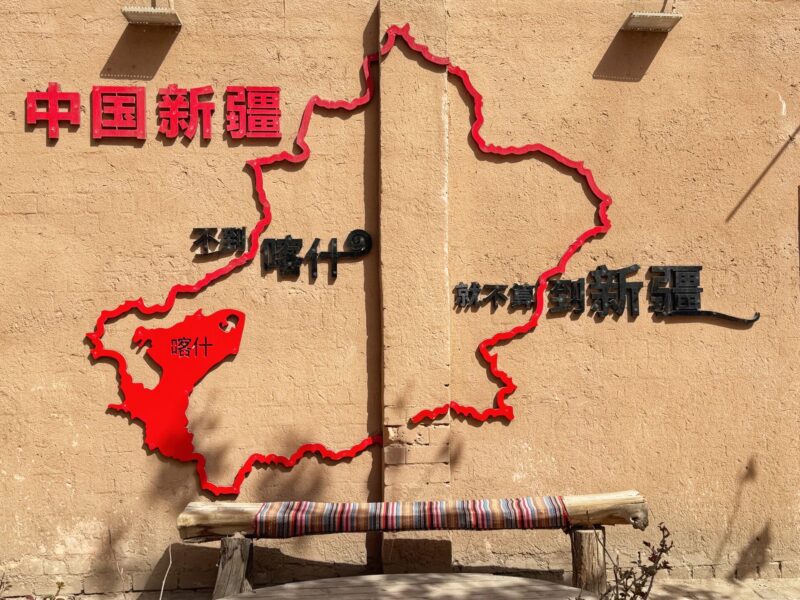
Kashgar has been an important trade and cultural center of Xinjiang and the Silk Road for over two millennia. It is one of the most popular and fascinating destinations in Xinjiang and even in China. In Kashgar, you can visit the largest bazaar in Asia, the famous Abakh Hoja Tomb, the holy Id Kah Mosque, and the tranquil Kashgar Old City, which retains the most authentic traditions of the region.
Below are some recommended activities to consider when planning your Kashgar itinerary.
Planning for Kashgar itinerary – What to Do and see:
- Kashgar Old Town Opening Ceremony
- Gaotai Ancient Homes
- Kashgar Ancient City
- Wondering in Kashgar Old City’s Bazaars
- Id Kah Mosque
- Kashgar Century-old Teahouse
- Abakh Hoja Tomb
- Traditional Uyghur Photography Sessions
- Kashgar Bazaar (Kashgar Livestock Market, Kashgar Western and Central Asian Bazaar for International Trade)
- Enjoy the local Uyghur food
Please note that these recommendations are specifically for Kashgar city. If you have more time, there are plenty of attractions you can explore as part of your Southern Xinjiang itinerary.
Kashgar Old Town Opening Ceremony
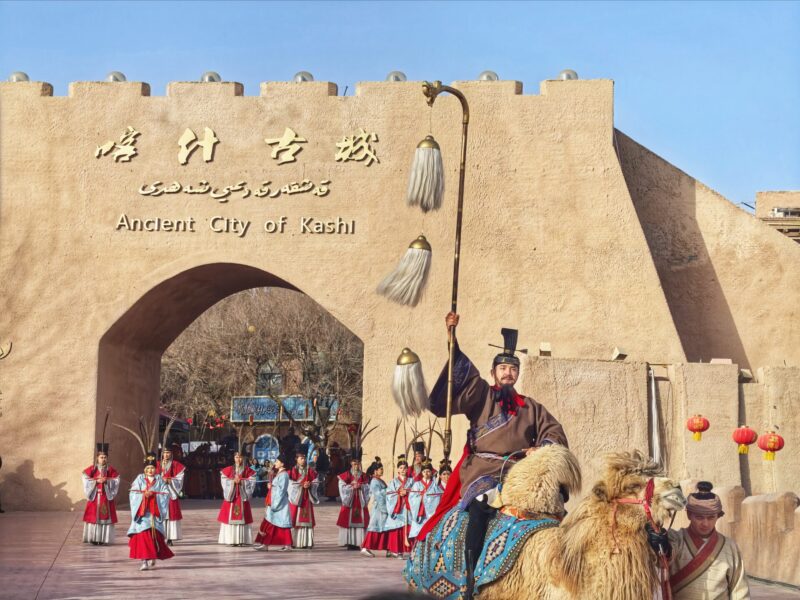
Every morning (except Mondays), there is a Kashgar Old Town Opening Ceremony (喀什古城开城仪式) held at the East Gate of the ancient city. The ceremony is a vibrant folk performance that showcases the unique charm of Xinjiang. It features costumed dancers in colorful Atlas silk, a historical camel caravan, and reenactments of famous Silk Road figures.
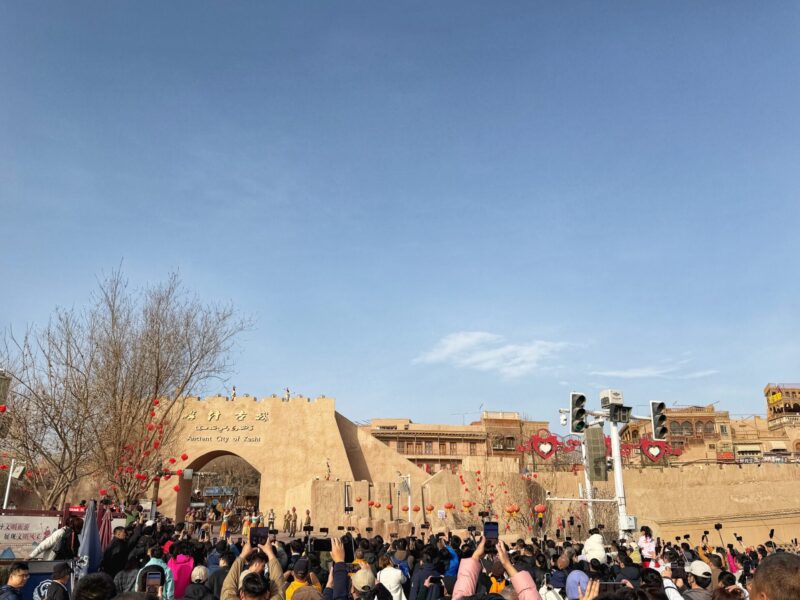
However, the experience can be quite overwhelming because there are so many people pushing to get closer, and selfie sticks are everywhere, blocking the view. It’s not an enjoyable experience unless you arrive early to secure a front-row seat, ideally at least 30 minutes beforehand. Unfortunately, we arrived about 20 minutes before the ceremony started, and there were already many people waiting for the show.
Kashgar Old Town Opening Ceremony (喀什古城开城仪式)
Time: Daily at 10:30 AM (except Mondays)
Location: The East Gate of Kashgar Old Town (喀什古城东门)
Gaotai Ancient Homes
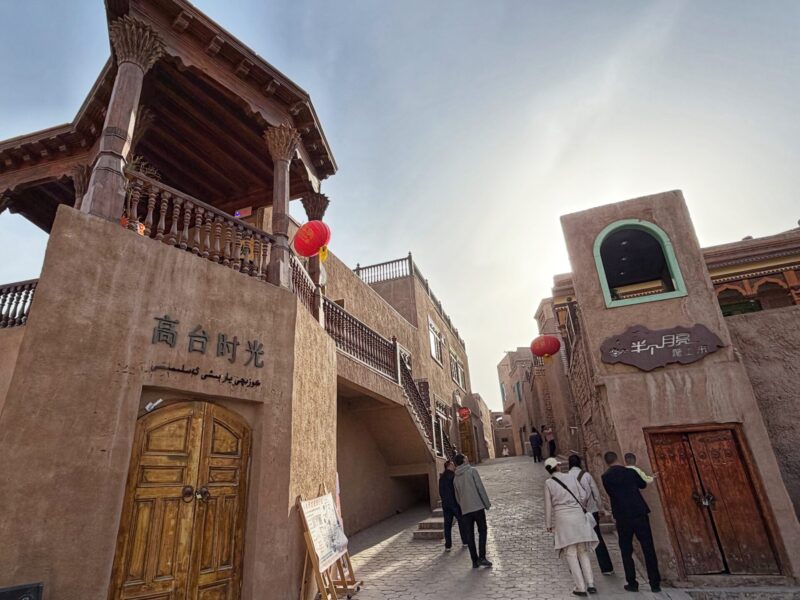
Next, we choose to visit Gaotai Ancient Homes, following the Kashgar Old Town Opening Ceremony. After that, we will return to explore the Kashgar ancient town.
Gaotai Ancient Homes (高台民居) is a neighborhood of over 600-year-old Uyghur houses, characterized by a cluster of traditional mud-brick homes built on a cliffside. These centuries-old residences are arranged along narrow alleys and interconnected by winding stairways, creating a maze-like neighborhood that showcases Uyghur architectural style.
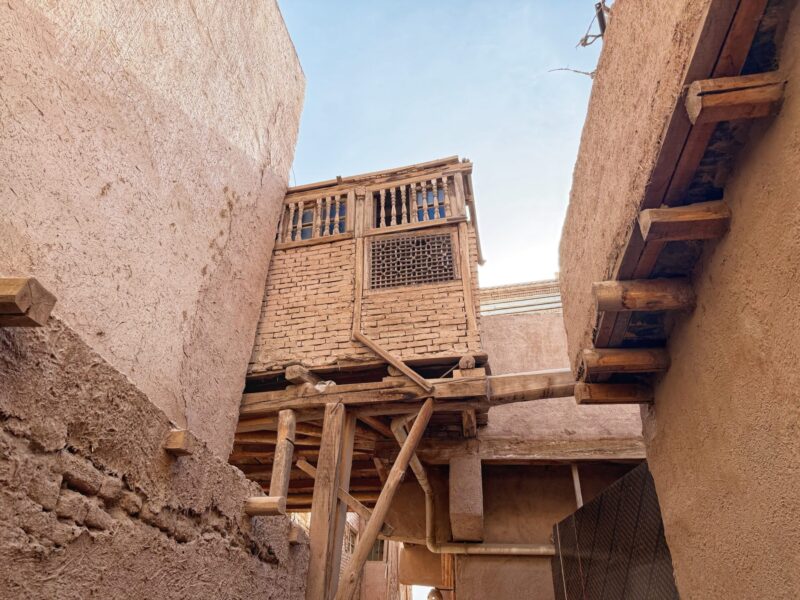
The mud-brick and wood buildings represent the only preserved traditional block of Western Regions style in China.
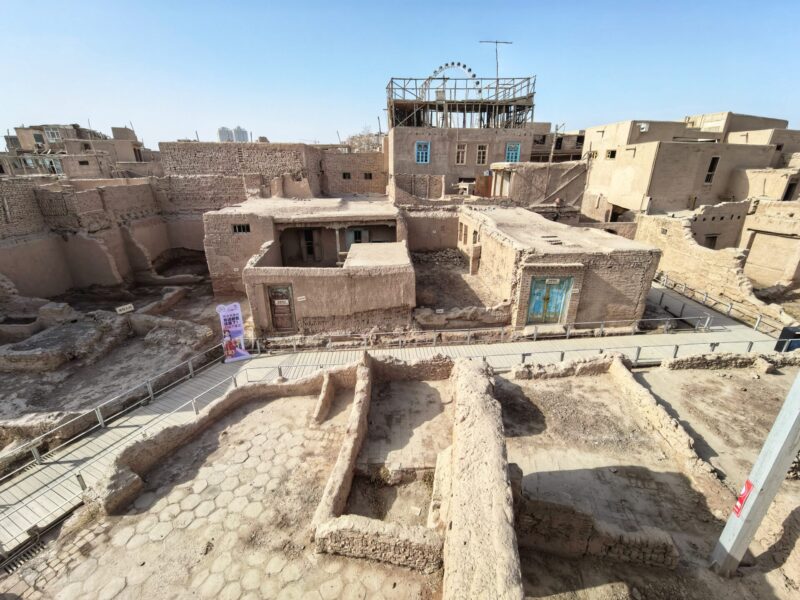
While most of the houses have been converted into coffee shops and guesthouses, there are still a few that are inhabited, with the majority preserved as a sort of open-air archaeological site. This area feels more authentic than the Old Town, although it is quite small. It is advisable to spend approximately 1 to 2 hours exploring the area.
Gaotai Ancient Homes (高台民居)
Opening Time: Daily from 10:00 AM to 10:00 PM (Last Admission 9:30 PM)
Address: Tuman Road, Kashgar City, Kashgar Prefecture.
Kashgar Travel Tips: The Gaotai Ancient Homes are located at the northeast end of Kashgar Old City, directly across from the East Gate of Kashgar Old Town. You can easily visit them right after attending the 10:30 AM Kashgar Old Town Opening Ceremony.
Kashgar Ancient City
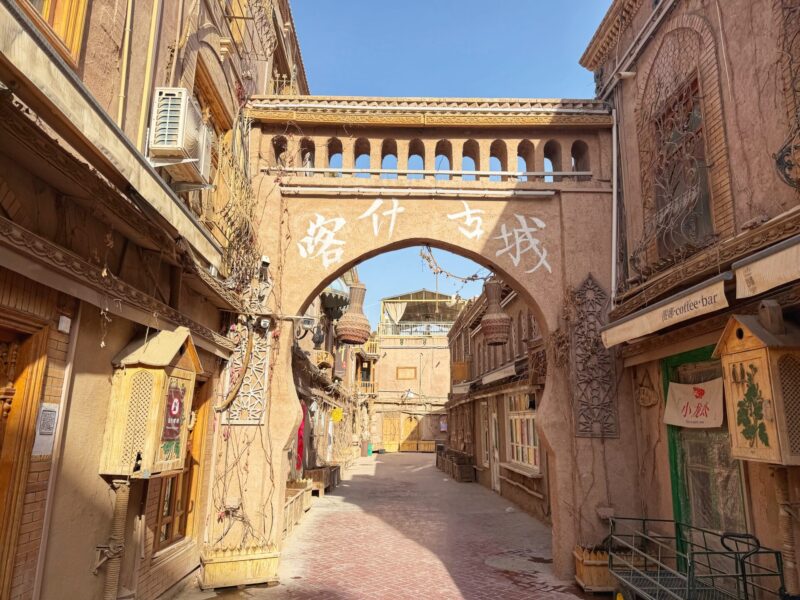
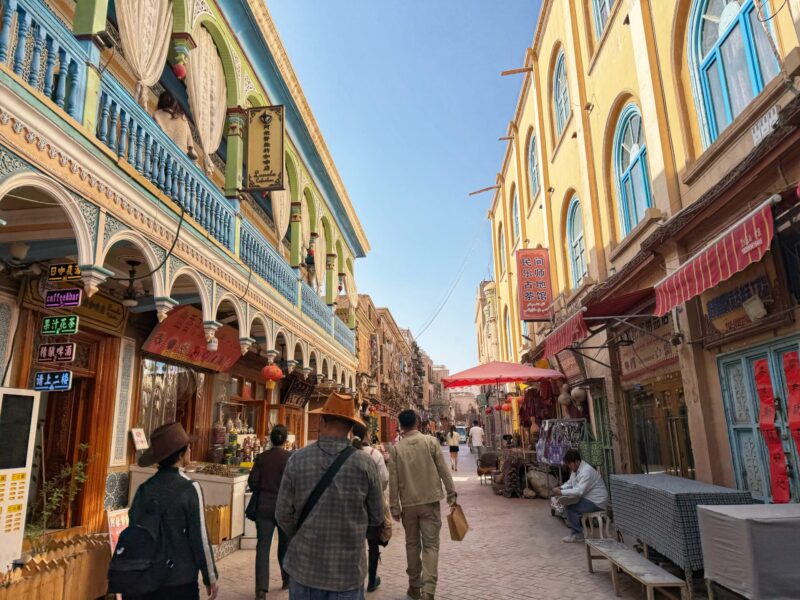
Kashgar Old City (喀什老城), also known as Kashgar Ancient City, is situated in the heart of Kashgar and has a history spanning over 2,000 years. It symbolizes both the city’s ancient past and its peaceful present. As the best place to experience local customs and gain insight into daily life, it is an essential stop on any Kashgar itinerary.
Covering an area of 4.25 square kilometers, Kashgar Old City is home to approximately 126,800 residents. Although the ancient city has undergone reconstruction and modernization, it successfully retains a charming, historical atmosphere. Many buildings in the old city have been renovated, but local features have been preserved. The colorful walls, round arches, and beautifully designed doors and windows provide a perfect backdrop for your pictures.
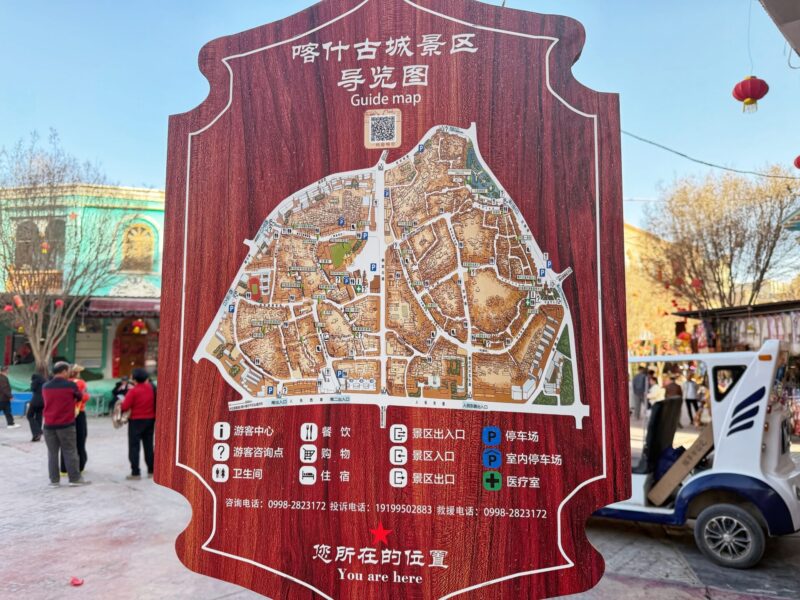
Despite being a tourist destination, Kashgar preserves its original features, which adds to its charm and appeal.
Kashgar Old City is vast and offers a variety of things to do and see. It is divided into two districts, each with its own distinct vibe. Here are some recommended activities in Kashgar’s Eastern and Western Districts:
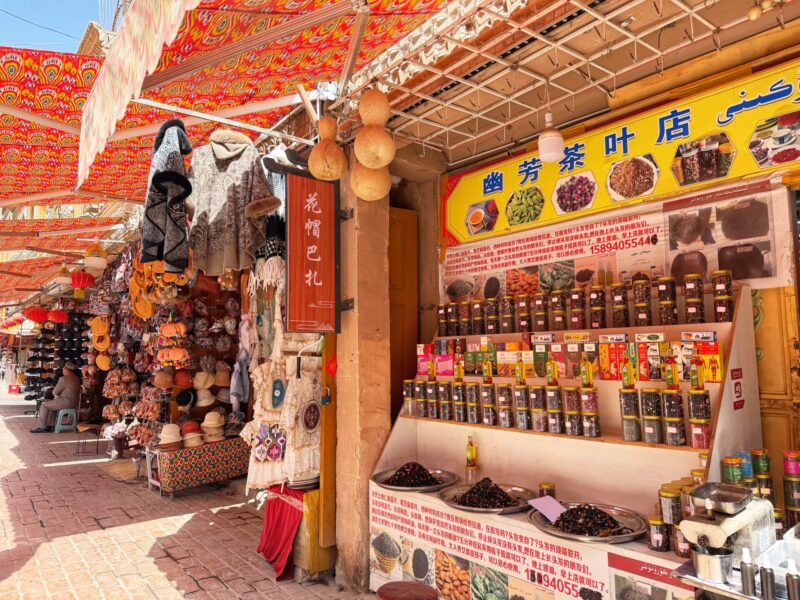
Kashgar Old City’s Eastern District is bustling with vibrant Uyghur culture.
To plan your Kashgar itinerary, wander through the unique shops, take a photo at the Rainbow Stairs (彩虹楼梯), enjoy a coffee at Nashiji Slow Hostel (那时慢民宿), or head to the Sky Garden (空中花园) for a panoramic view of the old city.
Kashgar Old City’s Western District is home to historical landmarks and cultural experiences. Don’t miss the Id Kah Mosque, the spiritual heart of Kashgar Old City.
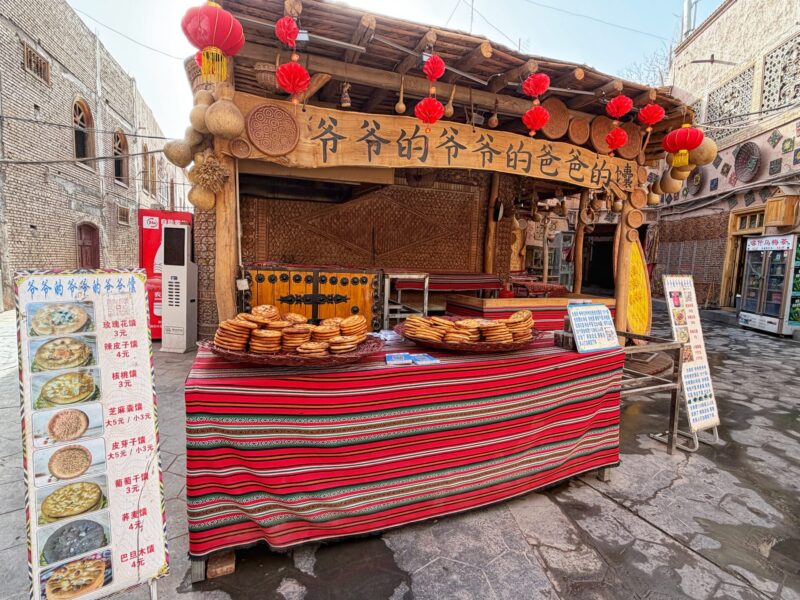
For a taste of local life, stop by the Kashgar Century-old Teahouse (喀什百年老茶馆) to savor traditional milk tea. Also, be sure to visit the popular Grandfather’s Grandfather’s Father’s Naan Shop (爷爷的爷爷的爸爸的馕) for authentic local cuisine.
Wondering in Kashgar Old City’s Bazaars
In addition to its stunning architecture, the streets of the Kashgar old city are lined with unique shops that are definitely worth exploring. Each street in the old city has its own theme, known as bazaars. In Uyghur culture, “bazaar” simply means market or fair.
Some notable bazaars in Kashgar old city include: Handicraft Bazaar (手工艺品巴扎), Cantuman Bazaar (坎土曼巴扎), Pottery Bazaar (土陶巴扎), Dopa Bazaar (花帽巴扎), Musical Instrument Bazaar (乐器巴扎), and many more.
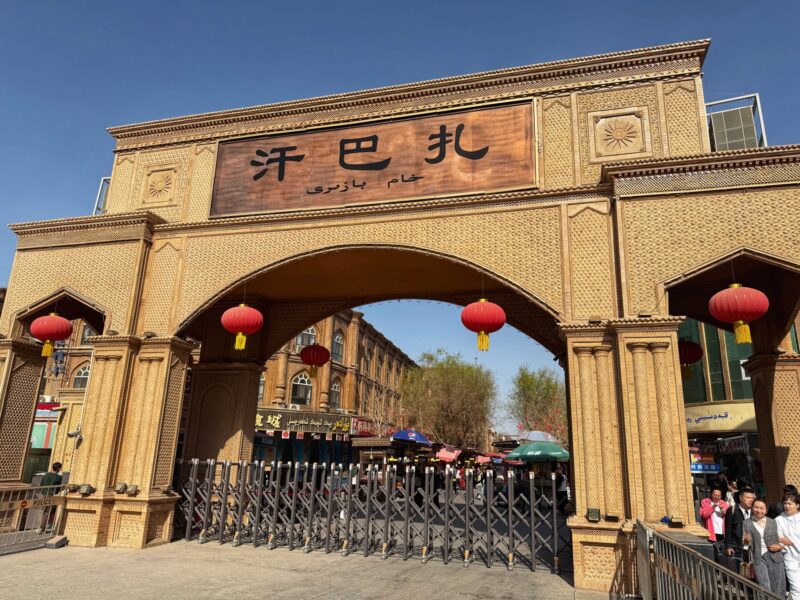
If you’re looking for delicious food, head to Han Bazaar. The Han Bazaar (汗巴扎), often transliterated as Khan Bazaar. Situated in the heart of Kashgar Old Town, Han Bazaar boasts over 300 shops and 200 stalls that primarily offer authentic Xinjiang street food, fresh produce, and traditional Uyghur crafts. The bazaar is also the most famous and vibrant food and handicraft market in the ancient city.
Kashgar Travel Tips: Han Bazaar is conveniently located right across the street from the Id Kah Mosque, making it easy to continue your Kashgar itinerary by visiting the mosque after enjoying your culinary adventures.
Enjoy the Local Kashgar Food
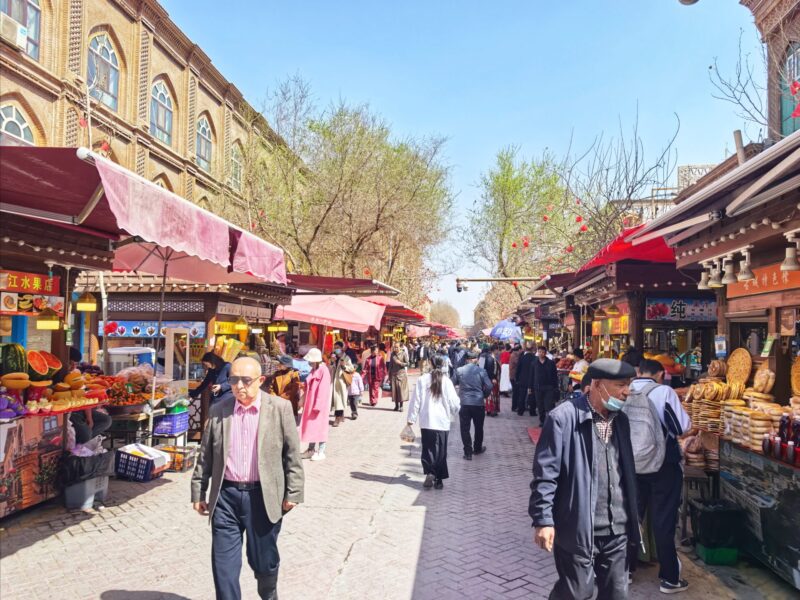
Kashgar is a culinary paradise where Central Asian flavors blend with the rich history of the Silk Road. The local cuisine is centered around tender lamb, hand-pulled noodles, unique tandoor breads like Naan, and exceptionally sweet fruits.
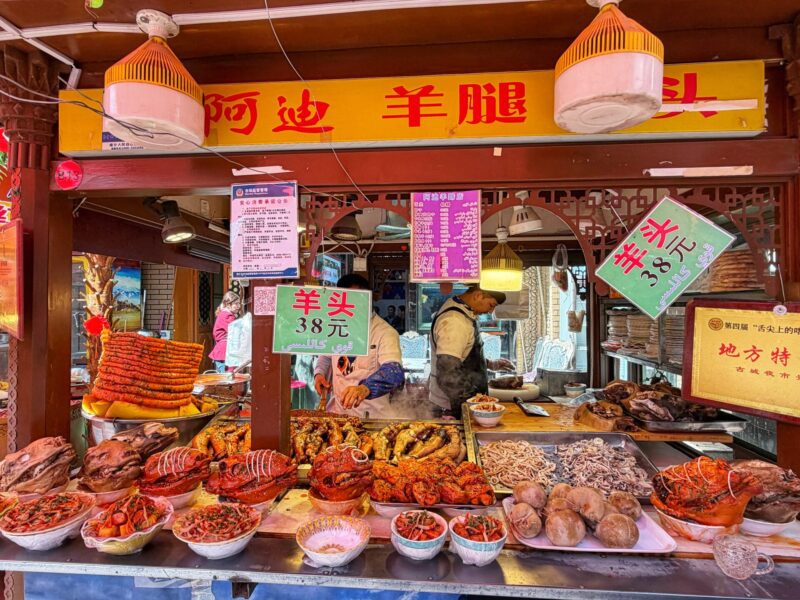
Here are some iconic dishes you must try when visiting Kashgar:
Meat Dishes:
- Kashgar Lamb Skewers (羊肉串): Large, juicy chunks of lamb seasoned simply with cumin, chili powder, and salt, then grilled over charcoal.
- Roasted Pigeon (烤鸽子): Pigeons marinated in local spices and grilled to smoky perfection or slow-cooked in a rich, nourishing broth (Gezi Tang) served with chickpeas.
- >Big Plate Chicken / Dapanji (大盘鸡): A legendary Xinjiang dish featuring a massive platter of bone-in chicken pieces, potatoes, green bell peppers, and onions, stir-fried in a savory, slightly spicy chili and Sichuan peppercorn sauce.
Staples, Rice, Noodles:
- Uyghur Lamb Pilaf (抓饭): Mutton, yellow and orange carrots, and onions are slow-cooked together with rice in massive iron cauldrons.
- Kao Baozi (烤包子): Small baked buns stuck to the hot walls of a clay oven, filled with minced lamb, onion, and sometimes carrot.
- Naan Flatbread (馕): A round flatbread baked in a tandoor-style oven, crisp at the edges and chewy in the center.
- Lagman (拉条子): Long wheat noodles stretched by hand and topped with a mix of tomatoes, peppers, and onions stir-fried in a wok.
Sweet, Drinks, Desserts:
- Handmade Goat Milk Ice Cream (Handan Bingqilin / 手工冰淇淋): Dense and creamy, this ice cream is churned by hand right on the street. It is completely vegetarian and incredibly comforting.
Id Kah Mosque
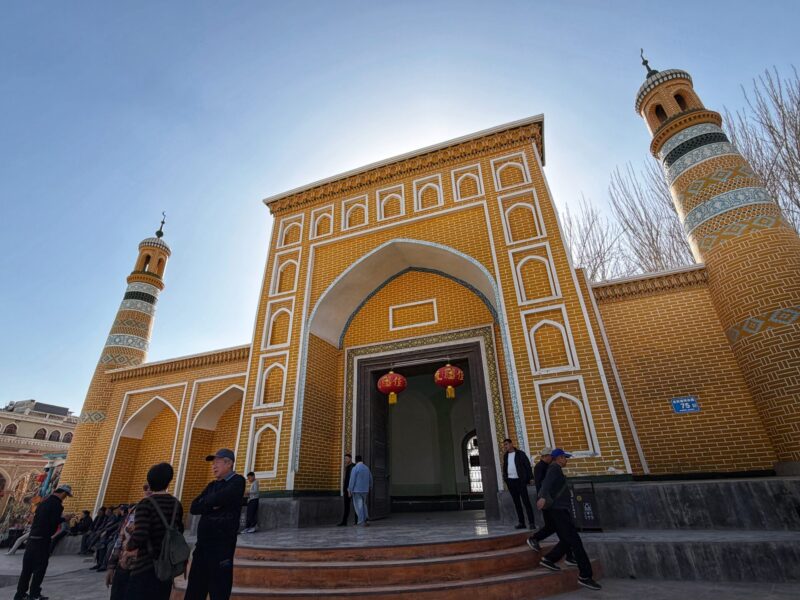
The Id Kah Mosque (艾提尕尔清真寺) is one of the most important Islamic sites in the region and is also the largest mosque in China. It serves as a key landmark in Kashgar. The mosque is an impressive structure, measuring 140 meters long and 120 meters wide, with a total area of 16,800 square meters.
Built in the 15th century, the Id Kah Mosque features a beautiful courtyard and intricate decorations. Visitors can experience the strong religious atmosphere as Muslims gather here for worship.
Id Kah Mosque (艾提尕尔清真寺)
Address: West of Id Kah Square
Opening Hours: Daily from 10:30 to 19:00 (closed from 14:00 to 16:30 during daily worship)
Entrance Fee: CNY 45 (Free admission for Muslims)
Kashgar Travel Tips: When visiting, it’s important to show respect for the faith by dressing modestly, and keep in mind that entry is not permitted during prayer times.
Kashgar Century-old Teahouse
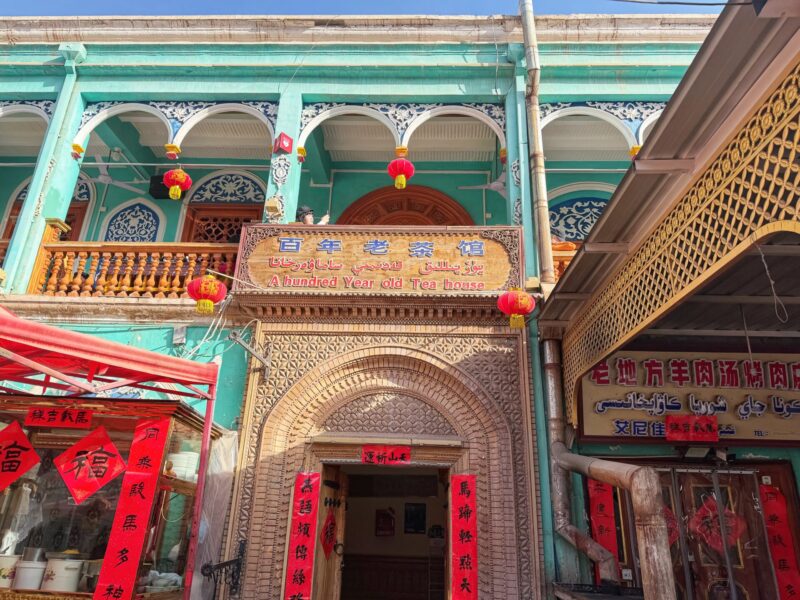
Kashgar Century-old Teahouse (喀什百年老茶馆) is a two-story building that showcases classic Uygur architectural style. It is one of the oldest teahouses in Kashgar and the most popular among them. This teahouse serves as a well-known cultural landmark in the city.
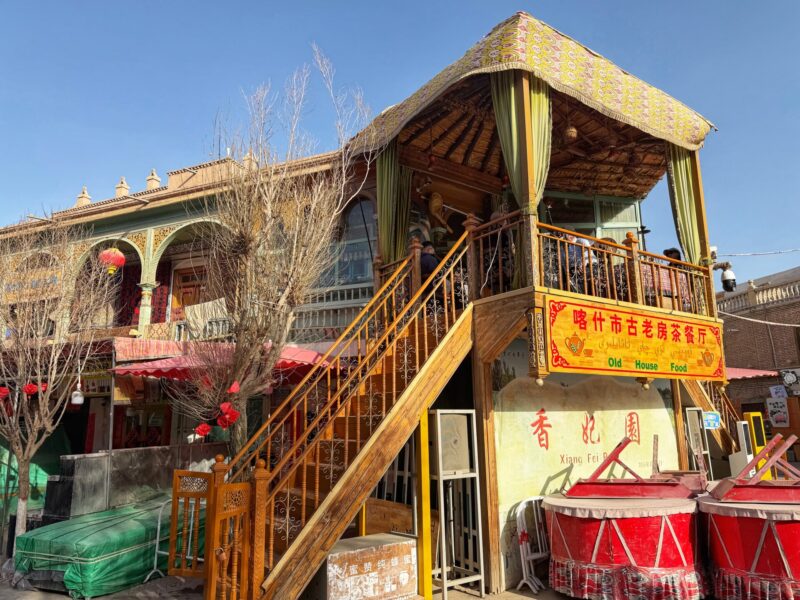
When you enter the teahouse, you’ll be welcomed by a vibrant atmosphere: a red carpet, blue walls, yellow rock sugar, and a mix of local residents and tourists sipping tea from small porcelain bowls, enjoying Nang (a type of bread), and listening to traditional music.
Many locals visit the teahouse to drink tea, chat with friends, and spend leisurely afternoons. Throughout the day, various performances occur, making it an excellent spot to relax and take a break.
Traditional Uyghur Photography Sessions
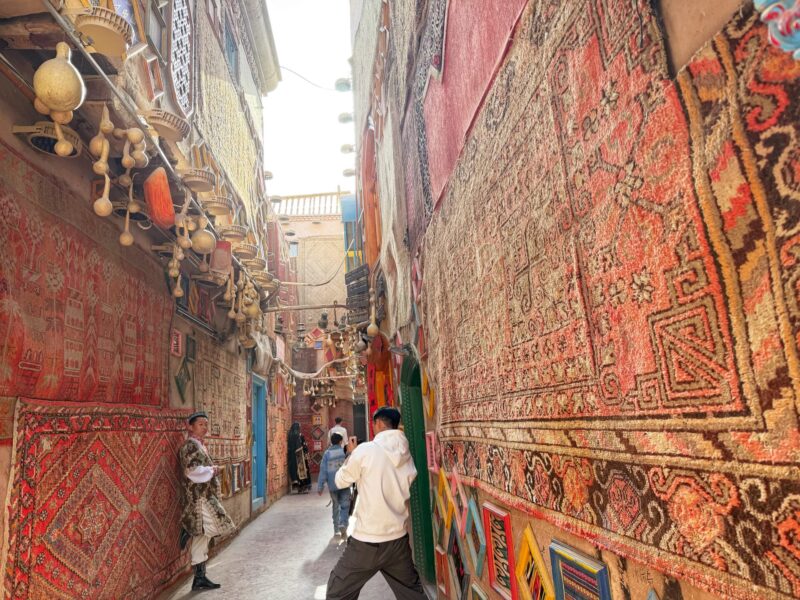
Similar to many other places in China, traditional wear photo shoots are very popular in Kashgar. Numerous shops in Kashgar Old City, especially in the Western District, offer rentals of traditional Uyghur clothing along with photography sessions. It can be a memorable experience if you’re interested.
The rental and photography package typically costs around RMB 199 to RMB 299 per person. A friendly reminder: make sure to confirm the price and negotiate before finalizing your shoot.
Abakh Hoja Tomb
The Abakh Hoja Tomb (阿帕克霍加麻扎), also known as the Tomb of the Fragrant Concubine (香妃园). It is a significant family cemetery that houses the remains of Abakh Hoja and 71 other family members.
In addition to its fascinating history, the mausoleum features many beautiful and impressive ancient Islamic structures, including glazed bricks, elegant domes, and minarets. It is one of the most important Islamic sites in Xinjiang.
We didn’t visit this attraction, but you may want to include it in your Kashgar itinerary if you’re interested. The Afaq Khoja Mausoleum is located about 5 km from Kashgar.
Abakh Hoja Tomb (阿帕克霍加麻扎) / Tomb of the Fragrant Concubine (香妃园)
Address: Haohan Village, Naizerbag Town, Kashgar City, Kashgar Prefecture.
Opening Hours: Daily from 9:30 to 20:00.
Entrance Fee: CNY 30 (add-on CNY20-60 if you wish to watch the performance dance)
Kashgar Bazaar
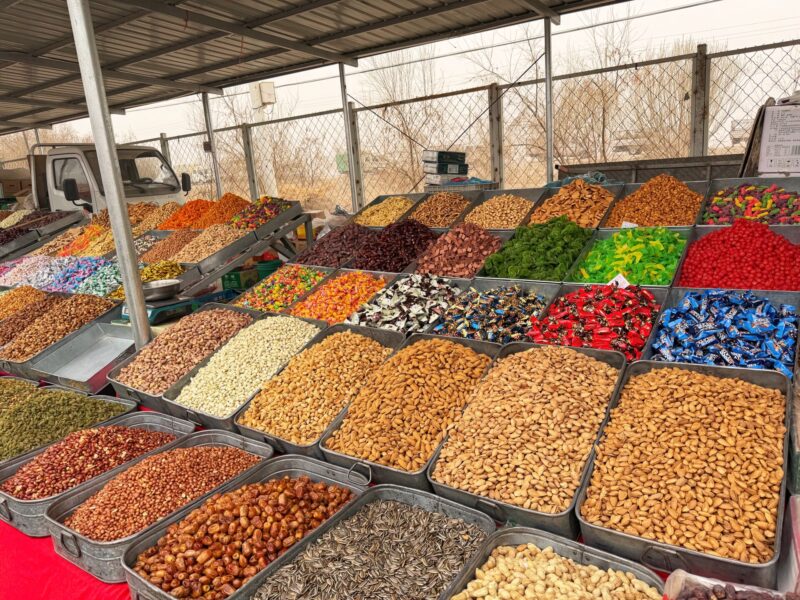
The term “bazaar” means “market” in Uygur and refers to the busiest place in Kashgar.
There are various bazaars of different sizes in the city, with the two most popular being the Kashgar Livestock Market (喀什牛羊大巴扎) and the Kashgar Western and Central Asian Bazaar for International Trade (喀什中西亚国际贸易市场).
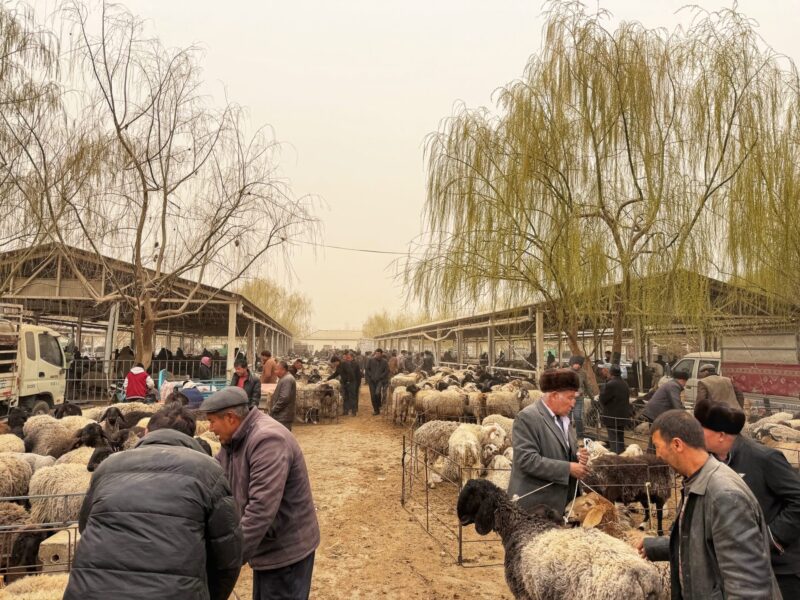
The Kashgar Livestock Market (喀什牛羊大巴扎) is held only on Sundays, so if you are in Kashgar on that day, be sure to experience this grand scene. From dawn, carts loaded with cattle, sheep, horses, donkeys, camels, and more are brought to the market from surrounding villages. Buyers negotiate prices with the owners before taking their animals home. Vendors also arrive early to sell noodles, pancakes, roast mutton, and iced tea. It’s important to note that the way animals are kept and handled may seem harsh if you are sensitive, but this is standard practice here and a part of everyday life. The market is an excellent place to witness the local culture up close.
The Kashgar Western and Central Asian Bazaar for International Trade (喀什中西亚国际贸易市场), also known as the Kashgar Grand Bazaar, operates from 11:00 AM to 8:00 PM. With a history spanning over 2,000 years, this market was once the largest in Asia during ancient times. It served as a gathering point for merchants on the Silk Road from China, Europe, and other regions to exchange goods. Today, the bazaar features more than 5,000 stalls offering nearly 10,000 different kinds of products. Local vendors offer a variety of goods, including dried fruits, spices, fabrics, copper items, knives, and leather products. A place where you can find almost anything.
More Kashgar Itinerary Travel Tips
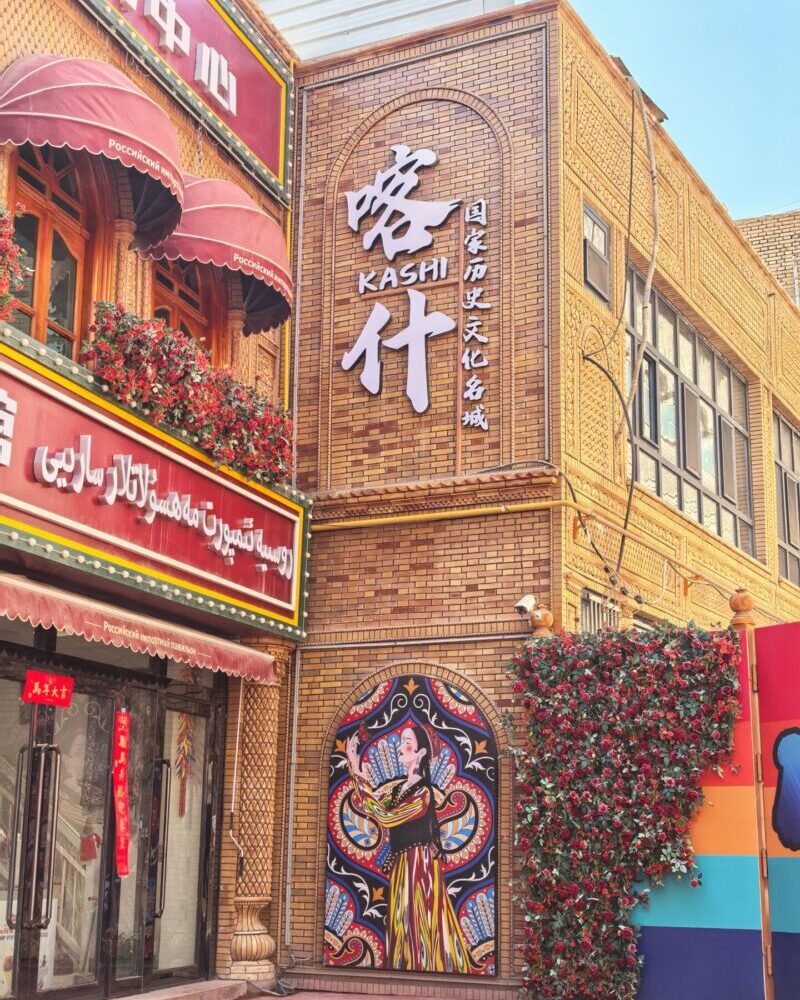
Respect Ethnic Culture – The main ethnic groups in Kashgar include the Uygur, Tajik, Hui, Kyrgyz, Uzbek, Kazak, Mongolian, Russian, Sibo, and Manchu, among others. Each minority group retains its own unique culture, including food, clothing, language, and traditions.
Islamic culture in Kashgar has a long history, significant influence, and a large following. It is important to dress appropriately, especially when visiting mosques.
Getting Around in Kashgar City: Didi is the equivalent of Uber in China and is very useful for traveling within the country, including Kashgar.
Traveling in Kashgar: Kashgar is well-suited for DIY itineraries. However, if you plan to visit areas outside the city, the best options are guided tours or arrangements with a private driver. Some popular tour option as below.
Internet Connectivity: Reliable internet connectivity is crucial when traveling in China. You can opt for a VPN or choose a good data roaming plan. If you prefer an eSIM, Trip.com offers great options.
Health and Safety Tips: Stay hydrated and drink plenty of water. It’s also advisable to use sunblock and prepare warm clothing to counter the significant temperature differences between day and night.
Timezone Difference – In Kashgar, dawn typically occurs around 9 AM, while sunset falls between 7 PM and 9 PM.
Best Time To Visit Kashgar
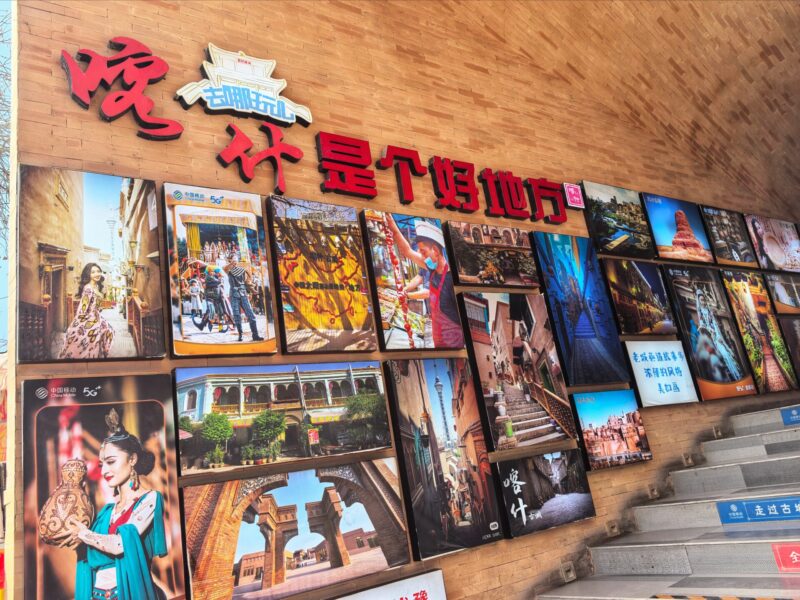
Xinjiang is vast, and every season offers unique experiences. This also applies to Kashgar. The best time to visit Kashgar depends on your preferences for experiences.
Best Time to visit Kashgar:
- April-June (Spring): This is the best overall time to visit. The temperatures are comfortable, and the mountain conditions are generally good.
- July-August (Summer): This period is ideal for high-altitude areas. While manageable with proper planning, temperatures can be extremely hot.
- September-October (Autumn): Many consider this the best season to visit Kashgar, but it can be quite crowded.
- November-March (Winter): Cold temperatures at altitude can lead to some mountain routes being closed. Ideal for a winter experience.
We visited Kashgar in mid to late March, which is typically the low season for Xinjiang. Tourist spots are less crowded during this time, and accommodation prices are relatively low. However, some scenic areas may still be closed for winter or undergoing maintenance, so it’s wise to double-check before your trip.
Overall: A Visit to Kashgar
In summary, Kashgar is a truly unique destination that has preserved much of its ancient charm. It is the ideal place to explore the ancient Silk Road and experience diverse minority cultures. Our trip to Kashgar was open-minded and memorable. However, traveling to Kashgar can be challenging. It often involves long flights or train rides, along with occasional paperwork checks when traveling to nearby destinations. Yet, this extra effort is what makes a visit so rewarding.
In short, if you enjoy exploring unique and less touristy places, Kashgar comes highly recommended.
Lastly, this Kashgar Travel Guide post is part of our Southern Xinjiang travel blog. Continue reading for more travel stories.