Last updated on May 16th, 2026
Don’t miss the opportunity to visit Nikko from Tokyo. Our Nikko itinerary includes all the main attractions and transportation to help you plan your trip!
Surrounded by lush forests and pristine lakes, Nikko (日光, Nikkō) is a charming town filled with cultural and natural treasures. It offers abundant natural beauty, historical landmarks, and popular tourist attractions. Visitors can enjoy various activities, relax in hot springs, and savor trendy cafes and gourmet cuisine. Nikko is also easily accessible from Tokyo, just a two-hour day trip away.
In this Nikko Travel Guide blog, we’ll explore why Nikko is a worthy day trip destination from Tokyo, highlighting the awe-inspiring landscapes and historic temples that make it a must-visit spot for every traveler seeking a taste of traditional Japan.
How To Get to Nikko from Tokyo
Traveling from Tokyo to Nikko is quite straightforward. Nikko is connected to Tokyo by the Tobu Railway and Japan Railways (JR). The two main train stations in Nikko: Tobu Nikko station and JR Nikko station which lie 200 meters apart from each other.
From Tokyo to Nikko by Tobu Railway
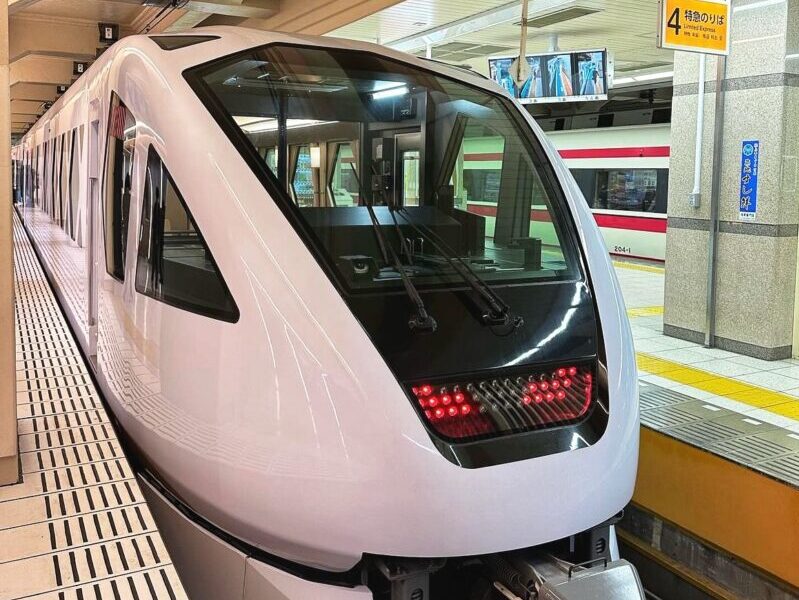
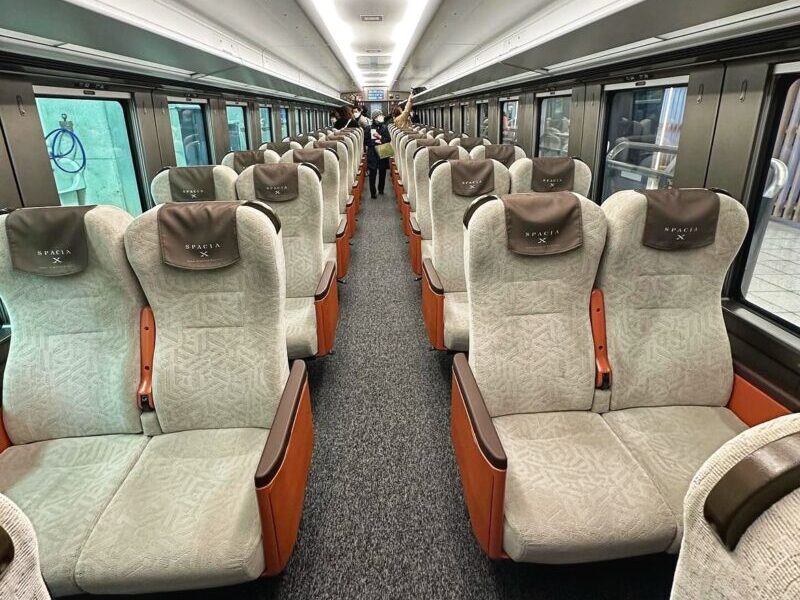
By Tobu Railway: The easiest and fastest way to get from Tokyo to Nikko is on the Tobu Railway. Local trains cost only ¥1,400, but it takes about 3 hours with transfers required. We recommend taking a direct Tobu Limited Express Train from Asakusa Station to Tobu-Nikko Station, which costs ¥3,300 and takes about 2 hours. There are 1 or 2 trains that run once every hour.
The Nikko Pass is a cost-effective option as it includes round-trip tickets for local trains and unlimited bus rides in the Nikko area. Please be aware that you will need to purchase an additional limited express ticket for ¥1,650 if you are using the Nikko Pass.
Nikko Pass
Tobu Railway offers two discount passes for visiting Nikko from Tokyo for foreign visitors: Nikko World Heritage Area Pass and Nikko All Area Pass. Both passes are cost-effective transportation options for visiting Nikko. They provide unlimited bus travel in the designated Nikko area and cover return tickets on local trains. You only need to add on ¥1,650 each way for the limited express trains.
Nikko World Heritage Area Pass is valid for 2 consecutive days and offers free bus rides to World Heritage areas, including Toshogu and others. It is ideal for people who visit only the shrines and temples in the town center.
Nikko All Area Pass is valid for 4 consecutive days and covers the widest area compared to the Nikko World Heritage Area Pass. It includes unlimited bus rides in the chosen region up to Okunikko, Lake Chuzenjiko and Kinugawa Onsen area.
Depending on your Nikko itinerary, most people choose to pay for this add-on to fully benefit from the Nikko All Area Pass. You can purchase digital tickets for the Nikko Pass online through Klook, or order physical tickets for collection at Asakusa station.
From Tokyo to Nikko by JR Rail
By JR Railway: If you are traveling from Shinjuku Station to Nikko, you can take a direct limited express train operated by Japan Railways (JR) and Tobu Railway. These trains connect JR Shinjuku Station with Tobu Nikko Station, and the one-way journey takes two hours and costs ¥4,090. All seats are reserved. To get around in Nikko, you can buy the Tobu bus pass separately or pay per ride.
Please note that the Japan Rail Pass does not cover the entire fare cost for this journey, as it makes use of Tobu Railway tracks. JR Pass holders will need to top up the difference at some point. However, the JR East regional Pass (JR Tokyo Wide Pass, JR East Nagano Niigata Area Pass, JR East Tohoku Area Pass, and JR East South Hokkaido Pass) do cover the entire trip.
Another option is to take the Tohoku Shinkansen from Tokyo Station to Utsunomiya Station, and then transfer to the JR Nikko Line. The entire trip takes 2 hours and the one-way fare is ¥5,880. This option is more expensive, but it only makes sense if you have the JR Pass.
Self-Driving
Self-Driving: It is possible to rent a car to drive to and around Nikko. Driving from Tokyo to Nikko takes approximately 2.5 hours, depending on the traffic conditions. This gives you more flexibility, as you don’t need to wait for specific train times. Additionally, you can easily bring baggage along, avoiding the hassle of carrying them through busy trains and stations. You can also browse on Rentalcars from Booking.com to find the best rate.
For hassle-free travel, consider opting for a group guided bus tour or a private car tour, especially when traveling with elderly and young children. Below is our recommended Nikko Tour Options::
Getting Around in Nikko National Park
When you’re in the Nikko area, the primary public transport option is to use the Tobu buses, which operate throughout Nikko. Alternatively, you can get around Nikko by driving a rental car.
There are shuttle bus services that cover 4 main routes in Nikko: the Nikko Heritage Area, Chuzenji Lake, Yumoto Onsen, and Kinugawa Onsen. Each route is associated with an alphabet and a specific color. You can pay for these bus rides by showing your discount bus ticket, using a Nikko Pass, or by tapping your prepaid transport card (ICOCA, SUICA, etc).
How Many Days to Nikko?
Nikko is a popular destination year-round, offering a wonderful natural experience as the seasons change. The area is quite expansive, and visitors can easily spend one, two, three, or even four days exploring everything Nikko has to offer.
A day trip to Nikko is possible with careful planning. It’s important to note that if you only plan to visit Nikko National Park (Temples and Shrines), one to two days should be sufficient. However, if you want to explore Okunikko (including Lake Chuzenji, Kegon Falls, Ryuzu Falls, and Yumoto), I would recommend planning for three to four days.
For a complete Japanese experience, consider staying in a traditional ryokan at Yumoto Onsen Town.
Things To Do in Nikko Itinerary
Our Nikko itinerary mainly focuses on visiting the Nikko National (Temples and Shrines). We also explored the Okunikko Region to see the Kegon Falls and Lake Chuzenji. After spending a night at Lake Chuzenji, we enjoyed a leisurely cruise before heading back to Tokyo the next day. There are many other attractions to explore in Nikko, so feel free to adjust the itinerary based on your interests.
Things to do in Nikko Itinerary:
- Arrived Tobu Nikko Station
- Shinkyo Bridge
- Nikko UNESCO World Heritage Site (Toshogu Shrine, Futarasan Shrine, Rinno-ji Temple)
- Kegon Falls
- Lake Chuzenji
- Optiona: Senjogahara Marshland Hiking Trails, Tobu World Square
Arrived Tobu Nikko Station
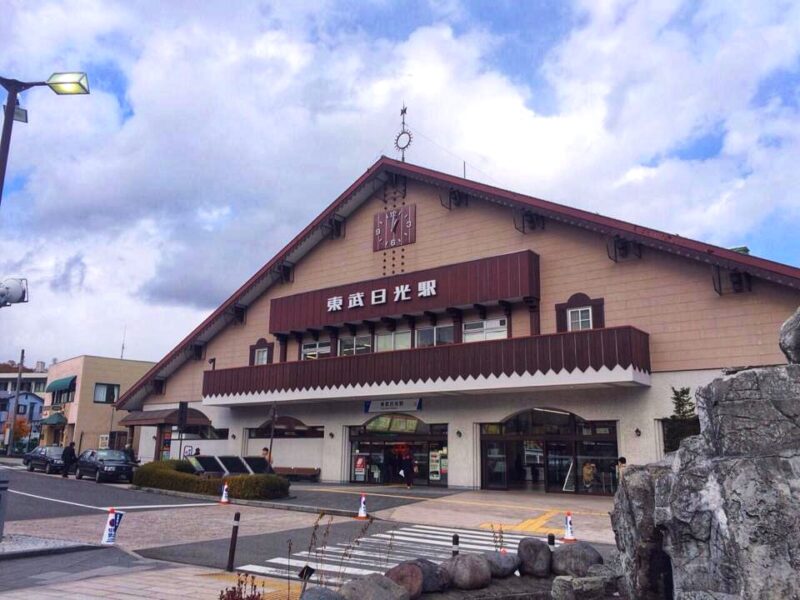
Tobu Nikko Station is located in the center of Nikko. It is the station where you arrive if you take the Tobu limited express train from Tokyo Asakusa station. If you haven’t prepared in advance, you can buy tickets for Tobu buses and various packages at the tourism visitor center here. Right outside the station, you’ll find the Tobu World Heritage bus stop, where you can catch a bus to visit all the sights in the area.
The station is surrounded by nature, with vegetation bordering it. Once you exit the station, you’ll notice that it is situated in a beautiful setting with several cafes nearby. The station has a charming appearance from the outside, with mountains in the background.
Shinkyo Bridge
To access the Nikko UNESCO World Heritage Site, you can either take a 30-minute walk or use the World Heritage Sightseeing Bus, which is covered by the Nikko pass. The bus will take you to Toshogu Shrine, and you can get off at either Daiyuin Futaarasanjinjamae Bus Stop or Omotesando Bus Stop.
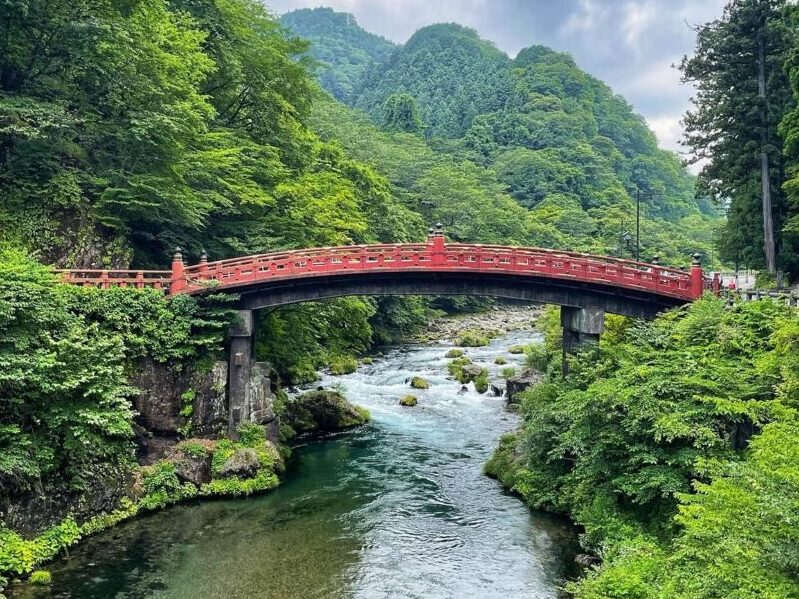
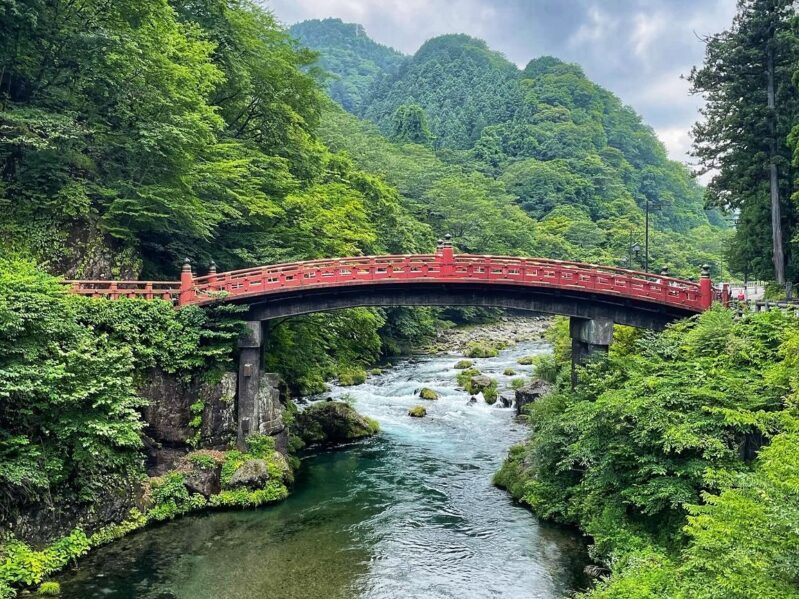
The picturesque red Shinkyo Bridge is the sacred bridge at the entrance to Nikko’s shrines, part of the World Heritage Site. From there, you can also begin exploring Nikkozan Rinnoji Temple, Toshogu Shrine, and Nikko Futarasan Jinja. Please note that there will be admission fees for these shrines as the Nikko Passes do not cover them. Additionally, the last entry time will be 30 minutes before the closing time.
A perfect first stop for your Nikko itinerary before visiting the shrines, temples, and other sightseeing spots in the area.
Nikko UNESCO World Heritage Site
Nikko is a beautiful area to visit in Japan, home to many shrines and temples with historical importance. The Nikko UNESCO World Heritage Site includes the Nikko Toshogu Shrine, the Nikko-zan Rinno-ji Temple, the Rinno-ji Temple Taiyu-in Mausoleum, and the Nikko Futarasan Jinja Shrine.
Among all, the lavishly decorated Nikko Toshogu Shrine is a must-visit in Nikko itinerary. You can easily spend an entire day trip exploring the area’s buildings and relics. If time is limited, we recommend planning 3 to 4 hours to explore the area.
Toshogu Shrine
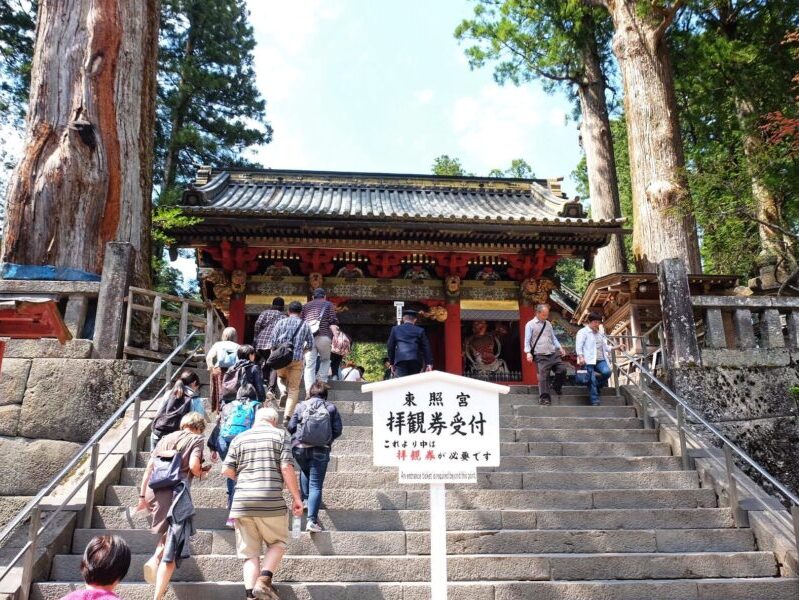
Nikko Toshogu Shrine (日光東照宮) is a stunning 400-year-old building adorned with intricate gold details, carvings, and Chinese paintings. Constructed in 1636, this ornate shrine was built to enshrine and serve as the final resting place of Tokugawa Ieyasu, a key figure in Japan’s unification.
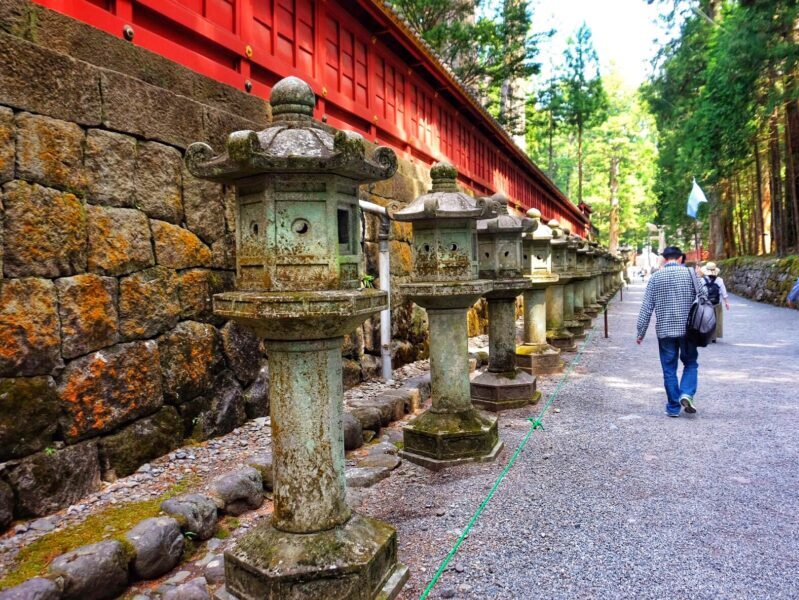
Surrounded by a lush green forest, the colorful buildings of the Nikko Toshogu Shrine are among the most beautifully decorated in Japan, making it a must-see when visiting Nikko.
Toshogu Shrine is part of the Nikko UNESCO World Heritage Site, along with Futarasan-jinja Shrine and Rinnoji Temple.
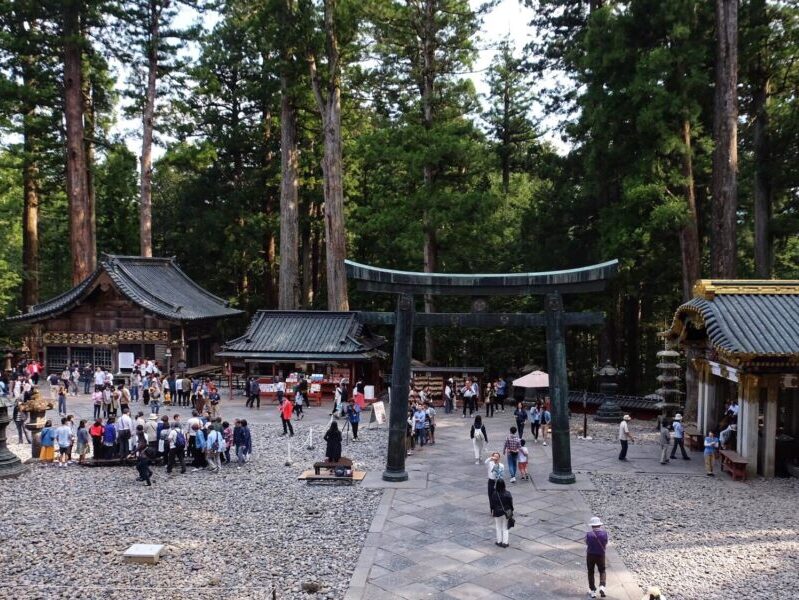
The Toshogu shrine is expansive and can generally be explored in four parts:
- Front Area (which includes the Five-Story Pagoda, the Front Gate, and Storehouses),
- Main Shrine,
- Inner Shrine and Tomb,
- Nikko Toshogu Museum.
Our visit to Nikko Toshogu Shrine lasted about 3 hours. It is one of the most intriguing attractions in the Nikko area, offering a grand and majestic experience.
Keep in mind that it tends to be crowded, with lines for entrance tickets. We suggest arriving early and taking your time to explore the entire area.
Toshogu Shrine (東照宮)
Opening Hours: 9:00 to 17:00 (April to October), 9:00 to 16:00 (November to March)
Admission Fee: ¥1,600 (Shrine), ¥1,000 (Museum), ¥2,400 (Shrine and museum)
Estimate allocated time: 2 to 3 hour
Front Area
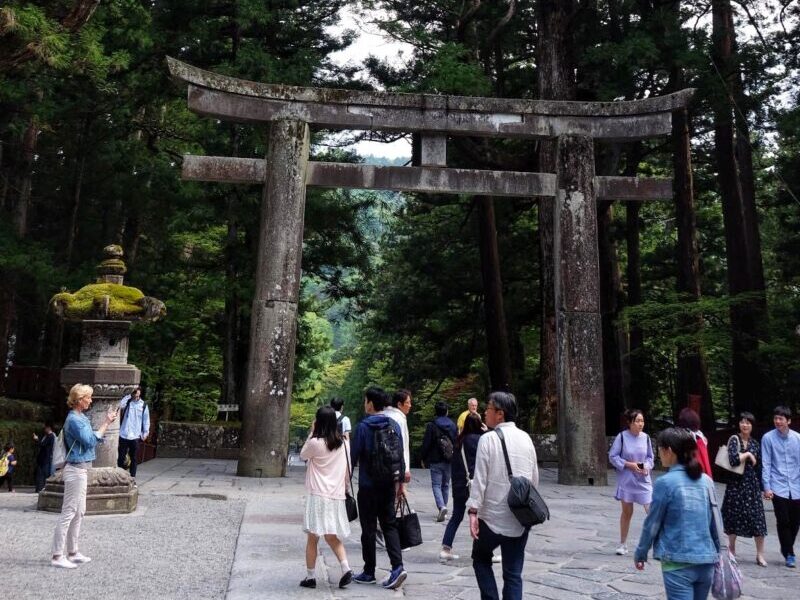
As you follow the route, the first thing you will see is an impressive stone torii gate (鳥居) dating back to 1618. This gate marks the entrance to the sacred place of Nikko Toshogu Shrine.
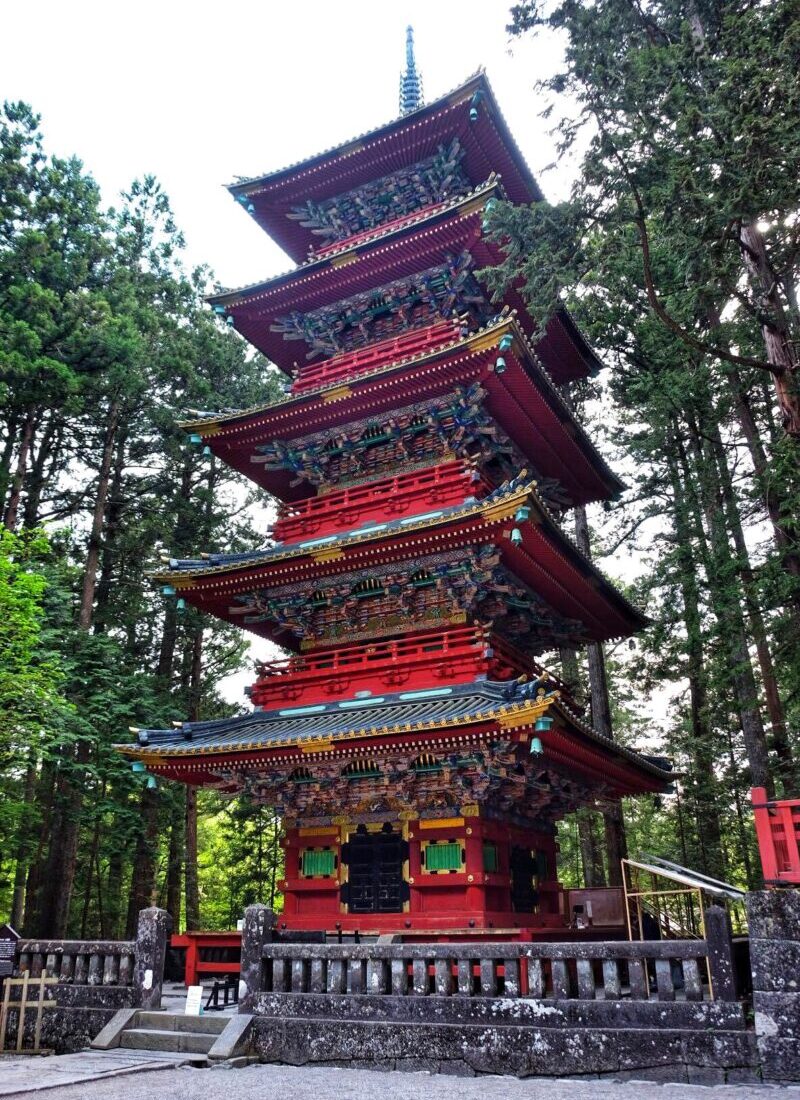
Immediately after passing through the torii gate, you’ll notice a five-story pagoda on the left.
The Gojunoto Five-Story Pagoda is adorned with elaborate carvings and has a vibrant red color. It is designated as a National Important Cultural Property. The original pagoda was built in 1648 but was lost to a fire. The current one was built in 1818. Please note that the pagoda is usually not open to visitors.
Sacred Storehouses
Continuing on the path, you will reach the Front Gate and then the Three Sacred Storehouses (upper, middle, and lower). Throughout the shrine, there are many wood carvings, with the most famous ones being the Three Wise Monkeys, Imagined Elephants, and Sleeping Cat.
Keep your eyes peeled for these carvings, as they are quite small and easy to miss!
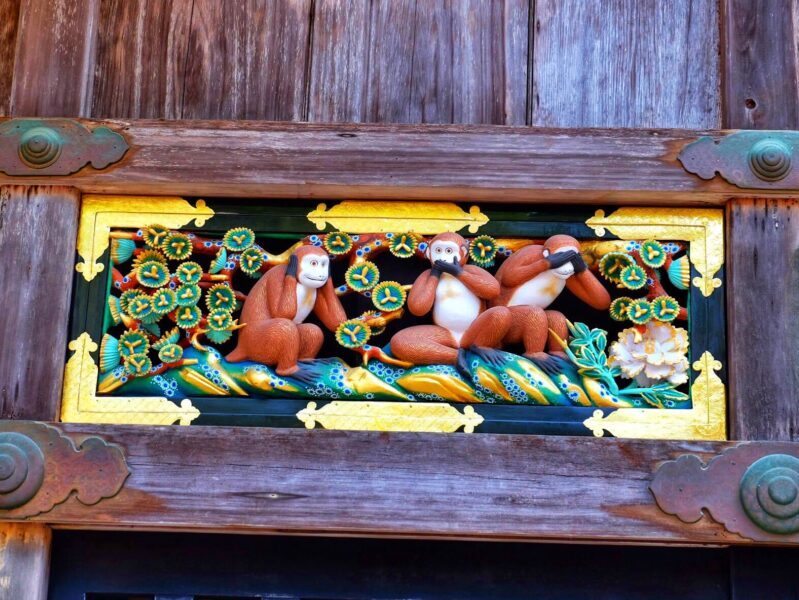
The Three Wise Monkeys (三猿), representing “see no evil, hear no evil, speak no evil,” are located close to the shrine’s entrance.
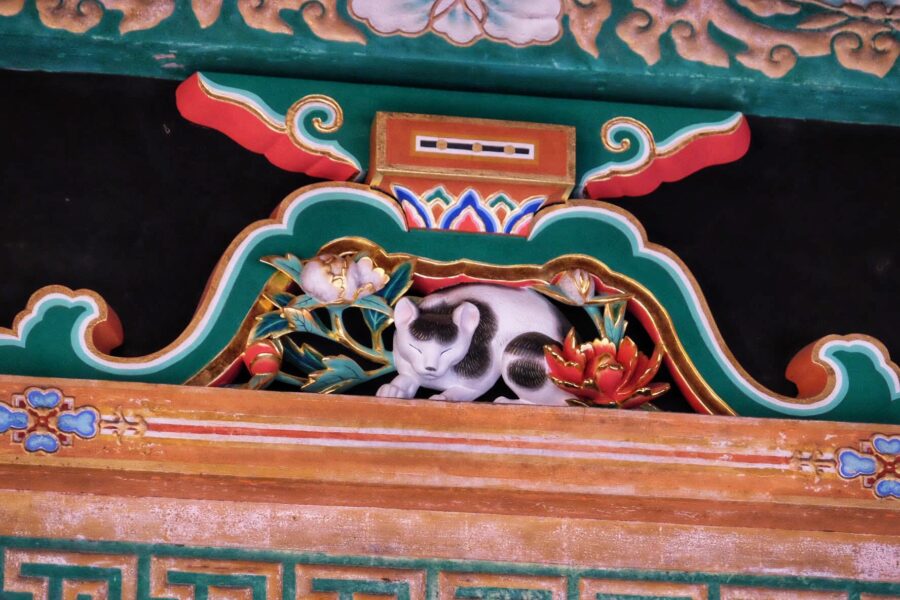
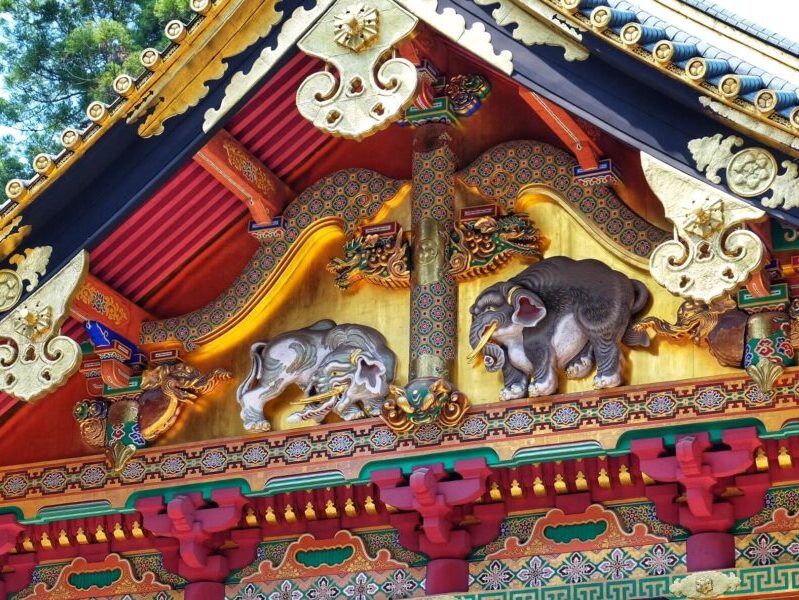
Additionally, you can find the Imagined Elephants (想像の象) and a Nemuri-neko sleeping cat (眠り猫) at the gate leading to the mausoleum.
Main Shrine
As you continue along the path, you will pass through a smaller torii gate and come across steps leading to the Main Shrine. The shrine grounds are adorned with many stone lanterns made of different materials.
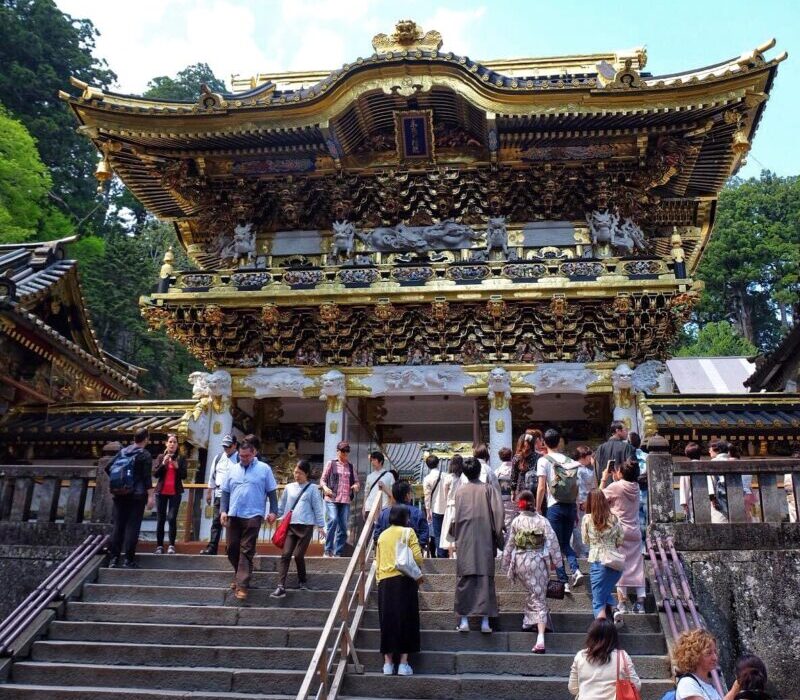
You’ll encounter the renowned Yomeimon Gate, featuring intricate carvings and known as one of the most grand shrine gates in Japan. Take a look at the carvings on the Yomeimon Gate, which are adorned with over 240,000 pieces of gold leaf. Absolutely astounding!
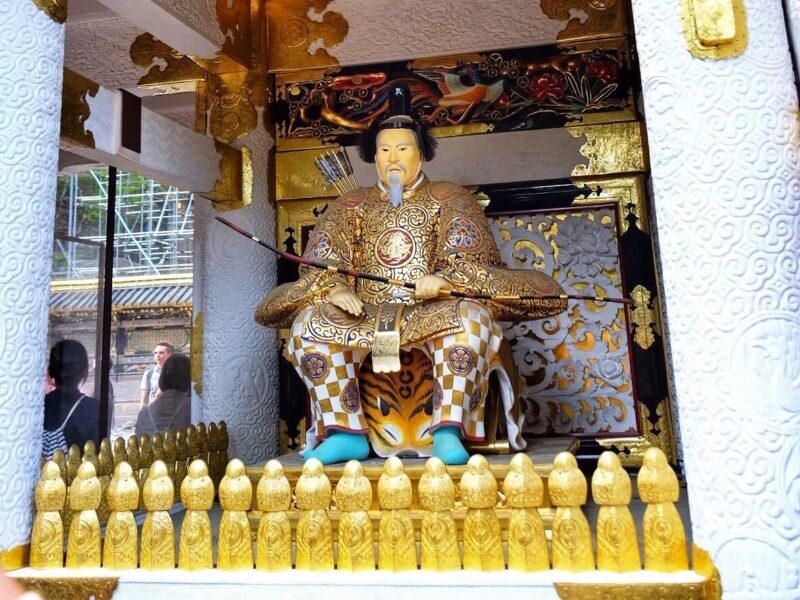
Inside the Yomeimon Gate, you can also see the Shinto Zuijin Kami Guardian Statues. Remember to take off your shoes before entering the Main Shrine, and please be aware that taking photos is not allowed inside.
Inner Shrine and Tomb
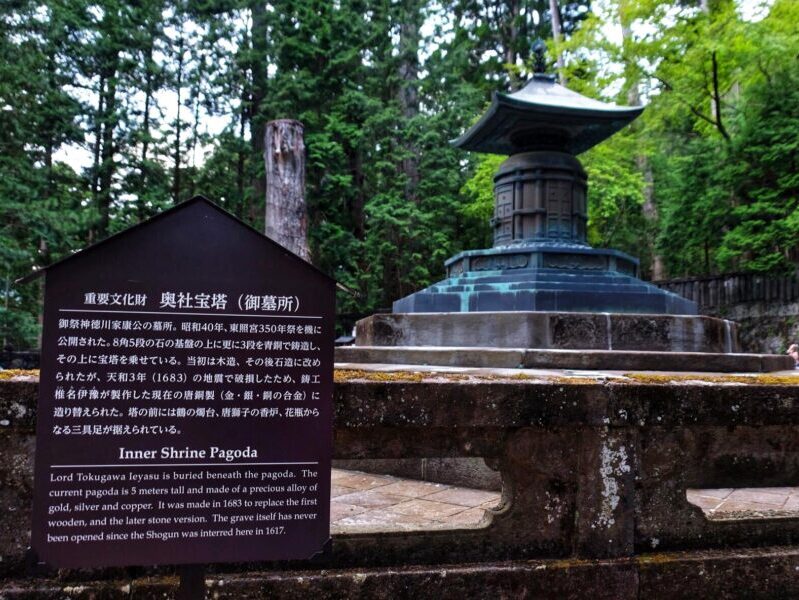
Afterwards, head to Toshogu Shrine as part of your Nikko itinerary. Ascend 207 stone steps, each carved from a single block of stone, to reach the Inner Shrine.
Located right behind the Inner Shrine is the tomb of Tokugawa Ieyasu underneath the Inner Shrine pagoda. Visitors are not allowed to approach the pagoda.
Nikko Museum
You can also find the Nikko Toshogu Museum on the shrine grounds, where visitors have the option to pay an additional fee to view items related to Tokugawa Ieyasu on display. If this doesn’t interest you, you can skip this option.
Futarasan Shrine
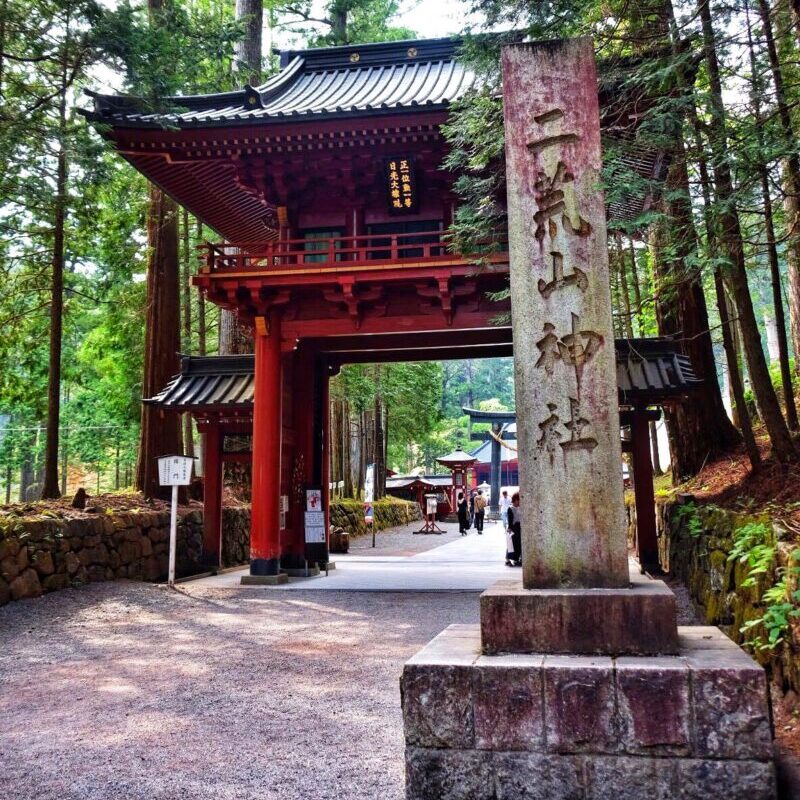
Futarasan Shrine (二荒山神社, Futarasan Jinja) is located next to Toshogu in central Nikko. It is dedicated to the deities of Nikko’s three most sacred mountains: Mount Nantai, Mount Nyoho, and Mount Taro. The shrine grounds can be accessed for free, but there is a small paid area (¥300) to enter the offering hall (haiden).
There is the main hall and front shrine, as well as beautiful shrine gardens. The place is well-known for granting prayers for good luck, pregnancy, smooth delivery of babies, and marriage. We didn’t spend much time here since our main destination was the Toshogu shrine, but we passed by on the way.
Futarasan Shrine (二荒山神社)
Opening Hours: Daily 8:00 to 17:00 (April to October), 9:00 to 16:00 (November to March)
Admission Fee: Free except the small paid area (¥300)
Estimate allocated time: 1 hour
Rinno-ji Temple
Rinnoji (輪王寺) is one of Nikko’s most important temples. It was founded by Shodo Shonin, a Buddhist monk who introduced Buddhism to Nikko in the 8th century. The temple comprises the main shrine called Sanbutsudo, which houses three golden Buddha statues, and Taiyuinbyo, the mausoleum of Tokugawa Iemitsu, the last direct descendant of Tokugawa Ieyasu.
Unfortunately, due to time constraints, we won’t be able to visit Rinnoji.
Rinnoji (輪王寺)
Opening Hours: 8:00 to 17:00 (April to October), 8:00 to 16:00 (November to March)
Admission Fee: ¥400 (Sanbutsudo Hall only), ¥900 (Sanbutsudo Hall and Taiyuin), ¥300 (Treasure House and Shoyoen Garden)
Estimate allocated time: 1 to 2 hours
Okunikko Region
Afterward, we board a bus that travels along the winding Irohazaka roads to the Okunikko region. Lake Chuzenji is located at the edge of a cliff, with the impressive Kegon Falls dropping off nearby.
The uphill bus journey take about 30 minutes or longer. If you are prone to motion sickness, make sure to bring some medication with you.
Kegon Falls
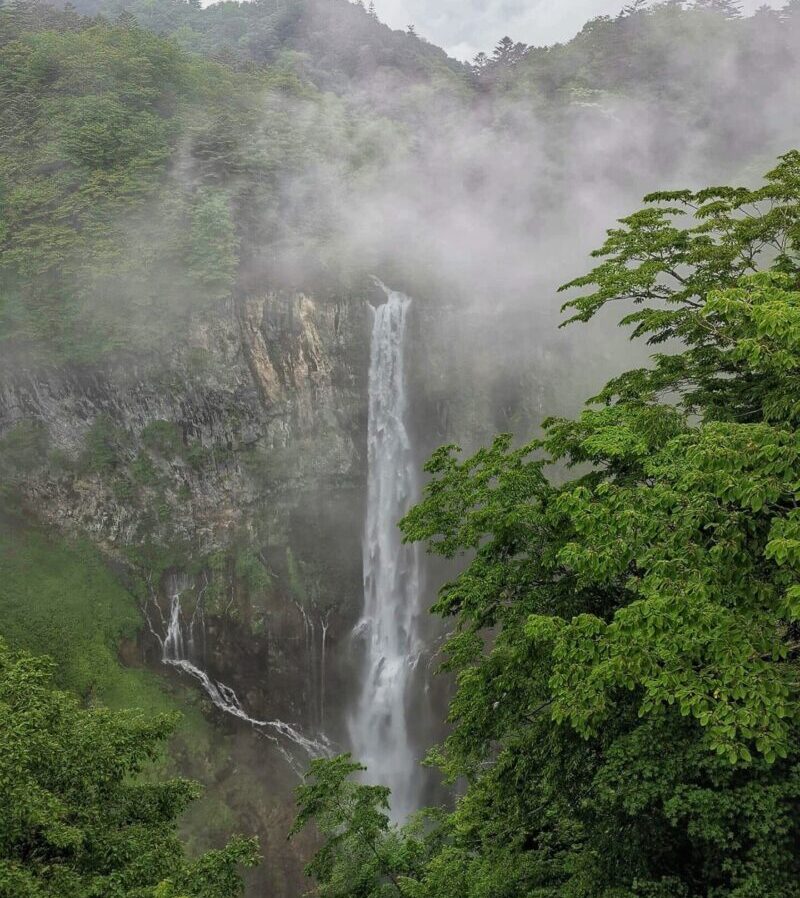
Finally came to Kegon Falls, one of the most famous natural sights in Nikko. It is also our last stop on our Nikko itinerary before heading back to hotel.
The Kegon Falls is about 100 meters tall and is renowned as one of Japan’s top three waterfalls, along with the Nachi Waterfall and Fukuroda Waterfall. It serves as the only outlet for Lake Chuzenji. While the waterfall is indeed majestic and beautiful. You can view the waterfall from a free observation platform or pay ¥550 per person to take an elevator down to the base for a more impressive view.
Alternatively, you can take a short 3-minute cable car ride up to the Akechidaira observation platform for a panoramic view of Lake Chuzenji and Kegon Falls. The platform provides breathtaking views of the natural scenery, which varies throughout the year. However, at times, heavy fog may obscure visibility from the Akechidaira observation platform.
Lake Chuzenji
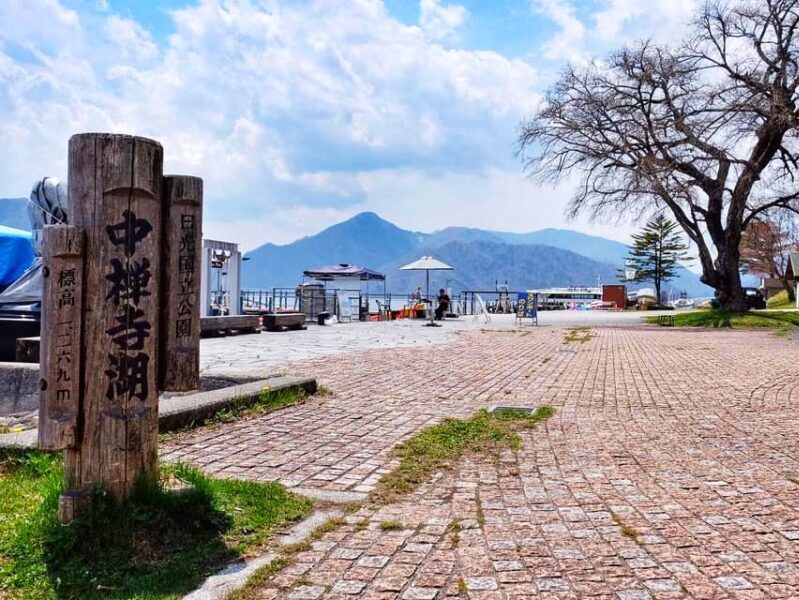
Many visitors consider Lake Chuzenji one of the main attractions of Nikko. This picturesque mountain lake near Nikko was formed around 20,000 years ago due to the eruption of Mount Nantai. It is located at the foot of Mount Nantai, a sacred volcano in Nikko.
While at Lake Chuzenji, you can rent a canoe and paddle around the lake, or you can hike the 25km circumference, which will take a couple of hours. If you have purchased the Nikko All-Area Pass, a cruise on Lake Chuzenji is included, so be sure to take advantage of that.
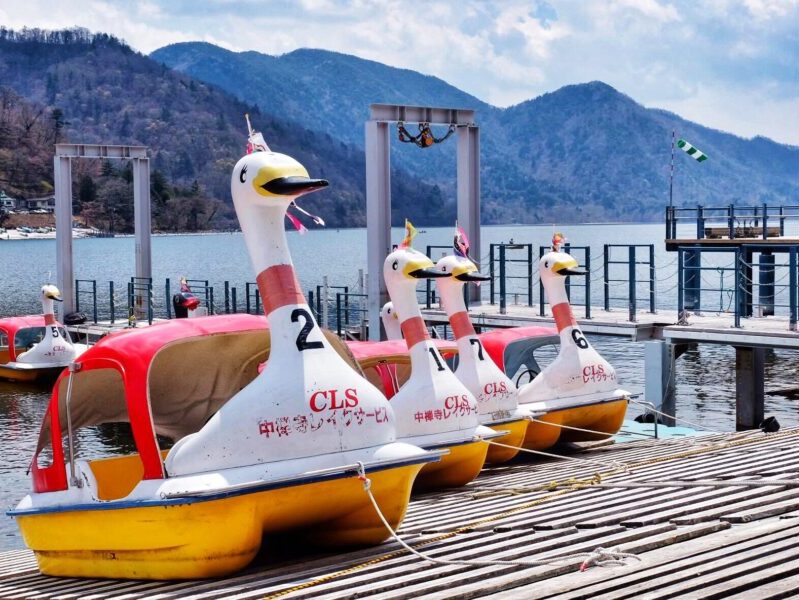
On our next day of Nikko itinerary, we head to the Chuzenji Ferry Terminal to catch the hourly cruise rides across Lake Chuzenji. The cruise stops at several piers, and we will be taking a one-way journey to Shobugahama Pier. However, the cruise services may be suspended in the event of bad weather. You can also choose to stay on the boat, wait for it to complete the loop back to the starting point.
The Nikko All-Area Pass will cover a round-trip cruise ride, so you can get off, walk around, and take the next cruise back.
More Time? Senjogahara Marshland Hiking Trails
The Senjogaharara trails are the most popular trails in Nikko. They offer a relatively easy walk along the marshland, with wooden boardwalks making it accessible. The duration of the hike can range from 6 to 8 hours, depending on the trail you choose. We didn’t have the chance to hike it due to time constraints on our Nikko itinerary this time, but it’s definitely a good reason to visit Nikko.
If you plan to hike the Senjogaharara trails, we recommend visiting a visitor center first to get an idea of the trail locations and to decide which ones you want to explore. They provide a map with estimated walking times in minutes, which I found very useful compared to just knowing the distances. The trail can be started from Ryuzu Falls, but there are a few other entry points as well, allowing you to tailor the length of your hike according to your preference.
Where To Stay in Nikko
If you are planning a day trip to Nikko from Tokyo, a well-planned Nikko itinerary can make it doable. Staying overnight in Nikko will be less stressful in terms of transit. If you decide to stay overnight, here are several accommodations to consider:
Nikko Station Hotel 2: Conveniently located close to Tobu Nikko and JR Nikko Station, this hotel offers spacious rooms with all the necessary amenities. They also provide a complimentary simple breakfast, which is a great plus.
Stay Nikko Guesthouse: A cozy guesthouse suitable for families. It has everything needed and is well located near the train station, the main street with restaurants and shops, and bus stations. The hosts are welcoming and very informative about the accommodation and the area. Limited selection and best to secure your room early. Check for availaibility – Stay Nikko Guesthouse.
Nikko Guesthouse Sumica: This lovely small guesthouse is an affordable option for staying in Nikko. It is conveniently located and guests can stay in a traditional house. It’s close to the Art Project House exhibits and offers various room types to choose from. It’s a basic but clean and comfortable place.
Overall: Visit Nikko from Tokyo
All in all, a visit to Nikko is highly recommended. This charming place offers a taste of Japan’s rich and varied natural landscape. The Toshogu Shrine makes Nikko a revered place of historical significance to both locals and visitors alike. Additionally, it features stunning waterfalls like Kegon Falls and the serene Lake Chuzenji, which allow you to truly appreciate the elevated role nature plays in Japanese culture. We would love to go back to Nikko to explore more.
Lastly, thank you for reading our suggested Nikko itinerary for exploring this charming area. For more travel tips and guides in the Kanto area, please check out our other posts.
How To Plan your trip to Tokyo (Must read for first-time visitors):
- Tokyo Itinerary: Travel Guide Blog + Budget Planning
- A Guide For Meiji Shrine, Harajuku, Shibuya Itinerary
- Asakusa Ueno Itinerary: A Travel Tips Guide For Visitor
- Where To Stay in Tokyo? The Best Neighborhoods and Hotel
- Tokyo Food Guide: What and Where to Eat in Tokyo
Tokyo Transportation Guide
Planning on an easy day trip from Tokyo? Check out our day trip option from Tokyo.