Kinosaki Onsen Sinonomesou Review

Sinonomesou Review: Kinosaki Onsen Traditional Ryokan Stay

posted in: Kansai Wide Japan | 0

Last updated on May 16th, 2026

Staying in Japanese ryokan is your must-do when visiting Kinosaki Onsen. Read about our stay with a detailed Sinonomesou review in this accommodation post.

Kinosaki Onsen (城崎温泉) is known for being one of Japan’s most attractive onsen towns. This is a picturesque idyllic hot spring town nestled in a lush mountain valley of Hyogo prefecture. Travelers can stay one night in a Ryokan or Japanese traditional Inn to experience the traditional Japanese lifestyle.

During our trip to Kinosaki Onsen, we stayed at this mid-range ryokan – Sinonomesou. This is a 3-star lovely ryokan run by kind Japanese ladies who made us feel very welcome. Our Japanese tatami room is spacious and clean, with lower dining tables and chairs. The Kaiseki room option is superb and we had a marvelous Snow Crab meal. A good affordable option for exploring Kinosaki Onsen. We loved our stay here.

Read about our Sinonomesou review to know more details in below accommodation guide.

Getting to Sinonomesou
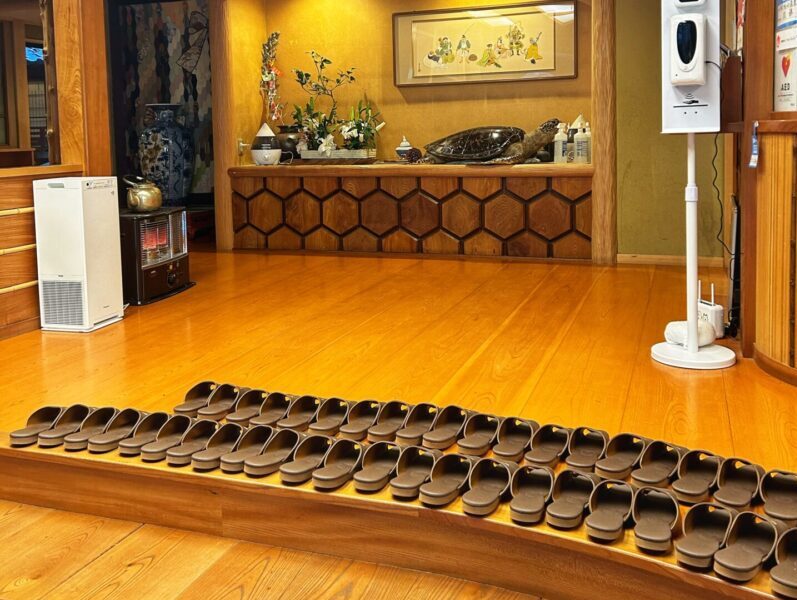
Sinonomesou Entrance

Ryokan Sinonomesou is tucked away in an alley off the main road. We arrived by JR train at Kinosaki Onsen train station. It was about a 10-minute walk to the ryokan. Along the journey to Sinonomesou, you’ll walk by some restaurants, eateries, gift shops, and specialty stores.

Once arrived in Sinonomesou, we were welcomed by the friendly lady owner. Though they cannot speak well in English, simple communication is not an issue. We were brought to our room upon completing the check-in process. You will be also asked for the preferable dinner time if you have reserved for the half-board plan.

Additional bath tax of about ¥800 per person per day is paid upon check-in. Dinner and breakfast are included for our stay and this is part of the reason the room price is high. But it is worth it!

Sinonomesou
Address: 757 Kinosakicho Yushima, Toyooka, Hyogo 669-6101, Japan.

If you’d like to make a reservation at Sinonomesou, then you can do so through Booking.com or Agoda.com. You can browse through those links for other listings in Kinosaki Onsen as well.

Visiting Kinosaki Onsen? Read on our Kinosaki Onsen Checklist Guide for all the essentials:

1. Planning a trip to Kinosaki Onsen – read more Kinosaki Onsen Travel itinerary Guide.

2. How To Get to Kinosaki Onsen
– Find the best prices on a RentalCars from Booking.com.
– Save on transportation: JR West Kansai Wide Area Pass [Get from Klook] , [Get from KKday]

3. Accommodation at Kinosaki Onsen – read more Where To Stay In Kinosaki Onsen.
– High Range: Nishimuraya Honkan and Nishimuraya Hotel Shogetsutei
– Mid Range: Ryokan Sinonomesou and Koyado Enn

4. What To Do in Kinosaki Onsen: Soak into 7 Public Onsen, Stay in Traditional Ryokan, Eat Kaiseki Dinner

The Room
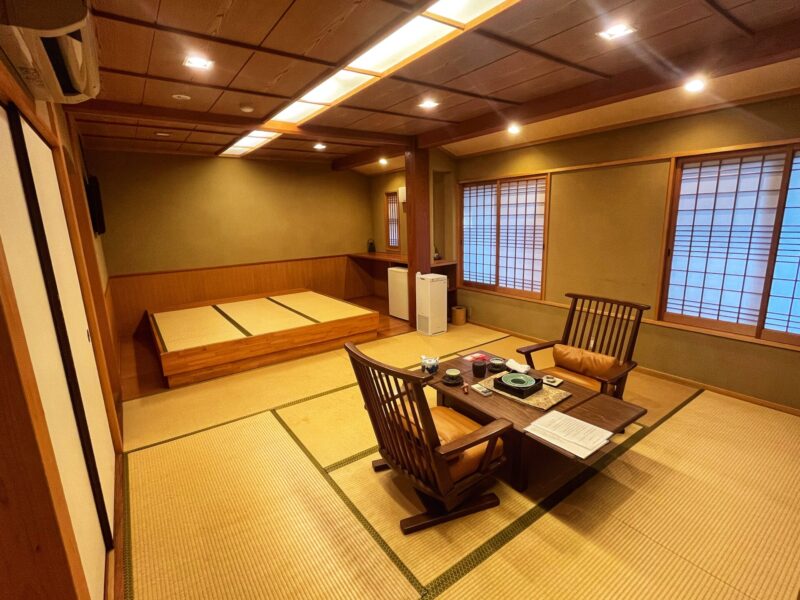
Sinonomesou Review - The Room
Sinonomesou Review – The Room

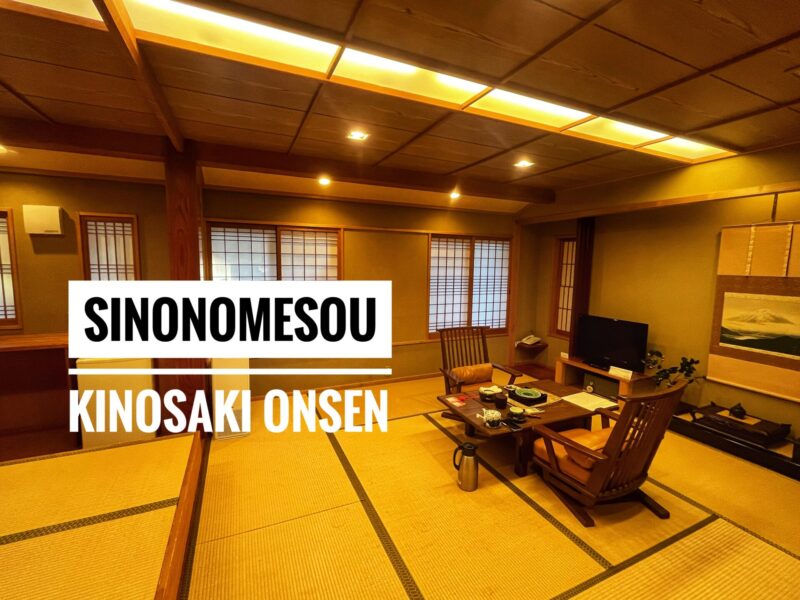
Here’s our room. These traditional Japanese rooms all pretty much look like this. You’ll find a Japanese low dining table with tatami mats over a heated floor.
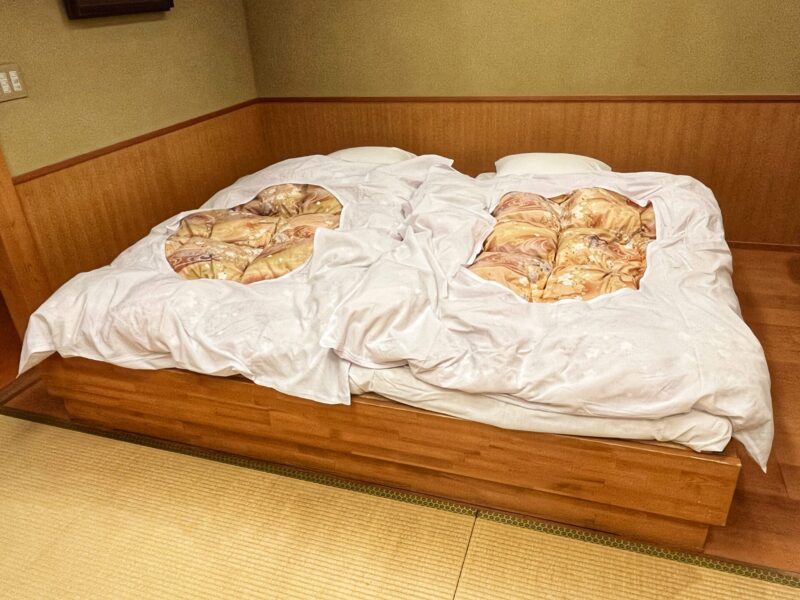
Japanese-style beds and futons

Sleeping is on the tatami mats and futon mattresses and they are usually kept in the closet. The ryokan staff will only prepare your Japanese-style beds and futons for sleeping after dinner.
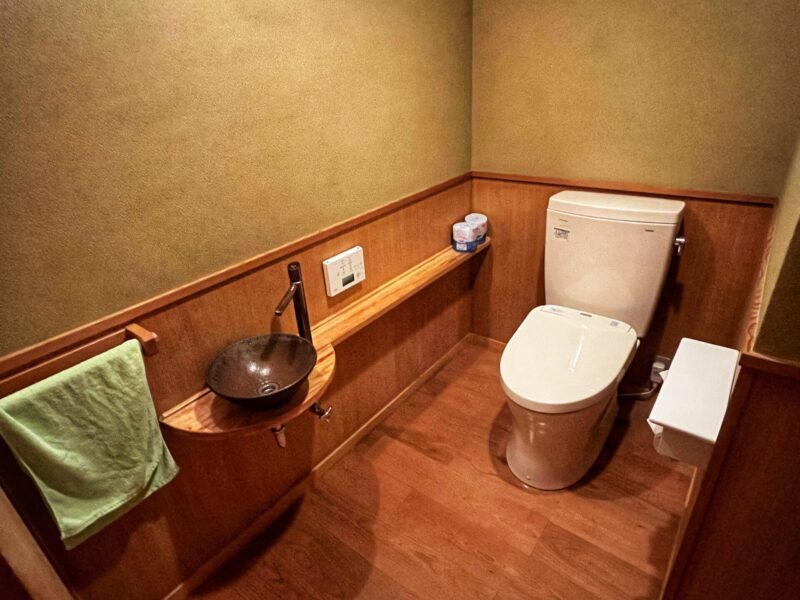
Sinonomesou Private Toilet

The best thing about our room is this private room had a private toilet and washbasin. Most of the ryokans have no private showers because you’re meant to use the public onsens to bathe. Although we didn’t use the private shower in the room, it is a great plus if you are looking for a private shower in the room.

Check the latest prices of Sinonomesou Ryokan here.

Wearing Yukata and Wooden Clogs
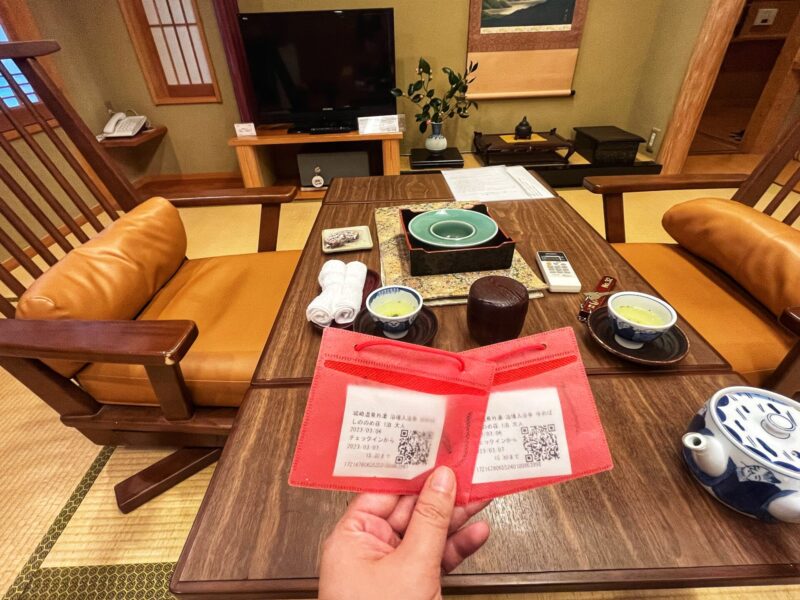
Free Onsen Pass from Sinonomesou

We settle in and can’t wait to head for the onsen dipped in Kinosaki Onsen. We then get changed into our yukata and using the wooden clogs provided in the lobby, start our onsen hopping!

When staying in Kinosaki Onsen, the ryokan will offer the Onsen Pass that allows guests to use the Kinosaki Onsen for FREE! This gives you free access to all seven public hot spring baths. The onsen pass is valid from 15:00 on the day you check in until the next day at 10:00 when you check out.

For day tripper, you can purchase the Yumepa pass at ¥1,300 from the tourist information center or entrance to each of the onsens. Alternatively, you can pay ¥500 per onsen bath.
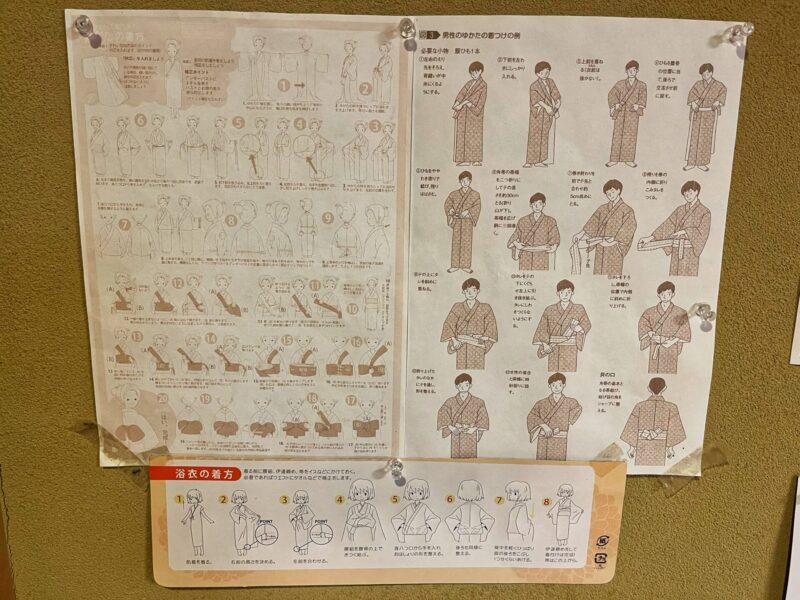
How To Waer Yukata

There is a guide on how to wear the yukata for man and woman.
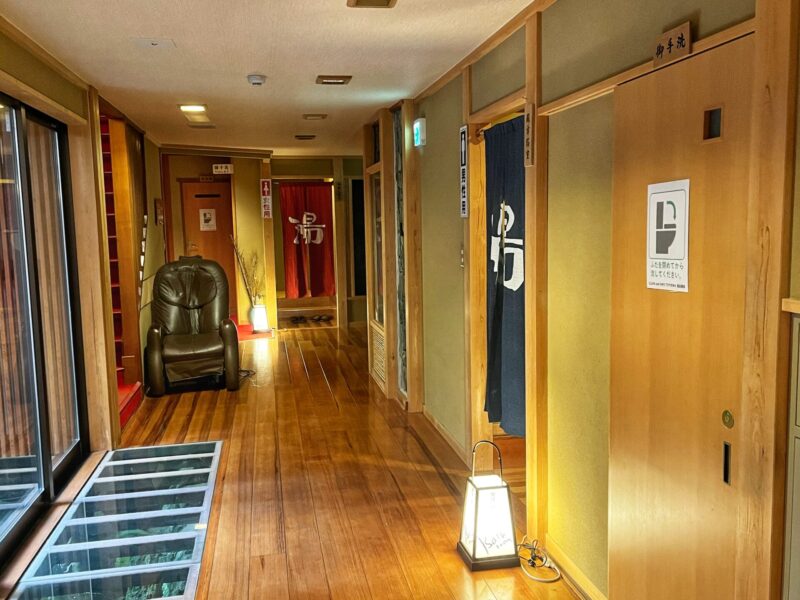
Sinonomesou Onsen Bath

There are 7 onsens in town, but we’ve stopped at 3 during our trip to Kinosaki Onsen. Each onsen is gender-segregated. Unless you are an onsen lover and would like to try all the seven onsens in Kinosaki Onsen. Else, 2 or 3 onsens dipped should be sufficient to experience the natural hot spring water here.

It’s also good to know Sinonomesou had its own baths – one for men and one for women.

Kaiseki Ryori Dinner
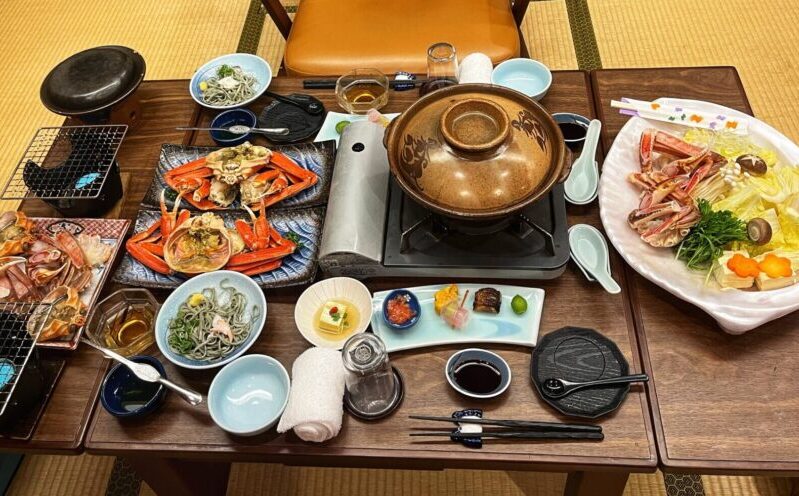
Sinonomesou Review - Kaiseki Ryori Dinner
Sinonomesou Review – Kaiseki Ryori Dinner

After the onsen, we were ready for the crab feast! We were advanced booking with the winter special Kaiseki Ryori meal with Snow Crab. The half-board meal is not included with the Matsuba Crab and we have been called to the property to upgrade our meal plan.

It is much more expensive than the price advertised. But trust me, it was totally worth it!
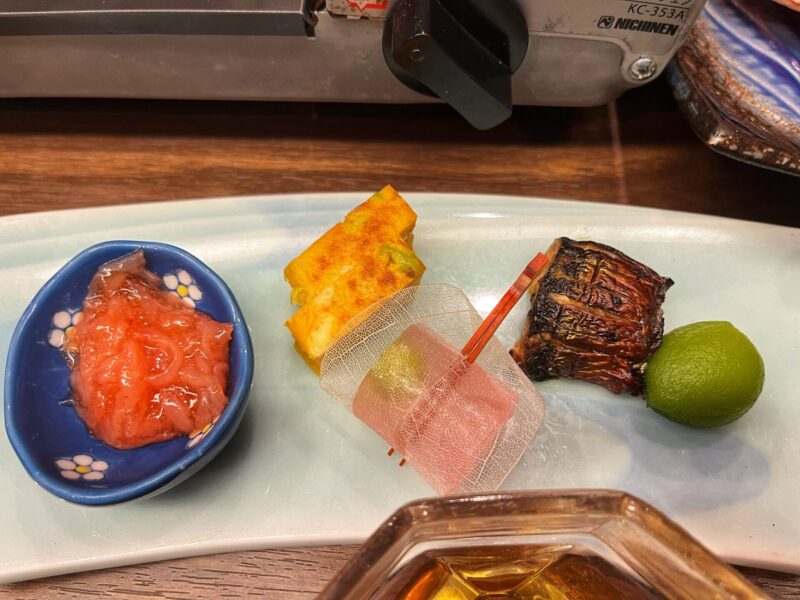
Kaiseki Ryori Dinner Appetizer
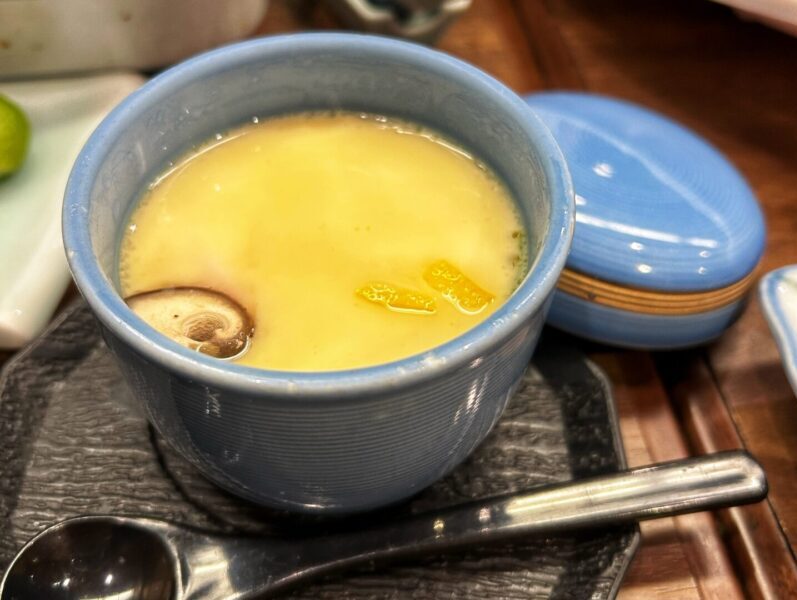
Kaiseki Ryori Dinner Steam Egg

As we entered the room, the table was already set with a full crab and various other plates and vessels, all containing crab.

There are lots and lots of small plates. A bit of so many different flavors. The food was outstanding!
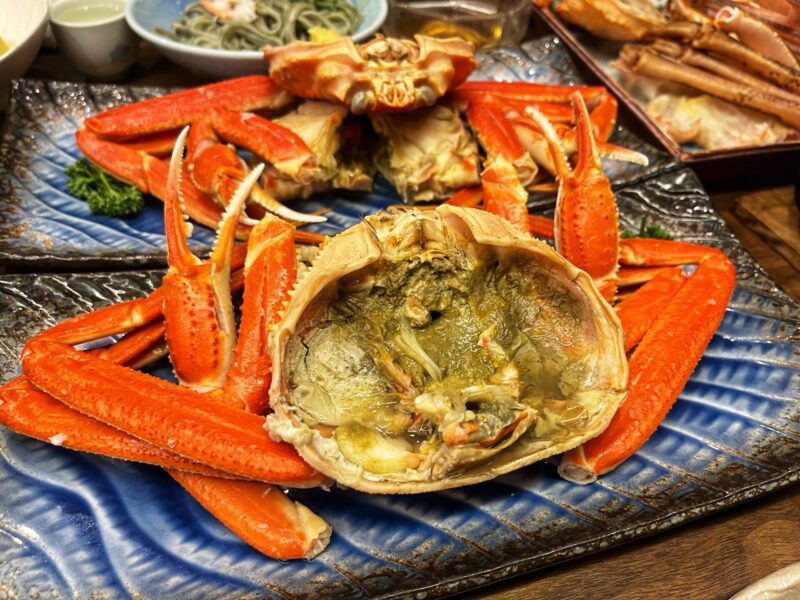
Sinonomesou Review - Eat Matsuba Snow Crab

Matsuba crab is caught between November and March each year and is fished from the Sea of Japan, just 10 minutes or so from Kinosaki Onsen. It’s my first Matsuka Crab and it was so fresh!
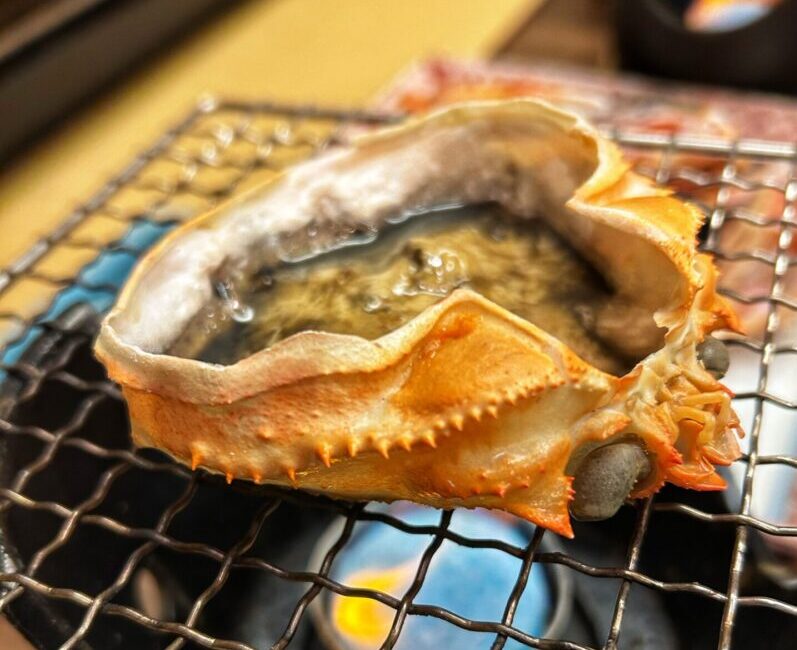
Kaiseki Ryori Dinner Grill Crab

We ate the Matsuba Crab via sashimi and also grilled it.
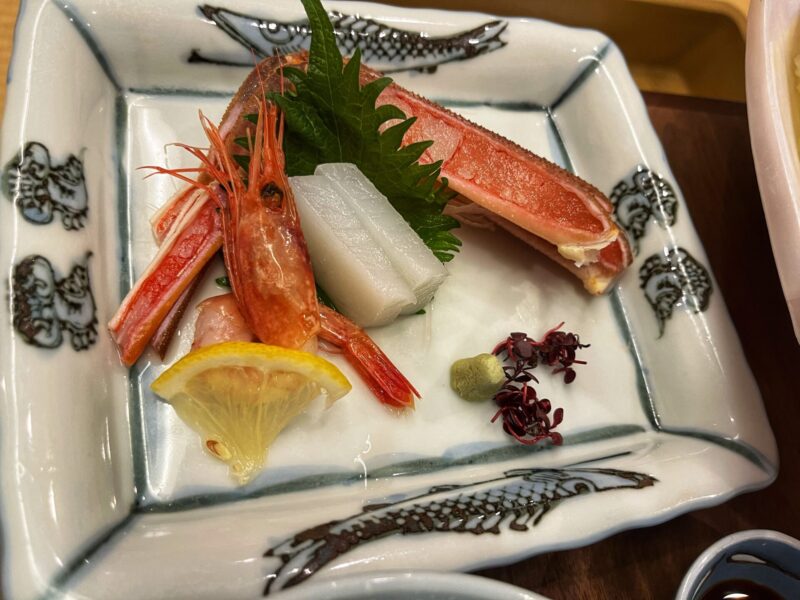
Kaiseki Ryori Dinner Sashimi Plate

Sashimi plate with crab,ebi, and fish.
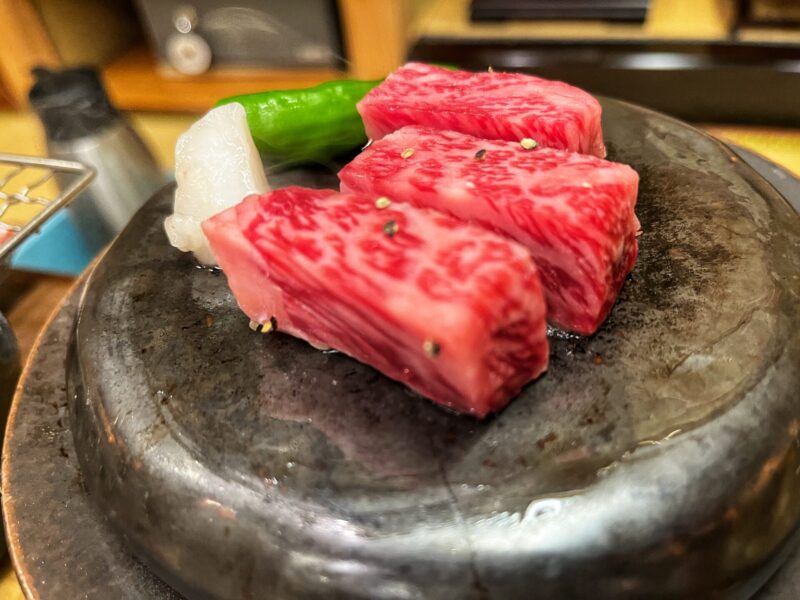
Kaiseki Ryori Dinner with Tajima Beef

Be sure to try Tajima beef here in Northern Hyogo! Only purebred Tajima beef, borne and raised in Hyogo prefecture can be certified as Tajima beef!
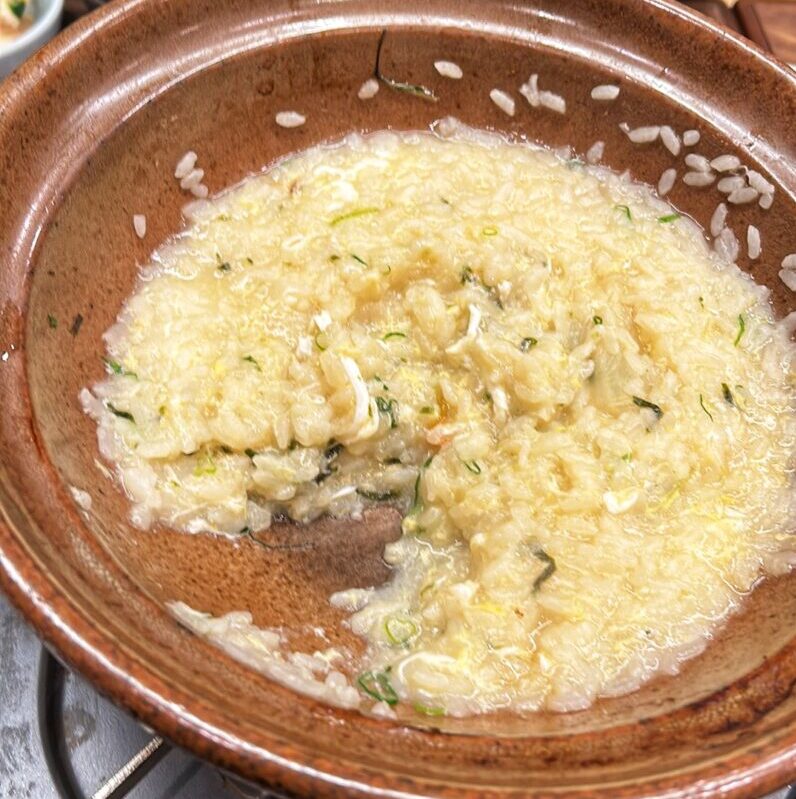
Kaiseki Ryori Dinner Japanese Rice Soup Zosui

Lastly, our Kaiseki Ryori dinner is ended with Japanese rice soup zosui. It is a satisfying dinner in Sinonomesou!

Japanese Traditional Breakfast
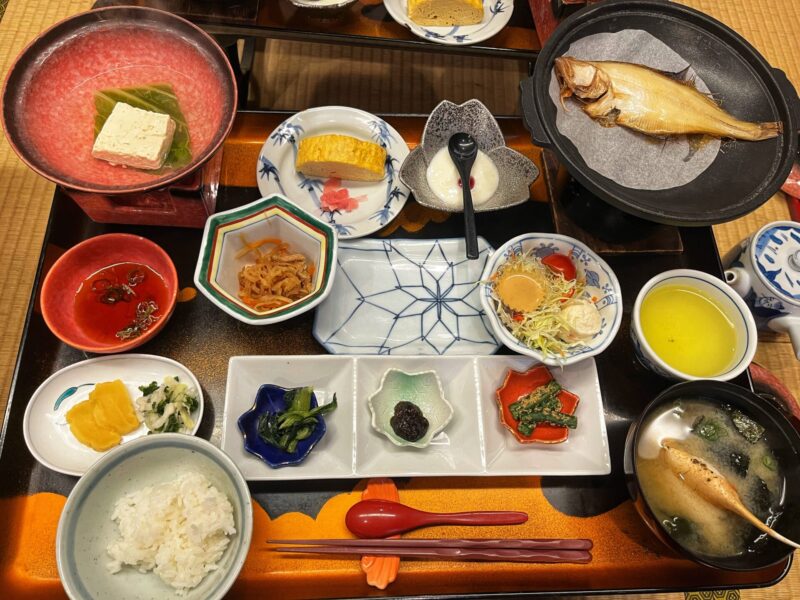
Sinonomesou Review - Japanese Breakfast Set

The next morning, the breakfast is also served in the room. We have the Japanese traditional rice set for breakfast. It is featuring with rice, miso soup, fish, pickles, and seaweed. We enjoyed seeing how it was served and prepared. It was so full to finish all of the items!

After that, we leave and head towards the train station to the next destination. It was a superb experience at our Kinosaki Onsen Ryokan and one of the most memorable ryokan stay in Japan.

My Final Sinonomesou Review
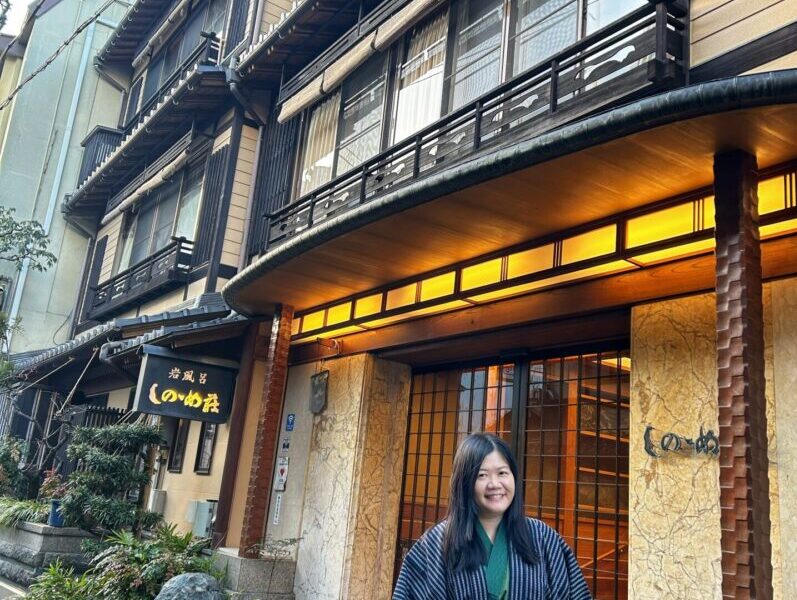
One night stay in Sinonomesou

All in all, we hope this Sinonomesou Ryokan review is helpful. It is a lovely ryokan run by kind Japanese ladies who made us feel very welcome. We truly enjoy our ryokan stay experience in Sinonomesou and will look for them on return trips to Kinosaki Onsen whenever possible.

In short, we truly enjoyed our stay in Sinonomesou and highly recommended it!

If you’d like to make a reservation at Ryokan Sinonomesou, then you can do so through Booking.com or Agoda.com. There are many ryokans with onsens in Kinosaki Onsen so be sure to go through the listing to find one that best suits you. Alternatively, you can look for other accommodations in Kinosaki Onsen as well.

Related Kinosaki Onsen travel stories:

Traveling to the Kansai Wide and looking for some inspiration? Free feel to continue to check out our travel stories to some other interesting places:
Shingu itinerary Travel Guide Blog

Hongu and Shingu itinerary: A Travel Guide blog

posted in: Kansai Wide Japan | 0

Last updated on May 16th, 2026

Visiting the Kumano Sanzen is the top thing to do when you’re in Shingu and Hongu. Read on to find out what to visit, how to get there, where to stay in this quick and easy travel guide blog.

Located on the Kii Peninsula in the prefecture of Wakayama, Shingu can make for a perfect side trip on your trip to Kii Peninsula. The city is famous for Hatayama Taisha and other Shinto shrines of key importance in the Kumano faith.

During our exploration of the Kumano Kodo area, we make a trip to Shingu (新宮) and Hongu (本宮町) for its sacred Kumano Grand Shrine. Together with Kumano Nachi Taisha Shrine, the Kumano Hongu Taisha at Hongu and Kumano Hayatama Taisha at Shingu are referred to as Kumano Sanzan. They are the head shrines of the Kumano Shrines of which there are about 4,700 throughout the country.

Read our Shingu Travel Guide below to find out all about this sacred destination!

How To Get To Shingu

How To Get To Shingu

To get to Shingu, traveling can take the JR train from Shin-Osaka or Nagaya direction to the Kii Peninsula. From either direction, it’s about a three-and-a-half to four-hour journey each way.

From Shin-Osaka, take the Kuroshio Limited Express bound for Shingu to JR Kii-katsuura or Shingu. The journey takes about 3.5 hours. The Japan Rail PassJR Kansai Wide PassJR Kansai Hiroshima Pass, and JR Ise-Kumano-Wakayama Area Tourist Pass are valid for this route. Take note that all seats are reserve seat for JR limited express train Kuroshio. 

From Nagoya Station, take the Limited Express Nanki to Shingu or Kii-Katsuuura. The journey takes about 4 hours. The Japan Rail Pass and JR Ise-Kumano-Wakayama Area Tourist Pass are valid for this route. But JR Pass is required to pay with an additional charge of ¥800 for using the Ise Private Railway route. It is always recommended to reserve a seat for JR limited express Wideview Nanki due to limited seats available.

If you are in Nachikatsuura, you can either takes the local train or bus to Shingu. The journey take about 20 minutes train ride from JR Kii-Katsuura station.

Getting Around in Shingu

Getting Around in Shingu by Bike

Shingu is a pretty compact city. It is a great city to walk or bike in to visit the city!

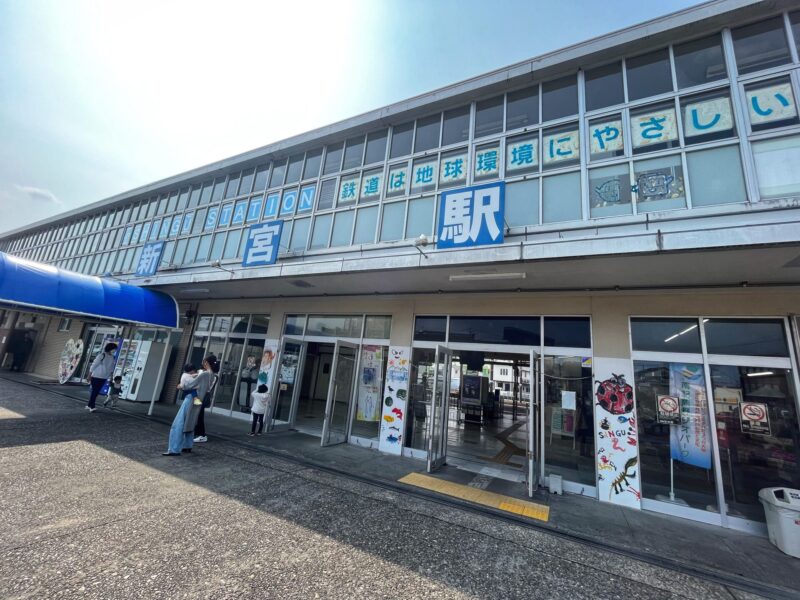
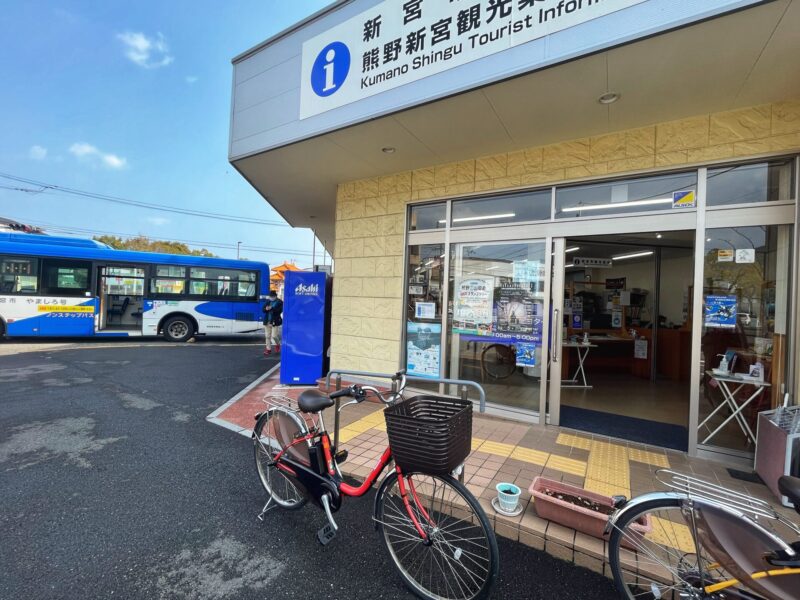
Many hotels offer complimentary or inexpensive bike rentals, but you can also rent a bike at Tourist Information Center located opposite the JR Train Station. We rented the electric bike at Tourist Information Center when visiting the attractions in Shingu.

Where To Stay

There are a few business hotels and guesthouses in Shingu if you are looking for where to stay in Shingu. But we choose to stay in Nachikatsuura as there are a number of good onsen hotels. From there, we take the bus to Shingu to visit the Kumano Grand Shrine.

Here is our recommendation:

  • High-RangeKumano-bettei Nakanoshima – This is one of the best hotels in the area if you want a luxurious stay! It is a seaside Ryokan located on a private island in Katsuura Bay.
  • Mid-RangeHotel Urashima – A popular onsen resort with beautiful hot springs in Nachi Katsuura. The most famous is the Bokido, a natural hot spring bath in a cave overlooking the ocean. Truly amazing!
  • BudgetWhy Kumano, Hostel & Bar is a convenient hostel accommodation with a bar and café in front of the. It is housed in a narrow three-story building with a tasteful design.

More accommodation options: Where To Stay in Nachikatsuura – Best Hotels Pick.

Kumano Hayatama Taisha Shrine

Visit To Kumano Hayatama Taisha Shrine

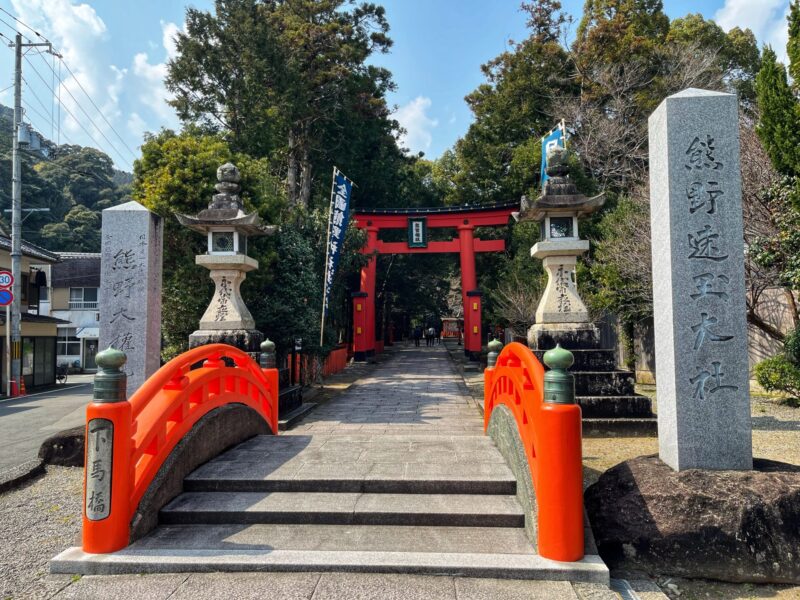
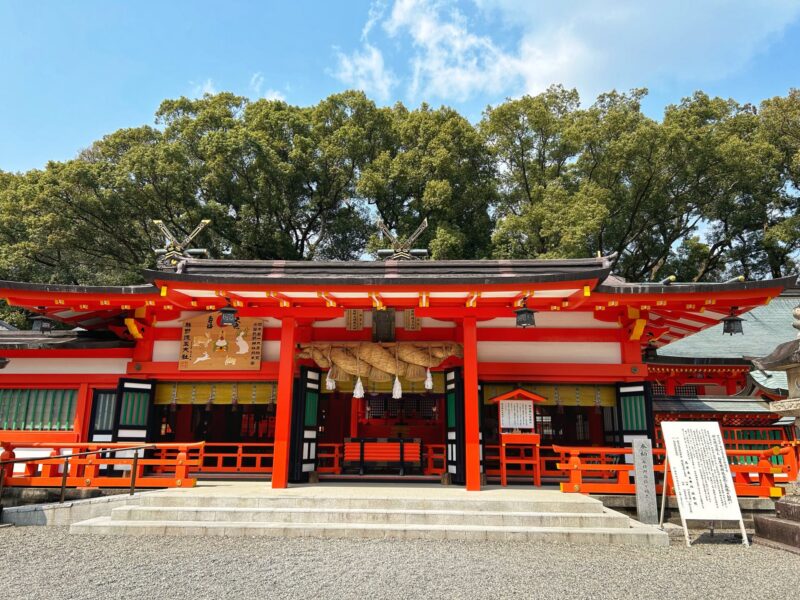
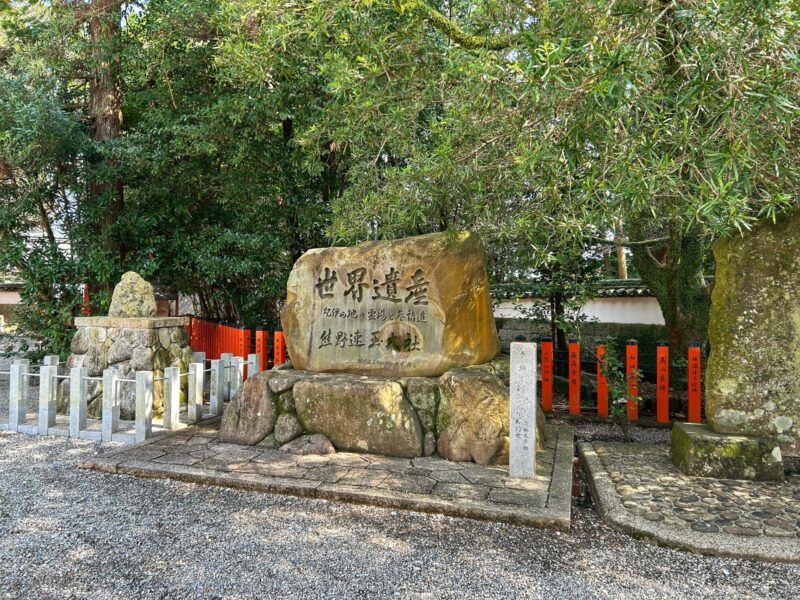
Firstly, head to the Kumano Hayatama Taisha Shrine (熊野速玉大社). This shrine is part of the “Kumano Sanzan” and oldest among the three. It is also the smallest, but also the least crowded.

Kumano Hayatama Taisha Shrine

Kumano Hayatama Taisha Shrine is a beautiful vermilion shrine with magnificent architecture. Offering prayer at the sacred ground of Kumano Hayatama Taisha Grand Shrine is said to bring fortune in this life.

Kumano Hayatama Taisha Shrine Ground

The ground is spacious and with many lovely features. There is a huge nagi tree that stands on the shrine grounds. It is believed to be 800 years old and locals believe the leaves can help to sustain relationships.

Getting there: About a 15 to 20-minute walk from the Shingu train station.

Kamikura Jinja Shrine

Hiking to Kamikura Jinja Shrine

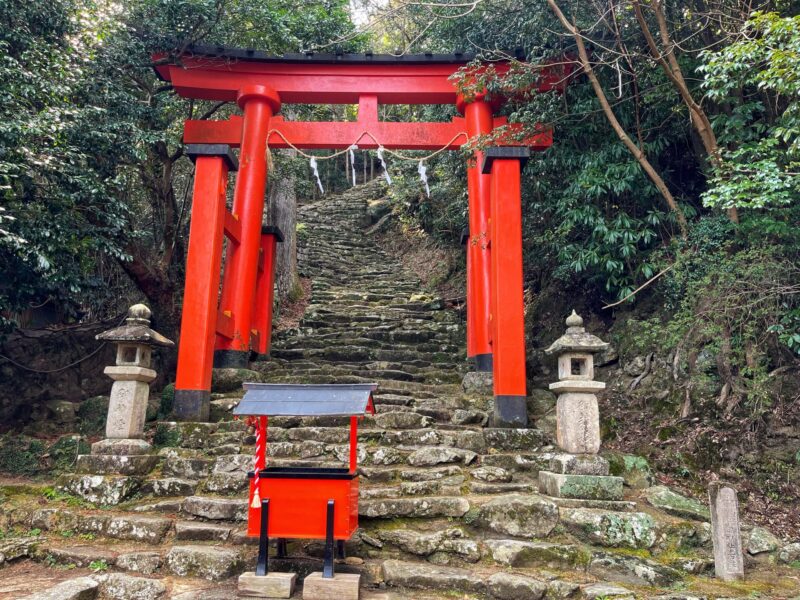
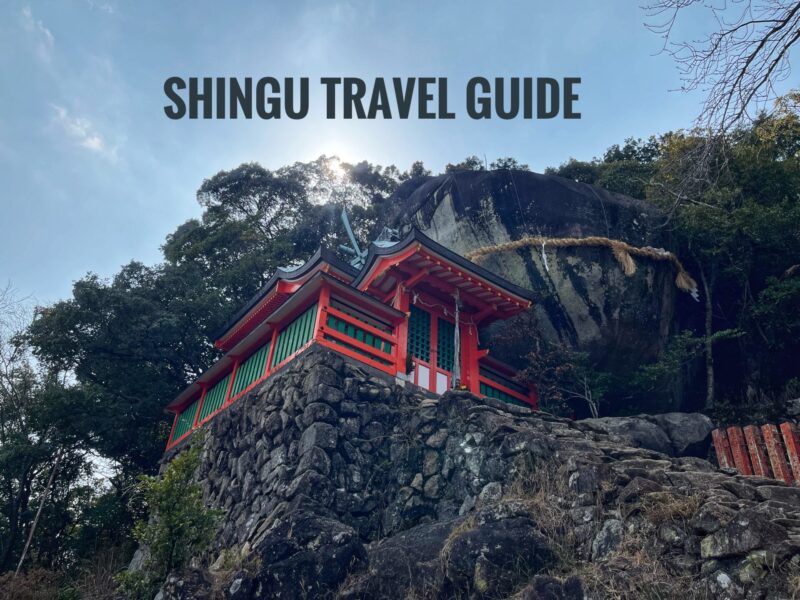
A relatively short walk from Kumano Hayatama Taisha Grand Shrine is the Kamikura-jinja (神倉神社), a shrine that marks the grand shrine’s former site. It is situated at the top of a cliff and some effort is required to reach it.

Hike Up to Kamikura Jinja Shrine

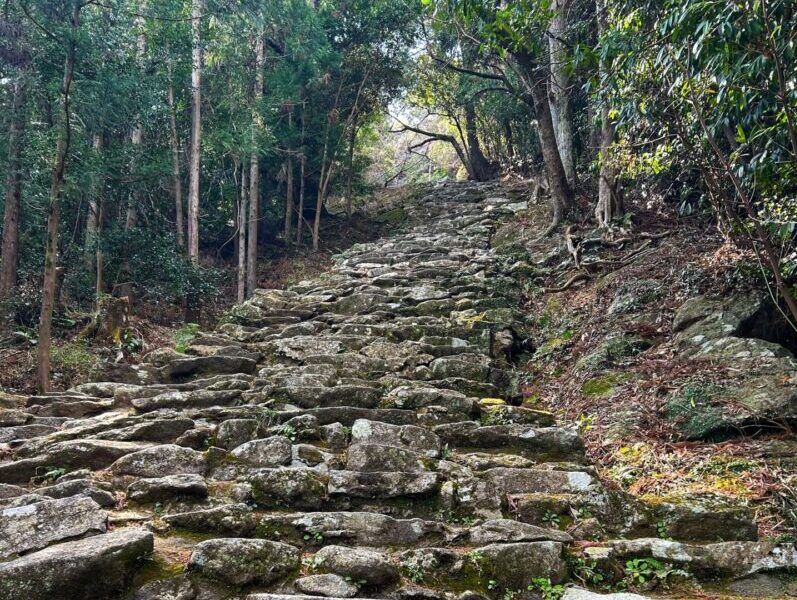
To get to the shrine, you have to climb up the 538 stone steps leading up to Kamikura-jinja Shrine. The stairs can be a little treacherous and physically demanding. Make sure you’re wearing good shoes when you hike up and be extra careful.

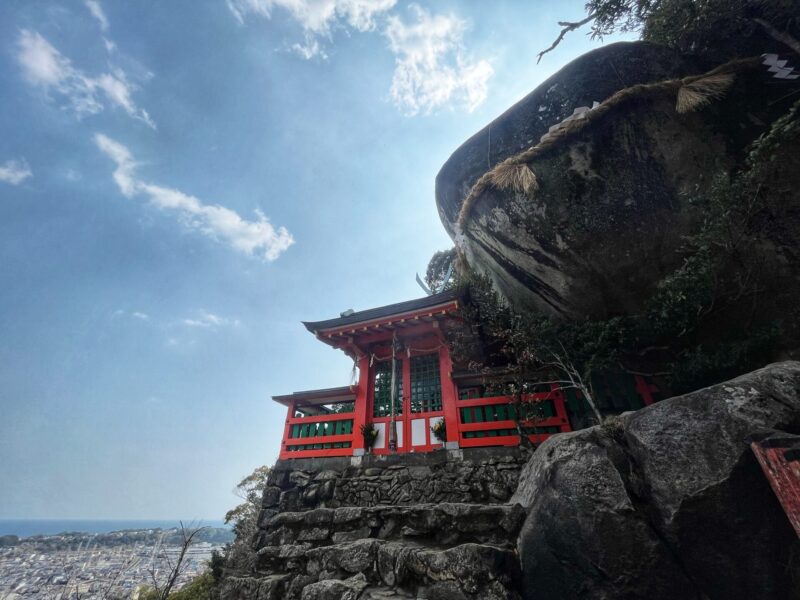
The Sacred Rock Gotobiki-iwa

At the top of these steps is a large, sacred rock called Gotobiki-iwa. Legends have it that this rock is the dwelling place of one of the shrine’s deities. Many people make the journey to worship there. The area is very calm and serene. You will also be rewarded with the best view of Shingu City. Worth the hike!

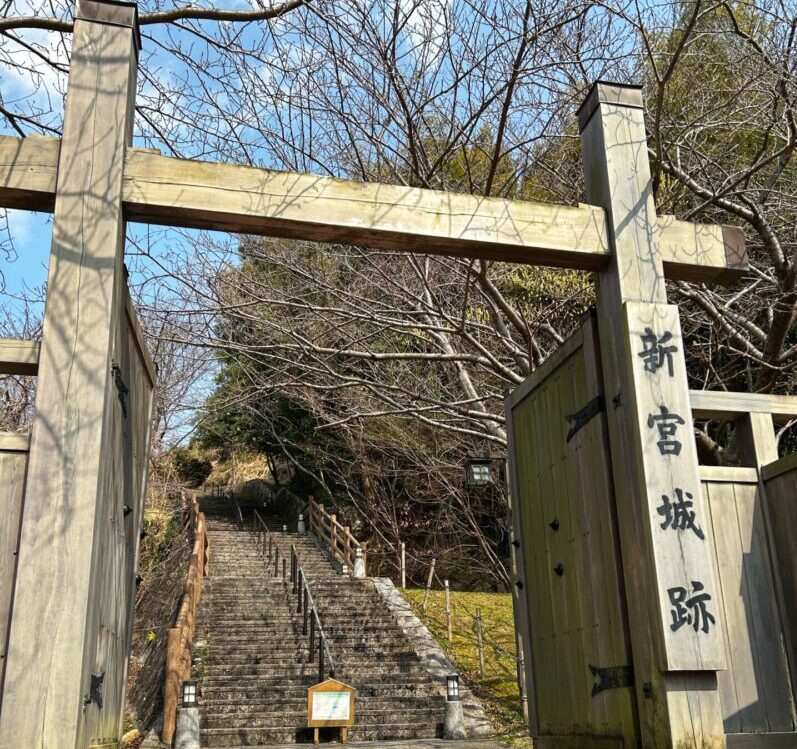
Shingu Castle Ruins (Tankaku Castle)

Visit Shingu Castle Ruins

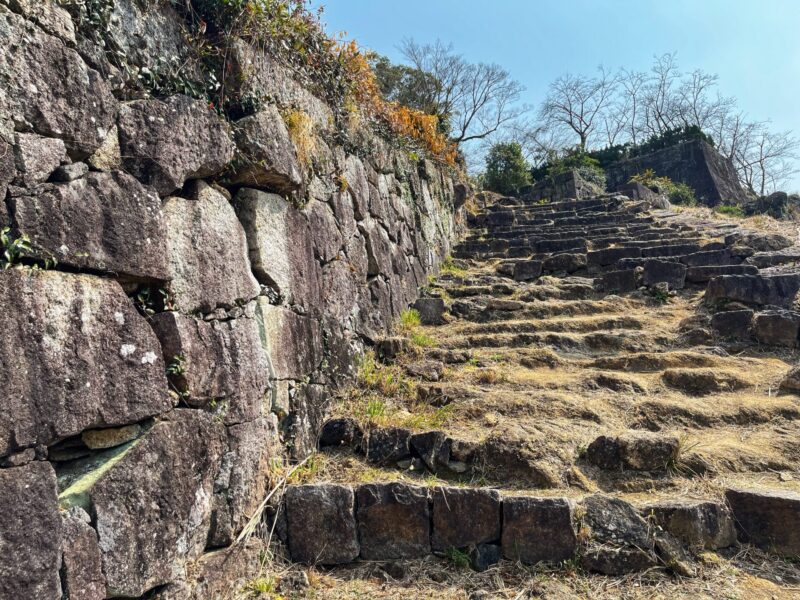
While visiting Shingu city, we also have a quick stop at the Shingu Castle ruins. There are nothing exceptional and no structures remaining from the original castle.

Shingu Castle Ruins

The ground is nice to walk around and have a get great views of Shingu City from the top. A great place for a quick stopover.

Kumano Hongu Taisha Shrine

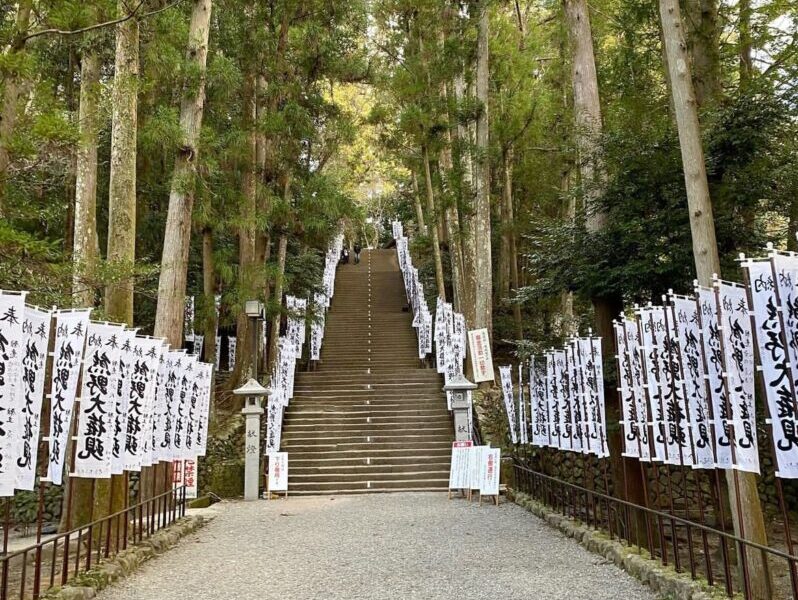
Stairs to Kumano Hongu Taisha Grand Shrine

Lastly is the Kumano Hongu Taisha Grand Shrine (熊野本宮大社). This is the most important shrine for Kumano Kodo pilgrims and is located at the center of the Kumano Kodo network of pilgrimage trails. A must-visit if you are in Hongu.

A moderate amount of stairs to climb from the entrance will get you to the main shrine area.

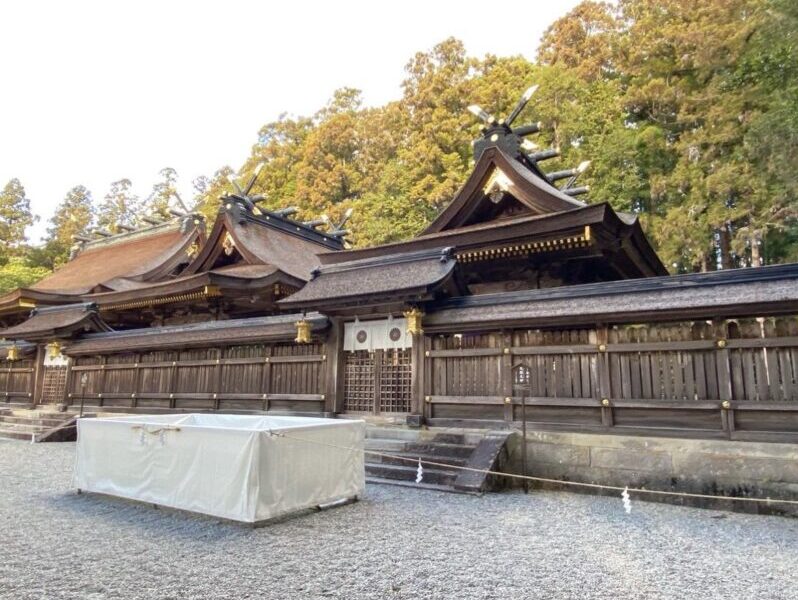
Kumano Hongu Taisha Shrine

Kumano Hongu Taisha Grand Shrine is classic Shinto design. The shrine itself was elegant and rustic, with a thick thatched roof (with cypress shingles). Symbols of Yatagarasu, (eight-span crow) with three legs are everywhere. The three-legged crow represents the sun in Japanese myth.

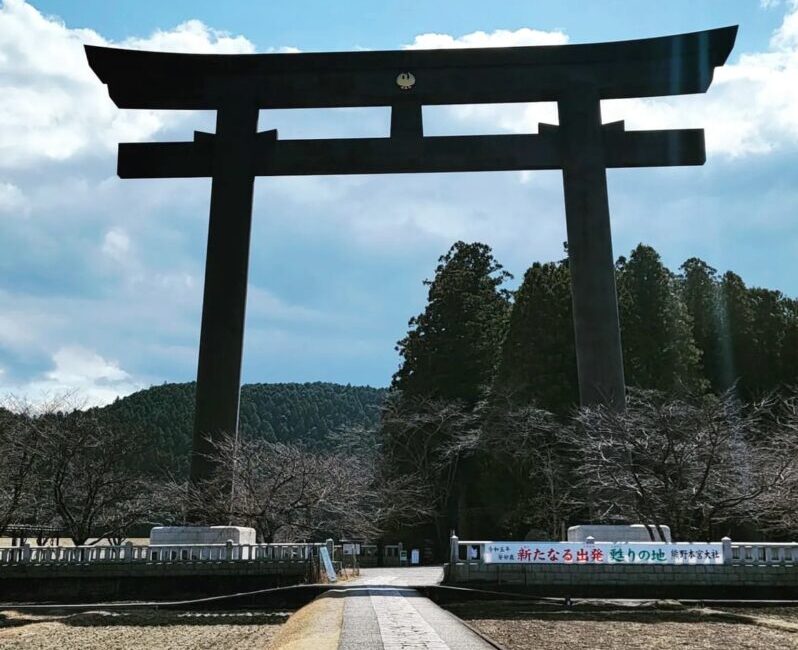
Japan Biggest Torii Gate at Oyunahara

The original shrine was built closer to the river (at Oyunahara). It was moved to its current location after the original structure was destroyed in the flood in 1889. If you have the time, walk 15 minutes or so to Oyunohara, the original site of Kumano Hongu Taisha where the Japan’s biggest Torii gate is.

Getting there: Take the local bus from Shingu Station to Hongu. The main bus stop in Hongu is the Hongu Taisha-mae bus stop, in front of the Kumano Hongu Taisha Grand Shrine. This is also near the Hongu tourist information center.

Overall: A Trip to Shingu

A Trip to Shingu

All in all, we hope this Shingu City guide helps you on your visit to the sacred Kumano Sanzen! We visited some of the important shrines in Japan and were truly amazed by them. Although Shingu and Hongu is not popular travel destination, this trip was one of the most memorable during our time in Japan. We could really enjoy the experience and feel the authentic vibe of a Japanese sacred place. If you are planning to visit off-the-beaten-path parts of Japan, you should definitely add Shingu to your list!

RELATED READ:

Planning a trip to the Kii Peninsula? Check out our other posts for inspiration: